
Ep. 48. Office Politics: The Fun and Frustration of Palace Intrigue
About this episode:
Original Air Date: May 4, 2026It’s easy to think office politics happens because people are scheming…but in our experience it happens because no one wrote anything down. In the absence of clear ways of working, the preferences of the most powerful people fill the vacuum and suddenly half your attention is spent learning whose attachment format to use rather than doing the actual work.
In this episode, Rodney and Sam dig into one of the most universal and underdiagnosed org patterns: the political operating system. They explore why politics can feel more fun than good process, why "influence without authority" is just pandering with better branding, and how to start replacing implicit norms with something more durable than whoever's in the room at that moment.
Tools from The Ready:
The Ready’s OS Canvas: https://www.theready.com/os-canvas
Mentioned in this episode:
Essential Intent: BNW Ep. 90 with Greg McKeown
Even/Overs: BNW Ep. 44
Dual Transformation: AWWTR Ep. 43
“action meeting episode”: BNW Ep. 80 with Sam Spurlin
User Manual to Me: BNW Ep. 159
In this episode:

Rodney Evans
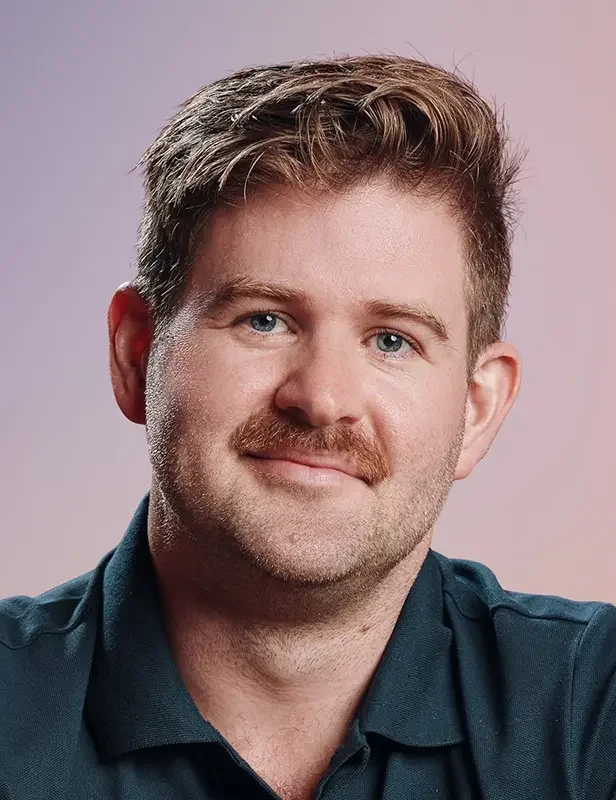
Sam Spurlin
Listen now:
Episode transcript:
Sam Spurlin:
I'm thinking of it as cathedral building. A project that is so big and it feels audacious, especially if we're in the early stages of it. All of us working on it right now probably won't be around when it comes to fruition. And I just feel like the world would probably benefit from more organizations that could build cathedrals in whatever it is that they're doing and not just kind of crap out another SaaS app.
[Intro music]
Rodney Evans:
Hey everyone. This is At Work With The Ready, a podcast about work design and how organizations can make change work in their favor. I'm Rodney Evans and I'm here with my co-host, Sam Spurlin.
Sam Spurlin:
Companies are facing more change than they were built for. And the problem is organizations are still running on management ideas from a completely different era. Rodney and I work with leaders and teams who are redesigning how work actually gets done, so change becomes fuel in the tank instead of sand in the gears.
Rodney Evans:
On this show, we share patterns we're seeing inside organizations, what's working, what gets in the way. Today we are talking about office politics. I can't believe we've never done this show before, but first we will check in because how you do something matters just as much as what you do. Sam, what you got?
Sam Spurlin:
Well, Rodney, I have a completely from left field check-in question for us today. What's a skill you have that you rarely get to show off?
Rodney Evans:
Oh wow.
Sam Spurlin:
Party trick maybe?
Rodney Evans:
Okay. I think you should go first and let me think for a second.
Sam Spurlin:
Okay. I have just the stupidest...the stupidest thing that I can do. I, under some conditions, can make a saliva bubble come off of my tongue and float through the air.
Rodney Evans:
That's disgusting.
Sam Spurlin:
I learned how to do it in French class in high school because a kid that I thought was pretty cool was able to do it. And then he taught me how to do it. And that's the main thing that I gleaned from four years of French class.
Rodney Evans:
I feel like I knew this story, which is disturbing.
Sam Spurlin:
I maybe have told it on the podcast before. I apparently am impressed by myself?
Rodney Evans:
I can't imagine why. Okay. This is a skill I don't use very often because we're adults now, but when I was younger, I made really, really excellent sandwiches. I would put unexpected ingredients in sandwiches and my mom loved my sandwiches. And we were like a big picnic family, a big picnic family of two. My mom and I liked sitting on the ground and eating sandwiches. But now it's like, when we have people to lake house and stuff, we just put everything out on the counter because people want to make their own sandwiches. So I don't get to exercise. And my husband is just like, there's a professional in the house calm down. Yeah, he's a bit of a food guy. Yeah, exactly. So I only really get to make them some occasionally for myself.
Sam Spurlin:
Okay. You calmed me down. I was getting ready to fight you that as an adult that was no longer a relevant skill to have, but I understand the caveats now.
Rodney Evans:
Somebody is like, "I don't like mustard." And you're like, "You know what? You just do it yourself."
Sam Spurlin:
Yeah, exactly. Yeah. Okay.
The Pattern: Without real clarity, we cater to the people in power
Rodney Evans:
Here's the pattern for today. It's a short one and I think it will be recognizable to anyone who's ever had a job. I first experienced this as like a camp counselor when I was 15. So in the absence of clear ways of working or call them what you will, standard operating procedures, protocols, rules, whatever. In the absence of clarity, the preferences of the most powerful people are what we work to. And essentially we get into this cycle of politicking and trying to navigate and maybe even influence based on the unwritten rules of the hierarchy. And it is the worst kind of organizational design and also makes for a terrible working experience. And so today we're going to talk about why that is, funny examples from our past, and what to do about it.
Sam Spurlin:
I just had this moment of clarity as you were saying that, which was like inhabiting somebody who doesn't know who we are or what this podcast is or what this world of kind of org design is at all and them just being like, "Well, yeah, of course. That's what organizations are. That's why I busted my ass for 20 years to be the leader. Yeah, people bend their will to my desires because what else even is there?" And I take a lot for granted being in the world that we are in right now, thinking about operating systems and there are other ways of doing things. And I think there's a large body of people out there who's just like, "This is just work. What are you talking about?"
Rodney Evans:
Who are like, "Yeah, no shit." Yeah. That's such a good point. I mean, for so many years of my career, this was the how of work was however Dave wanted it. That's how. Yeah, that's so interesting. Okay. You want to take a first swing at this?
Why leaning on relationships to get work done feels good in the moment
Sam Spurlin:
Sure. I mean, I think the main thing that I was thinking about as preparing for this is that essentially we're talking about work being anchored in personal relationships, and that is kind of the positive spin. We only get things done because we are in relationship with each other. You owe me favors. I owe you favors. There's this web of relationships in the organization, and that is an incredibly fragile way to think about how we get work done in the organization. It's fragile by design, but I do think there is this paradoxical thing to it, which is that it can feel good. When it is going well and you have good relationships with people, it's like, yeah, we don't need to write things down. We don't need to have a process. Rodney and I get along great. We see things eye to eye. We've got relationships with these other people.
We can just work together as humans and make things happen, which is sometimes possible, but I think it's probably not as common as we like to think it is.
Rodney Evans:
It's so true. And it's interesting, even just hearing you say that, Sam, I'm thinking back to jobs that I had where learning the person, learning what Elisa's lunch preference was, and that she preferred things emailed to her as PDFs rather than as PowerPoints and that she liked things printed two-sided. Also, to be clear, I was not an administrative assistant in this scenario...that was like a big part of the job. And there were like ten Elisas who were more senior than me, who I had to keep all this-
Sam Spurlin:
Who all had different preferences, right?
Rodney Evans:
Who all had different preferences, trying to keep this minutiae in my brain that had nothing to do with anything, just so that they didn't have to conform to a clarified and consistent way of working. And to your point, it really did feel like winning to be better at that than other people.
Sam Spurlin:
Sure.
Rodney Evans:
It felt like I must be really good at my job if all of these people are happily receiving the work that I am providing to them and I'm not getting yelled at or getting in trouble in the course of a week like the woman sitting next to me.
Sam Spurlin:
Yeah. Well, as annoying as it is, at least it's clear and there's kind of clear criteria about whether you're doing it well or not.
Rodney Evans:
Clear feedback loop!
Sam Spurlin:
Very clear feedback loop. "Wrong attachment, idiot!" "All right, I'll remember that for next time." But I mean, there is something, I mean, to your point about it, kind of feeling like you are building a skill, you are building expertise. It's just in the preferences of a specific person, which is maybe not the most generalizable skill to have in an organization.
Rodney Evans:
You know what? This is so fun, Sam. None of this is what I thought we'd talk about, but I'm realizing now also how much feedback around performance does have to do with this particular kind of emotional intelligence. And I think a lot of times, especially in larger organizations, when people talk about cultivating relationships and ability to influence without authority, barf, and high emotional intelligence, they're talking about developing this skill, which is basically, what's the word...pandering to people with more power than you have, which is an insane skill to have be so, so highly valued at work, and yet it so much is.
Sam Spurlin:
Yeah. I thought you were going to go down the route of feedback, feedback often just being feedback on opinion or opinion masquerading as feedback, which is like a flavor, I think, of the same thing that you're talking about here.
Rodney Evans:
Totally.
How to tell what’s best for a leader versus what’s best for the work
Sam Spurlin:
What I'm curious about is, is it wrong to have an opinion or a preference as a leader? If you prefer to have an email one way or another or this sort of document over another sort of document, can you not express that to your team?
Rodney Evans:
I mean, I think that's sort of at the core of this thing because the first principle that we're circling around here is, "Is it what's best for the work or is it what's best for me?" And in most organizations, there's an assumption that those are the same thing, but they're really, really not.
Sam Spurlin:
Very true. Very true.
Rodney Evans:
And I was in a strategy session that our colleague was leading with a client, and it was one of those things where the way the information was being organized on a mural board by a pretty large group of people was not logical to the CEO. And he was like, "We need to organize this differently." And he was like, I mean, he wasn't like an asshole about it, but he was just like, "This doesn't make sense." But there were actually a bunch of people there who were like-"
Sam Spurlin:
"No, it does"
Rodney Evans:
"This does make sense. Like, this is actually the only time it's ever made sense." And it's just one of those interesting things where it's like the way that our colleague was doing it was very much in service of the work. It was like, "We're going to put all of this out. We're going to decide what the prioritization criteria is, and then we're going to visually move the work along the matrix of this criteria that we've decided, and then we're going to move the work around in discussion about outcomes that we've determined." It was a very work designy way of doing this. And the CEO, whether it's because of habit or because of how his particular brain works or his learning style was just like, "No, this is not it."
And it's an interesting thing because I actually, in that situation, it's like, "Well, if it doesn't work for him, it's probably not going to work over time," and/but, if it works for 16 other people who are sort of understanding the full domain of work and how it is relatively organized and prioritized for the first time, that seems worth the discomfort of one person who's like, "This is how my brain works." But your point is the one that now I'm sort of wrestling with because in that situation, we did end up doing a different version of it afterward that was what the CEO wanted. And my personal opinion is that the first design was better.
Sam Spurlin:
I was getting curious about how it went because I think this is an interesting potential opportunity for this team, not knowing their specifics at all, to see that their CEO has a different preference, which is noted and totally fine. And there's probably...if it's just a matter of cognitively how you like to see information, there's probably a couple other people who maybe fall into that camp too. And also, we are not going to massively pivot what we have planned to do based on just kind of a minority preference for a different way of organizing. And that feels very normal to anything that we are facilitating. We're generally not cowed by a senior leader being like, "Mmm actually, I want this slightly different thing." But I think no external facilitator in a room doing this just within an organization. I think it's a very rare organization that's like "Actually, noted, and we're going to keep going down the path that we're on." And of course, we can circle back around later. We can figure out ... I think a lot of times we get to the end of it and the CEO who had an issue early in a process is actually like, "Oh, actually it's totally fine because we had thought through an entire experience." So yeah, it's just interesting to see how that shook out.
What navigating a CEO’s preferences looks like in practice
Rodney Evans:
Yeah. So we got to a reasonably good stopping place in that session. And the next session that we did, the rule that we agreed on actually was like, "we're not going to discuss the premise of the exercise before we've tried it."
Sam Spurlin:
That sounds like a rule we've made for ourselves at the ready before, because we love to facilitate each other.
Rodney Evans:
A hundred percent. And it was one of those things where, to your point, I think that if he had sort of seen it through and wasn't doing the cognitive work of trying to figure out a different way at the same time as being there, he might've gotten what he wanted out of it the first time.
But I think that's a real thing. People get like, "This is confusing or this is uncomfortable or this isn't how I would've done it. " And then they take themselves out of the experience and they don't necessarily allow the possibility that it could work because they're like, "Whoa, whoa, whoa, timeout, we got to fix this. " And we used to do this shit at The Ready all the time. And what I think we have all learned is like, even if ultimately the way that we did something, anything was unsuccessful, it's better to get to the end of it, reflect on it and fix it for next time than try to fuck with it mid-flight, which almost always gets you nothing. You neither get a new design, nor do you get the outcome of the original design. It's just noisy and ultimately pretty frustrating.
Sam Spurlin:
Everyone feels bad. The person who's really designed the plan.That sucks. Part of them is like, "Yeah, you see assholes? We didn't do my thing and we didn't get to a spot that felt good." And everybody else is out of the experience of being a participant and now they're off. Yeah, it's a mess. It is better to go all the way to the end and then make different choices coming out of it from there.
Rodney Evans:
And so I think in this case, I think his feedback ultimately will make it sharper. This is a meeting that we're going to do at least once a quarter, like a prioritization meeting in line with their six month strategy. And it would have been easier and better to just play through the first time. Totally. But I think this is what happens, right? Because again, talking about politics, that guy in that situation isn't trying to be a dick. What he's feeling is, "I don't know if this is going to work. I don't know. This doesn't make sense to me. This isn't how I would do it." And as the leader, he feels ultimately responsible for all of these people having a good experience.
He feels responsible for the work getting prioritized. He feels responsible for the fact that we're there to begin with, and he feels responsible for this team to not be annoyed and frustrated, even if he's projecting frustration onto them that's not really there. So it's sort of a perfect storm, you know? And I think my takeaway from that, because I haven't honestly had an experience like that in a minute, so many of my clients I've worked with for a long time and they just sort of buy into the fact that I have a plan in my head and we're going to get there and they just kind of let me do my thing.
Sam Spurlin:
Do your thing.
Rodney Evans:
I haven't been in that situation for a long enough time that I'm like, actually the miss was on us for not contracting around it beforehand and saying, "This is going to feel weird. Are you willing to just let it roll? We'll talk about it afterward and figure it out. " And to bring this back to the larger episode, I think that is how you get out of designing for preference is by doing some of that contracting upfront to be like, "This is not going to feel like your preference and is it safe to try anyway and can you just let it unfold and then can we talk about it afterward? And if you can't stand it, we'll change it."
Why office politics is more fun than building a good OS
Sam Spurlin:
Yeah, totally. Okay. So I want to throw another idea at you just about the broader kind of postulation that politics is rife in our organizations. And I think it's because politics can be more fun than the somewhat boring stuff of building a good OS. It is more fun to build coalitions and build alliances and build relationships and view all of that as the scaffolding for doing kind of crosscutting important work. And everybody likes to kind of feel like they're in Game of Thrones. And a lot of organizations, I think, design themselves to allow people to feel that way.
Rodney Evans:
Yes.
Sam Spurlin:
So does that hurt your heart as an org designer?
Rodney Evans:
Yeah, it breaks my heart a little bit, but it's true. I mean, to gossip is to be a human being.
Sam Spurlin:
Sure.
Rodney Evans:
And I do think palace intrigue is fun and it takes a certain set of experiences to realize that having really clear and explicit ways of working to replace political navigation ultimately feels better, but it really is the difference between junk food and vegetables. It really is like potato chips taste better though right now and it's like having salad instead is going to feel better later.
Sam Spurlin:
Long term.
Rodney Evans:
And even in an hour, it's going to feel better than having half a bag of potato chips. But right now, potato chips. Potato chips is like, "Let's go talk about how Dave is so shitty and he's such a diva and he's always asking us to do dumb shit the wrong way. Let's go talk about that. Yum, yum, yum, so salty."
Sam Spurlin:
Yeah. Not to squeeze this metaphor even further or spoilers for Game of Thrones, I guess?
Rodney Evans:
Never saw it. Go for it.
Sam Spurlin:
Basically everybody dies in Game of Thrones. Everybody likes to think that they're the one who's going to deftly navigate this crazy environment and come out on top and find themselves sitting on that comfy throne. And it's the same experience as to why everybody thinks they're above average driver. The math just doesn't work out that way.
Rodney Evans:
Absolutely. And this ties a couple points together that we've been touching on, which is, first of all, doing this kind of quote unquote "work" feels like you're doing something important, but ultimately leaders come and go. And I think the reason that it's very hard for people when a leader goes that they feel like they've cultivated a lot of goodwill with and they feel like they've really learned is because they know that they're just going to have to start over again and that ultimately that's not really a skill. I mean, it is a skill, but it's like a skill that someone shouldn't have and they may not-
Sam Spurlin:
And it's not a skill pointed at the purpose of the organization, like building a thing or something.
Why leaders’ preferences leave when the leaders do
Rodney Evans:
Exactly. It's not a skill pointed at creating value for a customer or something like that. Yeah. I was actually talking with other Sam about this on Friday and I was talking about organizations that appear to have no ways of working, that have been in business for a long time. And she comes from more like mid-market companies and she was like, "Yeah, that's because people leave." And they take their ways of working with them and nothing is documented and everything is based on their preference and like a CMO at most mid-market companies is there for 18 months and then they go and they just start over. And I was thinking, obviously The Ready is not like a normal organization, but I was thinking about like how hard it would be to break routines at The Ready no matter who left. It's like if Ashley and I both quit tomorrow, it's not like people would be like, "Well, now we're just going to have status meetings where one person comes in." It would make no difference. The ways that we work are so entrenched in the organization, but I think that's very unusual.
Sam Spurlin:
I'm going to go out on a limb here and say, even though in some ways I was known as "The Action Meeting Guy" at The Ready, the fact that I no longer work at The Ready probably doesn't mean that action meetings no longer exist. Has literally no bearing. You're still doing those meetings. Who cares if I'm there or not? But I don't think that's necessarily true in a lot of our clients, for example. We work with somebody for a while, they end up leaving and all the things that we were doing with them as kind of our key champion is now it's gone or they've just ... The more charitable interpretation is they take that to whatever their new role is at a new organization.
Rodney Evans:
Absolutely. But yeah, I think that this idea of like learning how a leader works rather than clarifying how an organization works, it's so fragile because then they leave and then what are you left with?
Why politicking wastes organizational attention
Sam Spurlin:
Yeah. This is making me think a lot about just the finite nature of attention and what we choose or what we have to spend that attention on in the day-to-day of our organizations. And I do think there's a zero sum nature to it. And if we're spending our time and attention kind of navigating the palace intrigue or building these kind of surface level relationships in order to get anything done, that's not attention going into figuring out how to create value, how to make our product better, how to make our services better, figuring out how to just make things better. We just have less freely available attention to do that.
Rodney Evans:
Yeah, absolutely. Absolutely. And before we started recording, I was trying to think of some examples from my past around this. And it's like the amount of time that I spent trying to figure out what was allowed, what was acceptable because stuff wasn't written down or a version of what was written down as a corporate policy, but actually the leader did a different thing, it was like a phenomenal amount of my attention, to your point, whether it's like that this person likes things printed out double-sided and sent as a pre-read, or this person likes to have the reading done in the meeting, or this person likes to read it out loud in the meeting. I actually spent calories understanding and catering to those whims, and it was everything. It was like, I worked at a place where we traveled a lot and it was like, "This leader doesn't believe in flying home on a Friday, so you have to take the red eye on Thursday night." And that wasn't written down anywhere, but the expectation was "Be in the office on Friday." Incidentally, I thought that that was utter bullshit and I didn't do it one time and no one ever said anything to me. So I don't even know how real that was, but 50 other people did it that way because someone sometime said that that's how they thought it should be. It's like there are a million of these examples and they're so insidious, but they're so expensive in attention of an organization.
Why short-term politics works against long-term value
Sam Spurlin:
Yeah. The triviality, taken alone, they seem trivial, but pile a lot of trivial things on top of each other and suddenly we're not talking about a trivial amount of time and attention. And I suspect in these organizations, yes, there are the trivialities, but I bet you there are some deeper things as well, such as this leader thinks of strategy this way, and this leader thinks strategy is actually just implementing a roadmap and we're using the same words to mean different things. And that speaks to a much larger kind of talking past each other and needing to figure out like, well, when leader A says strategy, they're really talking about this and leader B, when they say strategy, they're talking about this other thing. And my job is to make those align up. It's not just the sending the right attachments.
Rodney Evans:
Right, absolutely. And I think so many times, how many times at a client have you seen the "we don't have a strategy" excuse or not excuse, I guess just tension.
Sam Spurlin:
Reason, yeah.
Rodney Evans:
And then you talk to a leader and they're like, "We absolutely do have a strategy. We talk about it all the time. We literally went through it in a town hall last week. I don't know what they're talking about. " And it's like, "Okay, well, you have a different idea of what a strategy is than this person." Or maybe they just weren't listening, I don't know. But either way, it didn't penetrate into their brains.
And so having a definition of what strategy is ... And honestly, Sam, I've had this tension at the ready at various periods where it's like, since I've been stewarding The Ready, we've never not had an Essential Intent, we've never not had half-year outcomes, we've never not had Even/Overs at the organizational level. We have never not had these things. They have never been done in a totally centralized way. They've always had organizational input and yet there have been various periods where people have this craving for something else and have been like, "I don't feel like we have a direction" or "I don't feel like we have a vision..." And I mean, ironically now I feel like because we do have that and it looks really different than anything we've done before, now I understand what they meant, but at the time I was like, "What else do you want from me? Like, Jesus Christ, it is written down. This is it. This is all we know right now, what the fuck?" But this is where the implicit nature of what comprises strategy is often not pinned down.
Sam Spurlin:
Yeah. There's something about this topic that feels really important to me, and I'm not sure if I'm putting my finger on it quite right, but the idea that I think the most important work for, I would probably argue most organizations is probably quite long-term and is a big swing and is going to require more time than any one of us are going to be here in this organization. I'm thinking of it as cathedral building and remove all religious connotation to it. I'm just talking about a project that is so big and it feels audacious, especially if we're in the early stages of it. All of us working on it right now probably won't be around when it comes to fruition. And I just feel like the world would probably benefit from more organizations that could build cathedrals in whatever it is that they're doing and not just kind of crap out another SaaS app.
Rodney Evans:
Totally.
Sam Spurlin:
And I'm not shitting on SaaS. What's the cathedral version of what you are building software wise? What is the cathedral version of anything that we're doing? And I think in a lot of organizations, we don't even let ourselves ask that question because it seems utterly absurd that we could build something like that, that because of our day-to-day just chaos, nobody's thinking about the 10, 15, 20 year version of what we're trying to build and it's just the next quarter. And yeah, maybe some of that is just the system that we're in. If we don't hit the next quarter, we're all out on the street on our butts, but I don't know. There's something there that I wish we could do more of in our organizations.
Rodney Evans:
I really love this metaphor and I feel like we should do a whole show about it. We have only in the last six weeks figured out The Ready's cathedral. And it's one of those things where it was like, as it started to become clear, it was like, this is it. All of the other hypothesizing that we've done, the reason that it didn't stick is because it wasn't it, now this is it. And now it's just like all the tumblers have fallen into place and it's like the universe is just pushing us toward this new and somewhat different future. I did a lot of work on this and it's been so interesting to me because to your point, most businesses, and I'm around a couple of them right now, most businesses need that. Most businesses are trying to figure out, this is very Dual Transformation-y, but they're trying to figure out how to survive in the core and what they really need is the big idea for the future and they don't have it and they don't know how to get it.
And having been through this myself and watched what our competitors are doing and being like, "Ugh, not that. I don't want to do anything like that." And being offered opportunities to do other things that feel intuitive, like writing a book and being like, "No, that's not it either." It's really hard to have the pressure internally of what is the big bet and the big future. None of us know it, but we want it. And the world being like, these are the logical paths. And to sort of sit in like, no, I'll know it when I see it and this isn't it. And I'm going to keep saying no until it becomes so stunningly clear that I can't stop thinking about it. That shit is hard to do emotionally. But I think to your point, that is what cathedral building should feel like. And when it does, it's pretty exciting.
Sam Spurlin:
Yeah. And then the only way to have the time or space to really do that is to have an operating system that doesn't consume every free iota of attention dealing with kind of just the palace intrigue stuff. And we can put a lot of things on autopilot that should be on autopilot so that things can exist for longer than a quarter, that I don't have to spend my time kind of navigating the intricacies of other people's preferences and we can focus on doing the work. And of course, the future that I'm painting here is not this like ultra rational, we never have human conversations or conflict.
Rodney Evans:
Of course. Of course.
Sam Spurlin:
But those are rarer and more kind of pointedly focused at specific aspects of our strategy or the work that we're trying to do and not just the ambient feeling of being in the organization.
Andrea Robb’s organizing principles
Rodney Evans:
Totally. I think that's exactly right. And I'm going to draw something. I'm going to draw something and show it on camera. All right. It's going to be very simple. It'll be pictionary. Someone showed me this a long time ago. I think it was Andrea Robb. Do you know her?
Sam Spurlin:
I know the name. Why do I know the name?
Rodney Evans:
She's an org designer. She used to work at Airbnb. That's when I knew her.
Sam Spurlin:
Okay.
Rodney Evans:
Anyway, we were having this conversation. So there's three ... Wait, there's three sort of arcs. So if you think about this as a hierarchy, her point was the most evolved organizing principle is strategy. But if the strategy and the direction isn't clarified, you demote to operations. And just trying to be rigorous in execution and planning and moving. And if the operations aren't clear and functioning, you default to relationships. And that's how ... And basically she was saying-
Sam Spurlin:
Yeah, that's what we're talking about.
Rodney Evans:
"This is how things get done. And in the best case scenario, they get done based on strategy as the organizing principle. And in the worst case scenario, they get done based on interpersonal connection and influence." Which to your point is not to say we don't want to have interpersonal connection, but it shouldn't be the vehicle through which work can happen.
Sam Spurlin:
Yeah. It should be adding to the work that we're doing. It should be adding fuel to it and not being the only way that we can get stuff done.
Rodney Evans:
And hopefully making it fun and making it exciting.
Sam Spurlin:
Fun and better.
Rodney Evans:
And making it lower friction and whatever, rather than being the actual mechanism, which is like, I got to call Joe because Joe's the only one who has the password to press the button that my boss wants. And the SOP says it's 48 hours, but my boss wants it done by noon, so Joe it is. And I'm going to buy him a donut in the morning so that he'll do it again next week.
Sam Spurlin:
Am I Joe? I'm Joe in this, aren't I? Okay.
Rodney Evans:
You are Joe.
Sam Spurlin:
I can be bough with a donut.
Rodney Evans:
Yeah. He's donut operated, folks.
Sam Spurlin:
Very true. The one last little bit I'll add to that is that the benefits of really strong relationships is that we can disagree better. If you and I have a strong relationship and I feel like if I bring something to you that is counter to what you want to hear or whatever, and that's not going to harm our relationship, then I am more likely to do it. But if we operate in an environment where my relationship is the only thing that I have for getting things done, it's a very surface level sort of relationship. It's "How do I keep this person happy?" Not "how do I..." I'm going to use the word use, but it makes it sound worse than it is. "How do I use our relationship to have deeper conversation and deeper insight about the thing we are trying to do together?"
Why leadership politics keeps you from the truth
Rodney Evans:
Right. Absolutely. The other thing I wanted to talk about, because we both had a sticky actually related to narrative, I think politics shows up a lot in how we talk about work and what we say and what we don't say. Yeah,
Sam Spurlin:
Say more about
Rodney Evans:
That. I mean, when I'm working with an organization, I definitely will hear like, "Oh, this leader doesn't like blah, blah, blah." This leader doesn't like agile. Don't talk about it that way. This leader doesn't like process. So don't talk about it like process.
This leader, whatever the thing is. These preferences sort of get out of control. And a lot of times, and I have a really good, very recent example of this, but a lot of times I don't even think the leader in question knows that it's happening. Maybe once upon a time they made one one-off comment that was like, "I think that these guys from this agile consulting company are butt heads in that the SAFe framework isn't working for us," which it doesn't as an aside, so that person's right in this case, but that's not the point of the story. The point of the story is a lot of times people take even a one-off comment like that and turn it into a rule for everyone for all time and actually create a bunch of overhead because they believe that this is an explicit norm that they need to adhere to.
Sam Spurlin:
Yeah. I was just going to say, when I have investigated those preferences where it's with somebody telling me about somebody else's preference and I go and talk to the person, the actual person, there's usually either, it's either sometimes 100% wrong, which is very interesting because maybe it was a preference at one time and it's not now, or there's like a nugget of truth in it, but this whole mythos has been crafted around it and that has such a skewing impact on the organization.
Rodney Evans:
Totally. Well, and I think what I'm realizing in this conversation is like so much of this is just about making powerful people comfortable and we make them comfortable because they are responsible for our livelihood and for our reputation and for our sense of belonging in organization. There are very human, very valid reasons for why we want the pack leader to have the best, I was going to say the best bone, like the best steak bone, like a dog?
Sam Spurlin:
Are you talking about like a wolf? Yeah, okay.
Rodney Evans:
Sure. Yeah, you get it.
Example: How to navigate a leader during an off-site
Rodney Evans:
And also, and this is where I have a sort of funny example, I think these assumptions get us into so much trouble and ultimately create a really bad cycle of mistrust. I was facilitating an offsite very recently and I happened to know the leader quite well who was not in the offsite. I was working with people who work lower, quote unquote, in the organization. And throughout the offsite, there were elements of the new sort of strategy and direction of the organization that came up as being unclear. Now, what I interpreted from this is there's been a lot of change, a lot of this is new, people just haven't like fully processed the information yet. And the leader was going to come in for part of the offsite. And so I said to the person who was the leader of this group, "We should let them all ask their questions about this and get clear on what it is because I'm sure she's clear on it.
" And if there are these, like essentially a lot of the questions were like, "We should be making these decisions based on the larger strategy, but there are things about it that we don't yet understand." And I was like, "What a great opportunity to sort of clear this up." And the immediate response that I got from the leader in the room was, "I understand why you're saying that, but if I were her, I might feel like I've said this a lot of times and I've repeated myself a lot and like, why don't these people get it? And I don't want them to look foolish or inattentive or frank..." The undertone was like, "Or to piss her off." And I was basically like, "Okay, I know her well. Let me handle it. " I say this as preamble because I go to have this conversation with the leader and say, "Look, there are still questions about this.
I know you've been talking about it and the questions exist, so who cares? Why don't we do this? " And her immediate response was, "I've been talking about this ad nauseum, I don't understand, blah, blah, blah, blah, blah." Now, the politics move from there is, "Okay, done conversation over, we're moving on, we will not do this session of dialogue around the strategy." My conversation was like, "I'm sure that's true and it doesn't really matter if they don't get it yet. So no matter how many times you've said it, I think you need to say it again," to which she was like, "Fine." And it's like when you're inside of a system where you want to make that person comfortable and where you can feel their frustration and you want to respond to it because you're a good employee and also probably like a person who wants to stay in relationship, it's really easy not to push.
But this was a moment where I was like, this is about the work and what this group is trying to do and what they need to do it regardless of how many times she said it, regardless of how clear it could be, it's not.
And also she's wonderful and she's the kind of person who's like, "Fair enough, I'll be there." And then came and did an amazing job and it was great. And everybody thought it was a highlight. But it's like usually we don't even push because we just feel that little bit of like, "I don't really like this." And we just go, "Okay, okay, forget it. " And we have to at least check in with ourselves to be like, "Am I doing what's right for the work right now or am I doing what will make both of us in this slightly awkward situation feel more comfortable as soon as possible?" And if it's safe enough we should pick the work thing.
Sam Spurlin:
It's the potato chip thing.
Rodney Evans:
Yeah. It's the potato chip. Right.
Sam Spurlin:
It's the potato chip. Am I going to eat this potato chip now or am I going to have this salad? Okay, fine.
Rodney Evans:
Okay, fine. And look, we all eat the potato chip sometime. It's not always worth it, but it's worth at least stopping to consider for a second.
Sam Spurlin:
Yeah, totally.
Rodney Evans:
And as it turned out, we ate the salad and it was great.
Sam Spurlin:
It was a great salad. The salads can be great.
Rodney Evans:
And we came out of that all feeling really good and we had really made a lot of progress in a short period of time, but these are the moments that I describe them as being politics and what they are mostly is just personal preferences and humans being humans and a leader expressing frustration, which is perfectly, perfectly normal, and then doing something anyway because it's right for the work. And we can have more of that. We can have more salad in our day.
Sam Spurlin:
Yeah.
Rodney Evans:
Okay. So Sam, why don't you give us your first idea for what to do to deal with this stuff?
Tip 1: Don’t depend on only one person
Sam Spurlin:
Yeah. So for this one, I was thinking in the context of politics in terms of getting things done, especially long-term initiatives that are cross-functional, because often the transformation work that The Ready has traditionally done, it's touching lots of parts of the organization. And I see there is this way of thinking that has good reasoning behind it around having a single champion for a thing because that person probably cares a lot. That person can, if they have actual authority, they can go make things happen. There are reasons that DRI, directly responsible individual, these things exist within OSs, and I think that tees you up for a more political environment than you would want to actually have. So I like the idea of trying to build multi-threaded sponsorship into the cathedral building sorts of projects, these long-term things. It should not be any one individual's responsibility because if they leave, it's going to crumble or it's going to spin up some crazy internal politics that is just going to consume a lot of attention.
So how can we not have a committee? And I've realized that multi-threaded sponsorship is maybe just another way of saying committee. I don't think I'm saying that, but how do we create groups of folks who care about these things so that they are resilient beyond any single one of them? That's my first kind of provocation.
Rodney Evans:
I love that. And I mean, committee is another word for a team. I think that even committees can be great if they're structured and well run and they have actual work to do, but I think you're absolutely right. The fragility of an individual champion is bad design.
Sam Spurlin:
Yeah, it's tough.
Rodney Evans:
I love that.
Sam Spurlin:
It's also lot of pressure on that person as well too.
Rodney Evans:
It is.
Sam Spurlin:
Yeah. Generally, I think on good days, you feel empowered and energized to make things happen. And on bad days, you're like, holy shit, this whole thing rides on my shoulders and that is crushing.
Tip 2: Bring in fresh eyes to challenge assumptions
Rodney Evans:
Totally. I totally agree. My next one is going to sound self-serving, but it's not. I think that especially in group dynamics, hiring someone external who does either is not beholden to any one executive or has such a good relationship with the executive buyer that they sort of have free reign to do what they want can be so powerful. And it can be a facilitator, it can be a coach, it can be a consultant of some kind. It's not necessarily like a work designer like Sam and I, but the thing that I personally notice is how just because of like information asymmetry and my own naivete, I have a lot of freedom to question implicit norms in a group that other people don't feel like they have.
Sam Spurlin:
Yeah.
Rodney Evans:
It's like a way to sort of model doing what's right for the work rather than doing what's right for a person because I don't know what the individual people like or want. I'm coming with a design or agenda or a whatever in service of what they've told me they want. It usually doesn't really take individual preference into account at all. And I've seen a lot of moments, I'm sure you have too, in groups, where like I'll ask a question or say a thing, I can tell that I've kind of like hit a tripwire. A bunch of people in the room are like, "Oh shit, what's going to happen?" And the leader they think is going to have a reaction doesn't, either because it wasn't really a tripwire to begin with or because it's not my job to make them feel comfortable. That's not what they're paying me to do and so they let me get away with it.
Either way, it's like you're shattering the illusion that has potentially persisted for like years and it frees people up behaviorally to be like, "What other myths aren't true? What other implicit norms are bullshit? I just watched Rodney get away with this thing that I thought was verboten. Maybe there's other stuff that isn't verboten. Maybe I can just order the sandwiches without asking six people first." I think having a third party of any kind really in the action of a team's dynamic can shift it in a way that you just never will only with people who are on the team.
Tip 3: Write it down
Sam Spurlin:
Yeah, totally. Totally get that. My last one is, so because I think politics thrives in a kind of an oral tradition, if we're not really writing things down and we're just kind of talking about stuff, I think that is kind of the perfect environment for a more political OS to emerge. I think it is really powerful to create artifacts that outlive any individual leader or that just put down into writing things that we think are true so that we can talk about that and not just the ephemerality that we hold in our heads. So I'm talking about things like decision logs, like what decisions we made when success metrics and the kind of historical data behind them, case studies, testimonials, playbooks. I think all of this even becomes much more important too as AI pervades more of our organizations. If we want the AI tools that are existing within our organizations to work well, they need to be looking at the artifacts that represent the work that we are doing. And if it's purely in our heads and purely in the conversations that happen, then I think we're leaving a lot of useful information on the table.
Rodney Evans:
Yeah, I totally agree. My last one was very similar and I think that this is also where a fun little hack, a fun little political hack is like, to the extent that we are working based on a leader's preference, at the very least write it down. Write down the preference as an SOP and at least let's confront the truth of like Rodney doesn't want anyone to make direct eye contact with her before 11 o'clock in the morning. Just write it down. Just like, let's write it down and let's all just be honest that this isn't actually a preference. It's a rule even if it's insane. Again, it's just like these are small things that it's not any different than like keeping a log of everyone's dietary restrictions because we have dinner together a lot. It's like just write
Sam Spurlin:
It down. It's the user manual to me thing, which I know we have talked about quite a bit.
Rodney Evans:
Absolutely. Absolutely. Awesome.
Sam Spurlin:
All right. Well, I think we've put this one to bed. So as you always know, we are looking for new topics for the show at all times. So if you have an organizational pattern that you are having trouble changing, shoot us a note at podcast [at] theready [dot] com.
Rodney Evans:
This show is edited and mixed by Taylor Marvin at Coupe Studios and produced by Jack Van Amburg. At Work With The Ready is created by The Ready where we help organizations around the world change the way they work. Thank you so much for listening.