
Ep. 43: Dual Transformation Is The Future…And Nobody’s Prepared
About this episode:
Original Air Date: February 9, 2026Most organizations are built to do exactly what they do…and that’s the problem. When a core business starts to decay due to disruption, automation, or shifting customer demand, the instinct is to double down on efficiency, cost cutting, and short-term fixes. But that focus often crowds out the harder, riskier work of building what comes next. Nearly a decade ago, Dual Transformation offered a clear and compelling framework for this dilemma, yet nobody seems to be actually doing it.
In this episode, Rodney Evans and Sam Spurlin unpack why dual transformations are so rare, why it’s even harder than it sounds, and why it matters more than ever in an AI-shaped economy. They dig into the tensions between “business A” (the core) and “business B” (the future), the funding and operating system traps that kill new growth, and practical moves leaders and internal change agents can make to actually pull of two transformations at once instead of just talking about it.
Mentioned in this episode:
Enneagram 7: AWWTR Ep. 33 with Liz Orr
Ulysses, book by James Joyce
Dual Transformation, book by Anthony, Gilbert and Johnson
In this episode:

Rodney Evans
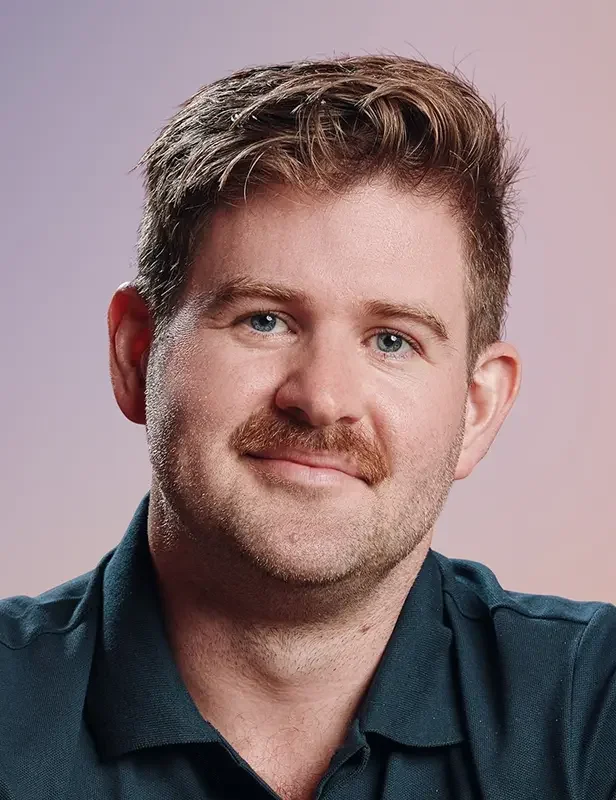
Sam Spurlin
Listen now:
Episode transcript:
Sam Spurlin:
I think there's often a lot of this hand waviness or everybody knows there's the new thing that we're trying to do and then there's the old thing, but nobody actually explicitly talks about it. So, all we have is this vague bad feeling of whether you're on the fun side or the not fun side. And that's not helpful to anyone.
Rodney Evans:
Hey everybody. Welcome back to At Work With The Ready. I'm Rodney Evans and that guy is Sam Spurlin.
Sam Spurlin:
I am Sam Spurlin. You are Rodney Evans and we are here to do a podcast.
Rodney Evans:
Good job, dude. AI is rewriting the rules of work in this moment. The future of work is here and the question isn't whether or not you're going to adapt, but how you design work for what is coming.
Sam Spurlin:
What my illustrious colleague is saying is that work design is no longer optional and the teams that treat it like a side project are actively being left behind. The ones that treat it as essential will keep up with the pace of change.
Rodney Evans:
So, today, very apropos, our intro, we are talking about dual transformation. And if you don't know what that means, don't worry about it. There's a whole book that we're going to reference. That's one of my faves. But first, Sam's going to check us in. Sam, what do you got?
Sam Spurlin:
What I got for us today is what is some type two fun you've had recently? And for those who aren't familiar with that nomenclature, I have no idea where it comes from. The first person I heard describe it was our former colleague, Spencer Pittman. Type one fun is the type of fun where while you're doing the thing, you're like, wow, this is fun. I am having fun. Type two fun is the type of fun where in retrospect you're like, okay, that was pretty fun. But while you were actually doing the thing, you maybe weren't having so much fun. And I don't know if there's a type three fun, but I would imagine it's even less pleasant than type two.
Rodney Evans:
I'm having such a hard time thinking of an answer to this question because everything that I think of, I'm like, "No, I enjoyed that at the time." I think it's because I'm too generally-
Sam Spurlin:
Maybe you could have a really broad-
Rodney Evans:
—optimistic slash Enneagram 7.
Sam Spurlin:
Yeah. You have a broad definition of what fun is.
Rodney Evans:
I kind of do.
Sam Spurlin:
Your type one fun is very wide.
Rodney Evans:
I kind of do have a broad definition. Okay, you go first and then I'll think while you talk.
Sam Spurlin:
Sure. So, one of my kind of 20 ... Actually, I probably started this last year, but I really like periodically reading a book that is just way too hard. One of those books that just has the reputation of like, everybody knows this book, but nobody's actually read it. I'm actually trying to read those. And they often are pretty type two fun. So, I'm like maybe two reading sessions away from having finished Ulysses by James Joyce. And it's been some-
Rodney Evans:
The doorstop.
Sam Spurlin:
Some type one fun, I would say mostly type two fun and I will be glad to be done with this project.
Rodney Evans:
Okay. First of all, I think this is an interesting psych test because what I'm realizing as I try to think of an answer is A, I generally don't do things that aren't fun and B, I think I take more joy in the process of most things than most people because I'm like a nerd who likes learning and doesn't feel generally confronted by being bad at things.
But I will say I've done a bunch of house projects at the lake, which I generally enjoy, but this one isn't finished yet. I wanted to put up track curtains like you have in a hotel room. And then I looked into them and it was going to cost like $6,000 for this house that is basically made of balsa wood. And I was like, "I'm not doing that. I'm going to figure this out myself." The figuring out process is fun. The actual assembling and installation process is fun. The part where I have to go to Lowe's like four different times because I don't know what anything is called and I don't know what size of anything I need and I have to return the thing for the second time because I brought it all the way home. Also, nothing there is close by. So, it's like a 45-minute round trip every time I fuck up.
I do not enjoy that part. In hindsight, the whole thing is going to have a real halo when it's done and I'm just going to be delighted by this thing that I did for like $500, but I don't like gear and I don't like the tooling part of craft and anytime that's the blocker, I'm just like, "Ugh, I don't want to learn about hammers today. I don't want to learn about drill bits right now."
Sam Spurlin:
Yeah. All right. That's a great answer.
Rodney Evans:
Does that count?
Sam Spurlin:
That sounds like it counts to me.
Rodney Evans:
Okay, cool. Sweet. So, what we're going to talk about today is this book and the concepts in the book, not just the book. We're not going to just glaze this book for 40 minutes.
Sam Spurlin:
I hope we're not because I'm going to be honest right up front, did not read it.
What is Dual Transformation and why now?
Rodney Evans:
I haven't read it in a long, long time. It's almost 10 years old, but the reason I'm bringing up this idea of dual transformation is because I'm working with several clients right now and they all share a very similar pattern, which is this. All companies are built to do what they do. How many times have we said every system is perfectly designed to get the results that it does? Companies are built to do what they do, but what that means is that when a company's core business, whether that's a product or a service, inevitably decays, either because there's a disruptor or it gets commoditized or it gets automated or it falls out of fashion, most companies struggle to build something new. And so then they put all of their focus on trying to get more out of the thing that is dying, which prevents them from incubating something new.
And before my practitioner homies tune out, I think that the core of this pattern is true whether you are providing an internal service to clients and customers or whether you're providing a product or service to the market, the really uncomfortable truth of complex systems is that they die and that from within them you have to build the new thing or you have to go down with the ship. That's just true whether you're the internal OD function or your tip of the spear selling AI technology to someone. So, don't turn that proverbial dial.
Sam Spurlin:
Well, let me throw even just one more wrinkle or layer onto that. The last note that I put into our board before we started recording is that you can think about dual transformation on an individual level as well too.
Rodney Evans:
Ooh, Sam!
Sam Spurlin:
We're all kind of optimizing for our current situation and our current relationships and like what our current context is needing from us as we should be. And inevitably, there's something coming around the corner in terms of our career or what our family needs from us or what our friends need for us. And there's, I think, a similar pattern kind of going on at the individual level. So, whether we're talking individual, functional team, entire organization, I think the pattern stays the same.
Rodney Evans:
I love that. That's so smart. Maybe we should record early in the day. Are you very smart early? Because I'm dumb without coffee, but I don't know. You might just be extra.
Sam Spurlin:
Maybe. I am a bit more of a morning person.
Rodney Evans:
You are a morning homie. Okay. So, this is the book. It's called Dual Transformation. This book was published in 2017. This is not a new thing. And in fact, in reading it, I'm like, "Oh, this is before AI was really a thing." But I find myself referencing it a lot because A, we do work that is often catched as transformation work and I think it's really smart and B, because it names very clearly this essential issue, which is the following. If you think of your core business or your core product or service, if you're an internal function as being business A, when that starts to decline or when customers don't want it anymore, or when you can't make the same amount of money, or you can't hire the right talent, whatever's wrong with it, when it starts to go wrong and it will, eventually, everything does start to go wrong eventually, you have to reinvent that core business to some extent, but also on the side, you have to incubate a new business, and that is business B.
And so the idea of dual transformation is that you have to transform two things at the same time. That's why it's dual. And so I'm going to read you the definition because it's really smart. So, transformation A is repositioning today's business to maximize its resilience. Transformation B is creating a separate new growth engine. And C, the third part of the equation is what these guys call the capabilities link, fight unfairly by taking advantage of difficult to replicate assets without succumbing to the sucking sound of the core.
Sam Spurlin:
Yeah.
Rodney Evans:
It's so rare for companies to be able to do this. And actually it is so core to being able to survive, especially now as AI is disrupting. Trying to do two transformations at once is one to two more transformations than most CEOs can lead at one time. And so I feel like this book, this concept is such a helpful framing for especially those right now who are struggling. And I'm around a bunch of companies right now for various reasons that were a rocket ship in the last 10 to 15 years and now are going in the wrong direction and are like, "Oh my God, what to do?" And to me, this is the most elegant answer. It is also very much not easy, and so I'm looking forward to digging into it.
Sam Spurlin:
Yeah, for sure. And if it helps to contextualize this a little bit more, so if you're familiar with Clayton Christensen's idea of disruption, and I'm not talking to you, I'm talking to the listener here, Rodney. I know you know this. And innovators dilemma.
Rodney Evans:
I was like, I know Sam. I do know him.
Sam Spurlin:
This is basically the response to what do you do when you are in a condition where you are being disrupted? I'm by no means kind of like a strategy expert here, but I do know that the way Clayton Christensen talks about disruption is different than just the colloquial use of the word disruption. They often get kind of mixed together. The disruption that he was talking about, and they talk about in innovator's dilemma, is the situation where a cheaper, simpler product, often created by a competitor, starts serving people who are not your current core customers and over time they move up market and they essentially eat your lunch.
Rodney Evans:
Is this like taxis and Ubers?
Sam Spurlin:
I think, yes, it can be.
Rodney Evans:
Back in the day.
Sam Spurlin:
It can be. And I don't have the examples that he uses in the original book in front of me, but I know that the way he talks about it and the way I've seen others talk about it is that it's almost, in some ways, it's an inevitability. The thing that makes a company really good at what it is currently doing makes it susceptible to disruption because it is continuing to make the "right" decisions in the eyes of the board and shareholders to serve your best customers and keep increasing margins and don't worry about that low margin crap that's not very good down market. And when you make all of the right decisions on that short timeframe, you find yourself in a situation where suddenly this competitor that you didn't think two thoughts about five years ago is completely in your market eating your customers and you're kind of screwed. So, dual transformation is the move, hopefully the set of moves that you can do as the incumbent to ensure that doesn't happen.
Rodney Evans:
Yeah. It's interesting because disruption and the dying off of anything does feel so inevitable and yet, particularly because of short-term incentives and pressure from boards and just quarterly goals and things like this, it is so difficult, especially for large organizations to properly incubate the new growth move and we'll talk about why, but generally it's underfunded, it's underloved, it's underclarified. Everybody wants to argue about how it's going to cannibalize the core business, which spoiler alert is the point over time, but feels very unpopular to say in the moment when the core business is paying for the new bet, it just, this idea really requires a different posture that says death is inevitable. The best thing that we can do is accept that and be realistic about the fact that we are going to have to use what remains to create what is new or it's over. And that as just an inevitability is not really what growth-based American capitalism wants to believe.
The moves that sounds simple, but are harder than you think
Sam Spurlin:
Right, right. I think when you describe dual transformation upfront, kind of that definition, it seems quite simple. I don't think anybody would argue like, "Okay, so we have a thing that we've been doing for a long time. It makes all of our money. We should keep that alive as long as possible. And then yeah, let's figure out what's next and make that happen too." And then when it becomes obvious, we kind of switch from one to the other and we're just continuing on. It's obviously not that simple. What is the real complexity that you see kind of happening in organizations that makes it that it's not like that just straightforward to do?
Rodney Evans:
This is my opinion only, and I would love for your opinion also. I think it's two things. The first one is I see very few leaders who are really clear on what the next growth engine is. And when I say that, I don't mean ... I see lots of leaders who have lots of ideas and are like succumbed to shiny object syndrome. That's not what I'm talking about. I'm talking about the leaders who are like really tuned into the landscape, to what their customers want, to what they could potentially provide, to the quiet signals. And I don't know if I've said this before on this show, but I'm working with someone right now who I've worked with before, who I think is one of the best CEOs I've ever been around.
And she's also the person who introduced me to dual transformation, ironically, or coincidentally, or perhaps not at all. Her basic feeling, and she's been in a couple of businesses that were declining, is like, it's your job as the CEO to be out listening to customers, to be paying attention to the market, to be talking to competitors, to be an interdisciplinary learner so that you can find the spark. And what she says is for every business, there is a spark. And what she's talking about with the spark is the combination of what the new growth thing is and your special capabilities that mean you can provide that new growth engine. Most leadership teams are so consumed with the chaos of their own organization that they are just not doing that work. They're just not out there talking to customers, identifying patterns, listening closely, learning to discern what the spark is so that they can even build an experiment around it.
So, that's number one. That's the number one problem, I think, is it's very hard to talk about transformation B when you have no fucking idea what the new thing is that you might build. But two is, I think this comes down to money mostly. I think that most companies have a really difficult time because budgets are built for generally for the core business and maybe for some innovation that's like buying another company or hiring consultants, budgets are mostly not built for incubating a separate new business and actually keeping it separate enough that it can become a real going concern. And as much as I hate to admit it, ultimately you can learn everything about a company by just learning how the money comes in and gets spent.
Sam Spurlin:
Sure, sure. Yeah. There's like three different things that you said there that hopefully I'll remember to circle back on. The first thing though that I was thinking along the same lines is that I think a lot of times the CEOs that are hired by boards are the CEOs that are going to run the core thing really well.
Rodney Evans:
Really well.
Sam Spurlin:
Because that's where the money is and that's where the quarterly results show up and that's what we care about. And then maybe they kind of talk out of one side of their mouth about the new thing that we're supposed to be incubating, but really they know and the board knows that their primary reason that they're in the position is to make sure the core business does really well and it's somebody else's problem to handle what happens at the end of that. The golden parachute happens, that CEO is gone, and then the new one comes in and has to deal with the mess that's behind.
Rodney Evans:
I think that's generally right.
Sam Spurlin:
The visual that came to my head as you were talking is, you know the Eisenhower matrix for like decision making like urgent, not urgent, important, not important. I think organizationally you get stuck in the urgent and important, which is always the core business. That's the urgent stuff.
Rodney Evans:
Yes, always.
Sam Spurlin:
And that's the important thing through one lens. And if you spend all your time in the urgent and the important, you don't spend any time in the not urgent but important, which is the new stuff where not only are you not making money from it, you are spending money to make it happen. And it's not a sure bet. And it is unknown if it'll actually pan out the way that we think it will. So, it always gets short shrift. And then my last thought here is like, I wonder, I think a lot of times M&A is the shortcut to dual transformation.
Rodney Evans:
A hundred percent. They're like, "What if we just bought something rather than figured it out?"
Sam Spurlin:
Yeah, and we feel behind the eight-ball, we know we should have been doing this for a lot longer, let's go buy something, which okay, fine, but there's all sorts of things that need to happen after that if that's actually going to jumpstart the new thing that you are doing. And I think too often the thing that is bought gets subsumed in such a way that all of the bureaucracy of the old thing gets imported into the new thing, the best parts of the new thing potentially get injected into the core business and now the new thing is not the new thing, it's just kind of an appendage on the core business that we already had.
Rodney Evans:
Yeah, I think that's right. When you were talking about the Eisenhower matrix also, I think another very natural tendency, again, for people in most jobs in knowledge work, not even just leadership teams, but especially leadership teams, is what falls into that urgent and important category is mostly what's not working. It's mostly like we have a customer leaving, our revenue is declining, our talent is leaving, our OpEx is growing. It's mostly something bad. And it's very understandable that we're all like "Squirrel!" when revenue quarter after quarter is dipping. And for the most part, I've really never been in a room except inside of The Ready where people go like, "Maybe we should let that thing die?
Maybe we should just understand that rather than trying to reverse this trajectory, we should build a new trajectory alongside of it and then eventually let it die." And then what that looks like is you size that appropriately, you cut out any waste that you can, you make it as efficient as possible so that you're basically keeping the lights on so that it can feed the new thing. But to your point, when you're not making numbers and your stock price is down 10 to 90%, it's very difficult to go like, "What if we just let this continue to slowly perish?" It's not really anybody's instinct and also it's not really what's rewarded. Every board and every leadership team just wants a plan for reversal. They're just like, "Show me how this trend line changes directions in three months."
The 3 crisis points of a dual transformation
Sam Spurlin:
Yeah. W ell, and I think in even the best case scenario, so I'm picturing an organization that is doing everything it needs to do with its core business, it's evolving it, it's protecting it, it's continuing to push it forward. It's also actually doing the dual transformation, the other new stuff. There is still a overlap of the new thing, kind of taking the spot of the old thing, where I think you inevitably have dips in everything we care about across the board.
Rodney Evans:
100%.
Sam Spurlin:
Revenue and just all the financial stuff that we probably care about, there is going to be that messy middle of that new thing taking that incumbent spot of like, this is now our main thing. And that pain is hard to sit with for a board, for a CEO, for a leadership team because of that just incredible short termism that I think is just endemic across capitalism.
Rodney Evans:
Absolutely. And one of my favorite sections of this book is there's a section on the three conflicts in dual transformation and two of the three crises are so related to what you just said. The first one is the crisis of commitment where transformation A, transformation of the core business needs like reassurance because nobody likes being in the business that's the sinking ship. When you're basically just throwing sandbags over so that it doesn't sink as fast, that's not a super fun place to hang out. And especially when it is very clear to people that the life raft is really going to be where it's at, but they're like, "No, no, you stay here on the Titanic and keep throwing deck chairs over so we don't sink as fast."
That's a hard place to ask people to stay and transformation B needs like a lot of inspiration because it's hard to do a new thing that's unproven, et cetera. That middle part is very messy because you have to hold both of those truths in mind at the same time. And then the second crisis is the crisis of conflict, which is basically arbitrating between A and B with a bias toward B and deflecting criticism. And it's like talk about like the messy middle. It's like there's going to be a period of time when those numbers dip that business A is like, "This isn't going to work. You should never have left us behind." And you know what I mean?
Sam Spurlin:
Yeah.
Rodney Evans:
The messiness of this is inevitable, which in my opinion is probably why this book wasn't more popular. I think that this should have been like a seminal canonical text for anyone doing any kind of anything, any kind of growth, any kind of strategy, any kind of organizational change. The fact that I only know the one CEO who references this book of all the CEOs I know. And to me, it is like the most, the clearest way of understanding corporate cycles and what is required. I think mostly it's not popular because it's really fucking hard.
Sam Spurlin:
Yeah, it's too real.
Rodney Evans:
It's true, but like strategy leaders love this book. CEOs do not love this book because they're just like, "Boo, I don't want to do that. That sucks," which it does. I think it asks a lot of people who are going to have to make those choices, be in the mess, watch all of the numbers look like shit for a period of time, ruthlessly protect this thing that's unproven while reassuring these people who are steering the Titanic. It's a mess. It's a whole mess.
Sam Spurlin:
There's too much conflict, too much conflict. Inevitably, there will be some people who are upset. There is no path forward where everybody is stoked.
Rodney Evans:
That's right.
Sam Spurlin:
I think that's just a sign that it's actually speaking to something true in the complexity of how this shit actually works.
Rodney Evans:
Yeah. And one of the reasons that I really like doing polarities work with companies or in workshops and shit like that is like our ability to hold two truths at the same time is very difficult and dual transformation requires that on every level. It requires you to hold two things as important. Our core business is important and our new growth engine is important. Our old culture did get us here and we're going to have to do something radically different. This thing was proven and feels safe and it's no longer working and we have to do something risky.
Sam Spurlin:
And it doesn't mean anybody did anything wrong and that somebody to blame because I think that's the natural follow on to that, that people often will oversimplify to, "Oh, so if our current culture isn't what we need it to be, then whoever advocated or championed the current culture are wrong in some way," which no, context changes and that's fine.
Rodney Evans:
Exactly. Well, and the thing that I remind leaders of who I talk to about this stuff is that I'm like, "Bro, you built a rocket ship. That's so rare. It is so rare to build a business to be a 100 or a 200 or $300 million business out of nothing. Almost nobody does that. I have no idea how you actually do that. It seems like lightning in a bottle. So, you didn't fuck this up. It's just that now you're confronted with the inevitability of death." And that also I think is very difficult for people to reconcile when they're like, "No, no, no. I do birth stuff. I do growth stuff. I create things. I don't let them die." It's a lot of being in conflict with your own history and your own perspective.
Recognizing when you’re in a dying business
Sam Spurlin:
Yeah. I just had this image of the difference between talking to somebody like a CEO who has to look at the whole view of the organization. And I think a conversation like this probably hits them differently than somebody who lower in an organization, hasn't been there from the beginning, who is like, "Yeah, that's fine. I don't give a shit about any of that."
Rodney Evans:
I don't care.
Sam Spurlin:
"This is my paycheck. Whatever this organization is going to be in 20 years, cool. Not really my problem. I need to do my job and you need to leave me alone." And I think there's an empathy that has hit me in a little bit different way. Picturing that person being like, "I don't really care all that much about the overall strategy. Am I going to have a job for the next five years?" Yes. Okay, great. Let me just get to it.
Rodney Evans:
Yeah. This is a little bit of a tangent, but is that okay? I guess my deeper question is just like, especially in a large organization, but honestly, I see this even in smaller companies, is it okay to be insulated from what's really going to happen out there?
Sam Spurlin:
It's a coping mechanism, I think.
Rodney Evans:
I do think there are a lot of people in a lot of companies who don't know what the P&L looks like and don't pay a lot of attention to the stock price. They're concerned about the org chart and they're concerned about their day-to-day and I feel like that's very understandable. And also, I think a lot of people are caught off guard because they aren't sort of paying attention to the landscape and being like, "Oh, the trend line is in the wrong direction." And these cost-cutting things and these layoffs and stuff, they're not just performative. It's because we aren't making money anymore. You know what I mean?
Sam Spurlin:
Totally.
Rodney Evans:
And it's like what's the right balance, especially for people who are listening who aren't CEOs or chief strategy officers, what's the right balance between doing your job and being primarily concerned about your internal customers and what they want and need and paying enough attention to the broader landscape to be like, "Oh, I am in business A and it is dying. I should probably think about that."
Sam Spurlin:
Well, I think to your point about people not necessarily being super concerned about what's happening in the broader sky situation of their organization, what's the numbers actually looking like, I think a lot of leadership teams use that as permission to not be transparent about that and to not care, to essentially say, "Our people aren't asking about it, so we're not going to be transparent about it." And I think when I look at a couple of the organizations that I've worked with that I think have done a pretty good job about this, there's actually a higher expectation about what you should be aware of and how I am going to treat you as a member of this organization.
And you're going to get more information so that things aren't kind of coming out of nowhere. And we're going to talk very explicitly about we are doing this sort of dual transformation. We do have a legacy business, which is super important. There's still juice to be squeezed from it and there is still opportunity to make it work better. And it is the engine that will allow us to do anything else in this organization. And yes, there's also this new thing that we're all super stoked about and there's kind of this halo of this is the fun new future thing. And that is also true. And we actually need both of these cultures, both of these entities to own their shit and really move forward if any of us are going to be doing anything in 10 years.
Rodney Evans:
Yeah, I love that. I think it's the right blend.
Engineering a dual transformation from the inside out
Rodney Evans:
Okay. So, Sam wrote a manifesto. It's good. That's about his future. What it's really about is the organizational design function inside of companies and how it should be structured and what it should be doing and why Sam should be probably stewarding it. Let's say that you are in that role inside of a company because a lot of our listeners are, and you don't have a big team, but you have a lot of access to the top team. What are you doing?
Sam Spurlin:
Yeah.
Rodney Evans:
What are you doing as you're listening to them wring their hands about the core business declining and the market moving away from them and they're saying like, "Just use AI instead and find efficiency and fire people so that we can get this thing back on track." What role do we have to play in that discussion if we're inside the house?
Sam Spurlin:
Yeah, that's a great question. So, where my head goes immediately is getting really crisp and clear about what are the capabilities that we can use to really bridge these two things.
Rodney Evans:
I love that.
Sam Spurlin:
And what is the OS that we need for the core business? And is it the best possible version of itself? Spoiler alert? No. There's more to be done there. All of the really boring stuff that we've always done a lot of work around, operating rhythm and just everything around how does this thing work? And the nice thing about that is it should be more knowable. There should be less unknown variables. We've been doing it for a long time. We know how this machine more or less works, but there's still opportunities to make it work better. Great. Let's be really explicit about that. Now, for the new thing or new things that we are testing, what is the OS that this entity needs in order to do its version of its work better? And being very open to the idea that it is potentially a complete opposite of what the core business is.
And being very okay defining that and saying that that is okay and not getting kind of bogged down in ideas of fairness. How come the new thing doesn't have to do this process? Well, because of what it is and where it is in its life cycle, it is completely inappropriate for us to import this more robust process from the core business. And I think there's so much education and facilitating and handholding around those conversations basically and making it okay that these two things are very different. And then what unites them? How do we talk about the thing that we're actually trying to do?
Probably like purpose stuff and some other very foundational shared services that can be used equally by both sides of the business and making sure that is being used and designed as thoughtfully as possible and probably helping adjudicate more of that attention into the new thing when I think by default it'll probably go to the more known thing. So, how do you have more people advocating for the new thing without completely strangling the old thing? All of that is so intention. And I think having a team or somebody whose job it is to really own and feel that tension so that everybody else can be a little bit more directly focused on the thing in front of them, I think just helps the whole system function a little bit better.
Rodney Evans:
I think that's really smart. And it's like, before you have transformation B sort of up and running and separate, because it does need to have really clear boundaries around it, there's a bunch of work to do from a bunch of the first team roles that isn't really anybody's job to do. So, like coming at this from an external perspective, like a lot of times when I'm working with a leader, sometimes just talking about their function, but sometimes talking about their whole organization, I find that actually the spark that I mentioned earlier, they do know it. It just takes work to sort of like pull it out of them. They actually do have the idea. They have seen the quiet signal. It's just completely buried under 60 hours a week of meetings and like no cognitive space at all to think about shit. I think as transformers, helping pull that out of that role, for example, working really closely, for example, with the CFO on like, how would you fund something like this?
Because it's easy to say there's no money, but when you decide to buy a company suddenly and there's money, when you decide to hire McKinsey to do a new strategy deck for you, suddenly there's always money if you actually really feel the pressure to do this thing. But again, first you need the thought on what transformation B is going to be. And then there's a lot of how. Often there's a lot of work if you have a chief strategy officer that's like, okay, which of these things is the thing that you're going to sort of incubate around and how are we going to be sure? If you're working with product or like tech or R&D or whoever, it's like, how are you guys really getting the customer insights to do the transformation on A to make it better and more efficient and more streamlined and cheaper and whatever.
And then to really understand who you're building for in transformation B. There's a lot of how work just to be able to do two transformations at once. And it's nobody's job to do that work actually. And so I think there is a real benefit, whether you're working with an internal team or a team like from The Ready, if this is the situation that you're in, just having someone in the role of like architecting. Architecting this so it can even happen because it's not in anybody's plan, it's not in anybody's algorithm, it's not in anybody's disposition. Nobody is instinctually going to do this. And so it's just like, how do you even start to have two companies inside of one company that have different operating systems? That is a lift.
Sam Spurlin:
It's a lift and a half.
Rodney Evans:
It's a lift and a half.
Navigating the emotions of the dying business
Sam Spurlin:
I've got to say. And I think it starts with being really explicit about like that's what we are doing and that is okay because I think there's often a lot of this like hand waviness or like everybody knows there's like the new thing that we're trying to do and then there's the old thing, but nobody actually explicitly talks about it. So, all we have is this like vague bad feeling of whether you're on the fun side or the not fun side and that's not helpful to anyone.
Rodney Evans:
It's so true. I've been part of transformations like this. They weren't called this and they weren't done like this necessarily, but where the A business, the emotions run really high when people are like, "Why are you abandoning our core customers? Why are you abandoning the leaders who built this place? Why are you defunding the work that made us all rich and got us all here?" Like basically like what is under the question, and I've heard this from like a bunch of BU leads, is like, "Why don't you care about my thing anymore?"
Sam Spurlin:
Right. Yeah. And care can look like a lot of different ways.
Rodney Evans:
That is a profound blocker of doing new shit that people really underestimate.
Sam Spurlin:
Yeah, no, totally. What care looks like when your BU 10 years ago was the new thing that we're trying to figure out is a different type of care when it's the core thing that we all know is not going to be what takes us to the next level. There's lots of different kind of flavors of care. The care of like maintenance and repair and iterative evolution is different from the care of like, if I stop caring about this thing, this spark goes out and everything goes along a path of care. And if we expect it to always kind of be of the same intensity and same flavor, yeah, we inevitably feel like we're getting kicked to the curb at some point.
Rodney Evans:
Yeah, I think that's right.
Sam Spurlin:
Okay, Rodney, we've done a good job of this already, but let's be even more explicit about what folks could try or do instead to get potentially their dual transformations up and running the way they need them to.
Tip 1: Weekly feedback routines with customers
Rodney Evans:
Yeah. So, my first tip, and this is truly for anyone who's providing a service or product internally or externally is you have to have time in your week where you are talking to customers. You have to have a discipline around customer discovery and there are two different kinds of customer interaction. I have now really learned this lesson and I know how to do both kinds, but I didn't until like two years ago. If you are trying to optimize the thing that you're already doing, basically you're trying to get to deeper empathy with your current customers. If I'm an org design leader, if I'm an HR leader, if I'm a finance leader, I am talking to my end user to understand how their expectations are changing, what their pain points are that maybe we could solve for them, how our offerings could start to shift to better serve them. We're basically just saying, "You guys are my guys. How can we do for you what we already do for you, but better and faster and more?" That's core business customer engagement.
And then there is what we call like customer discovery, but it's a more exploratory kind of customer research that's related to transformation B, that's related to the new thing. Again, if you're an org designer and your core business is fucking spans and layers, you should be doing this to figure out what the next iteration of your offering is internally. This is where we are doing much more generative, much more exploration. We're not assuming that we know the customer. We might actually be building for a different customer. We are now looking for like jobs to be done, quieter signals, discovering bigger problems that we're not already trying to solve that might be worth investigating. This is where, if I'm an HRBP and my core offering to my end user has been executive coaching and I'm starting to be like, "Okay, in 2026, what's really going to be up for you? What's really going to be up for this team? What's going to be most strategically important? Blah, blah, blah, blah, blah."
And what they're saying to me is, "I need this team dialed and it's not." I am now hearing a different problem set that I potentially could build around. I potentially could build capability around more team level coaching, more facilitation, more whatever. That's a very, very small and localized example, but this is what I'm talking about because in A, it's like, how do we do better coaching that's more efficacious for you? And in B, it's like, what is the different kind of problem? And maybe you're not actually exactly the customer. Even just getting really smart that there are those two kinds of customer engagements and that they do different things and that neither of them is, "Do you like me?" Which is a lot of the customer research that I see companies doing is basically like, "Did I do a good job? Are you satisfied with the job I did?"
Sam Spurlin:
Yeah.
Rodney Evans:
It's not that interesting to me. This is really the only thing that I'm not interested in.
Sam Spurlin:
Totally. And to that last point, every company that has ever sent me a survey immediately after some sort of interaction that's like, "How did we satisfy?" Stop. I hate that.
Rodney Evans:
Stop doing it. It's so annoying.
Sam Spurlin:
You're not getting any useful information out of that.
Rodney Evans:
You're really not.
Sam Spurlin:
Okay. That was great.
Rodney Evans:
Thanks.
Tip 2: Import as little as possible from the old company
Sam Spurlin:
Here's my idea. I think one of the most common failure modes of all the ones we talked about is that the new thing gets scrunched, gets crushed by the process of the old thing.
Rodney Evans:
Yes.
Sam Spurlin:
So, I think a really concrete thing that you can do is find parts of your old operating system, your existing operating system, won't even call it old, the existing operating system that are inappropriate for the new thing that is trying to be cultivated and see if you can find a couple of those things, processes, practices that you can remove, that you can strip away. Maybe the new thing can use a slightly less heavy-handed hiring process. Maybe that's what you need to get the right folks in. Maybe the folks working on the new thing have a lighter budgeting process because they're doing more experimentation and it doesn't make sense for them to go through the full company OKRs or budgeting or planning process. Things like that, be very careful about what is being imported from the existing OS into this new space where we're trying to cultivate something that hasn't existed before.
Rodney Evans:
I love that. And I think even investigating that recursively, it's like then you could also look at whether those things are really necessary for company A too.
Sam Spurlin:
Broadly. Yeah.
Rodney Evans:
One of the things that struck me as I was re-skimming through this book last night is a lot of the examples that are in the book, and they're really good examples even though they're 10 years old, are companies that were already really well run. Their core business declined because that's inevitable, but their OS wasn't totally fucked. And so Amazon was able to lean into AWS because Amazon's core business was quite well run. It wasn't like total chaos or total bureaucracy inside where they're like, "We can't even do the thing we do, much less try to figure out what a new thing is." And a lot of the examples are like that. Netflix has been a very well run business, which has allowed them to go from DVD to streaming to content creation because their OS is very dialed in. It's not mayhem internally.
Sam Spurlin:
Yeah. That just made me realize that I think a lot of times when we talk about dual transformation, I'm assuming that people are really focusing on the new thing because that's the fun thing where our brains naturally go. And I think-
Rodney Evans:
Dual, Sam.
Sam Spurlin:
Dual. I know. So, actually investing more time and effort into better running the current thing, I actually, even if you have no idea what the new thing is, doing that first will create space for transformation B, but that's not the sexy work that people I think are drawn to.
Rodney Evans:
It's really not.
Tip 3: Write the manifesto for both businesses
My other idea is for those of us who are in a place where we're sort of stuck and playing mental ping pong between the core business that we would like to keep breathing life into and the future business that we think will eventually need and is sort of the bridge to survival. I like the idea of actually writing sort of a memo or a business charter or a short narrative about each one. So, what is the description of the current business that we are in optimally? First of all, a lot of companies don't even have that. They have a plan or they have a strategy deck with a bunch of bullets, but they're not like, "This is the description of our business today. These are the kinds of clients we serve. These are the kind of things we do. This is how the money works." We don't often even see that written down.
So, write that down, that's cool. And then do the same thing for the business that you wish you could start. A lot of startups begin with like a founder manifesto or a pitch or a pitch deck. And that's essentially what this is. It's like, what would the pitch deck look like for your core business and for your future business? Just so that you could start to have a vivid picture in your mind of both as a starting point. That is not going to be wasted work that could be completed in a few hours.
Sam Spurlin:
Totally. All right, Rodney. Did we do the thing?
Bonus Tip: Read Dual Transformation
Rodney Evans:
I think we did. My last plug, which isn't really an idea, but actually just read this book. It's a really good book. And I sort of forgot how good it was, but it's just, I've been reminded of it in so many situations lately. And what I didn't remember is that there's like a whole workbook at the back that I never filled out, but I'm going to because it's really practical. It's really smart and practical. And I sort of wish that this had become like the Transformation Bible instead of a lot of dumber shit that's out there that's more popular, which is like a lot of things. So, I don't know, we're not sponsored by these guys, these three guys who wrote this book 10 years ago, but I think it's good and I think it should be more referenced than it is. And I think the workbook is pretty sick if somebody wanted to sit down and actually complete it.
Sam Spurlin:
Hell yeah.
Rodney Evans:
And with that plug, I'm finished.
Sam Spurlin:
Beautiful. We're always looking for new topics for the show. So, if you have an org pattern that you're having trouble changing, shoot us a note at podcast[at]theready[dot]com.
Rodney Evans:
This show is engineered by Taylor Marvin and produced by Jack Van Amburg. At Work With The Ready is created by The Ready where we help organizations around the world change the way they work. Thank you for listening.