
80. Host Meetings That Don’t Suck with Sam Spurlin
About this episode:
Original Air Date: July 24, 2021If we’ve said it once, we’ve said it a thousand times: Meetings are the worst. Instead of being a meaningful work tool to help teams strategize efficiently, meetings more often block things—anything—from actually getting done. At The Ready, we’ve got a different method: action meetings.
In this episode, longtime member Sam Spurlin dispenses a step-by-step guide to implementing and scaling effective action meetings, breaks down the best ways to “get people what they need,” and reveals how to keep the action-meeting train chugging along into the future.
(Editor's note: this might be Sam's first appearance on the show, but it won't be his last! He'll return to co-host the Future of HR miniseries with Rodney in 2023, and then Aaron formally passes the co-host baton to him at the start of 2024.)
Tools from The Ready:
Article: Action Meetings: How to Facilitate the Best Meeting of the Week
Downloadable: The Ready’s OS Canvas
Mentioned in this episode:
A Confederacy of Dunces by John Kennedy Toole
self-management: BNW Ep. 52 with Ali Randel
“Tom Thomison episode”: BNW Ep. 16
In this episode:
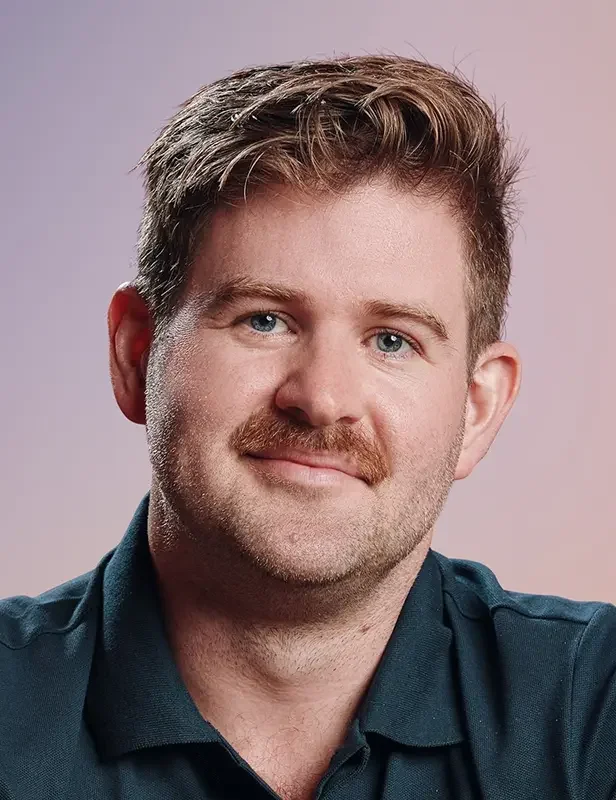
Sam Spurlin
Consultant + Partner at The Ready
Sam is an organizational design and transformation advisor focused on building people-positive, complexity-conscious organizations. For nearly a decade, he partnered with senior leadership teams across Fortune 500 companies, startups, and nonprofits to rethink operating models, leadership systems, and how work actually happens. His work has included engagements with GE, FreshDirect, Pacific Gas & Electric, MITRE, Ritual, Akamai and others. Earlier in his career, Sam consulted with David Allen on the updated edition of his bestselling book Getting Things Done, and published with Dr. Mihaly Csikszetmihalyi on the future of work and positive psychology.
Sam's LInkedInSam's Website
Aaron Dignan

Rodney Evans
Listen now:
Episode transcript:
Rodney Evans:
What I often hear is, "I'm not sure we talked about the right things," to which my reply is, "Why didn't you bring a triage item?" But that's the thing early on when you're accustomed, as I have been in my career to attending someone else's meeting, to going to someone else's dinner party, and then you don't like the food, you're just like, "That chicken was garbage." But when all of a sudden it's potluck and you're like, "There was no salad here." And then somebody goes, "Well, why didn't you bring salad?" You're like, "Uh-oh."
[Intro music]
Aaron Dignan:
Hey everybody. Welcome to the show. This is Brave New Work, a podcast about reinventing our organizations and the search for a more adaptive and human way of working. I'm Aaron Dignan and I'm joined by my co-host, Rodney Evans.
Rodney Evans:
Hello everyone.
Aaron Dignan:
And we are also joined by Sam Spurlin, our colleague at The Ready, employee number one at The Ready. Sam, welcome to the show.
Sam Spurlin:
Thank you very much for having me. It is truly an honor.
Aaron Dignan:
On today's episode, we're going to talk about action meetings, a very particular kind of weekly meeting that we practice at The Ready. But before we unpack that, we will check in, which is consequently the first step of the action meeting.
Rodney Evans:
We will. Hey, look at us. So meta. All right, so we will do a check-in question for today, and the check-in question is what are you recommending to people right now? Let's go Sam, then Aaron, then moi.
Sam Spurlin:
All right, I'm coming at you with two recommendations. One, if you are an iPhone or an iPad user and you don't like the default weather app, get the app called CARROT Weather. It's amazing and really good. And the second is a book from 1980 called A Confederacy of Dunces by John Kennedy Toole. It is amazing.
Rodney Evans:
I want to argue with you about that so bad, but I'll save it for the-
Sam Spurlin:
Oh, it's a very frustrating book and I hate everybody in it, but I very much enjoyed the book.
Rodney Evans:
All right, another day.
Sam Spurlin:
Another day.
Rodney Evans:
Aaron.
Aaron Dignan:
All right, since we've started a pattern of two, I've got two. One of them is a major hat tip to Rodney Evans, which is, I just purchased the iPhone 12 Mini, the little baby iPhone.
Rodney Evans:
Yes, you did.
Aaron Dignan:
And I'm very happy with it. I use it less frequently and it fits in my pocket without sticking out and I feel happier.
Rodney Evans:
I love it.
Aaron Dignan:
So iPhone 12 Mini. Number two-
Rodney Evans:
Fitbit phones forever.
Aaron Dignan:
As you may have heard on the pod before, and you two have certainly heard from me before, very excited about my continuous glucose monitor telling me what happens when I eat food. So those two things people are getting an ear full on.
Rodney Evans:
Nice. That reminds me of one that I hadn't thought of before, which is the Oura Ring. So Aaron has a Oura Ring.
Aaron Dignan:
Strong plus one.
Rodney Evans:
My friend Hollis gave me her old Oura Ring to try out and I like it so much. And so I got a new one for my birthday that is prettier and newer and has longer battery life and I love it. It tells you about your heart rate and your sleeping and your activity levels, and it's a great simple interface. It's really nice. I like it. And the other is from the Content Pocket. If you have not watched Hacks on HBO, just stop listening to this podcast and go watch it. Jean Smart is a national treasure. It is very loosely dramatization of Joan Rivers' life as a comedian, as a breakout female comedian, and I could not have loved it more. It is a glorious season of television.
Aaron Dignan:
So I guess affiliate links in the show notes.
Rodney Evans:
Someone sponsor us so I can stop working.
Aaron Dignan:
All right. That was a fun check-in whoever wrote it.
What is an action meeting?
Aaron Dignan:
Okay, so today's topic is action meetings. And I guess I want to start by asking you, Sam, what even is an action meeting? Where did they come from? How is it done? What's the structure? How would you explain it to someone who's never heard of it before?
Sam Spurlin:
Sure. So it comes from Holacracy, at least that was where I was first exposed to it under a slightly different name. They called it a tactical meeting, but it is just a highly structured meeting type that teams generally do every week or so to get really clear on their upcoming work and most importantly, unblock each other so that we can go into the week or the next two weeks feeling like we have everything we need to go do great work. And you're probably wondering how are you going to talk about a meeting type for an entire podcast episode, but there's a lot here for us-
Aaron Dignan:
Just you wait.
Sam Spurlin:
To chew on.
Rodney Evans:
I can talk about it for a week.
Sam Spurlin:
Exactly. I'm glad that you two are here with me and are equally nerdy about this, but I think it's also really interesting as a bit of a Trojan horse for doing more interesting transformational work within organizations. And that's what I'm actually really excited about. I've seen what can happen within organizations when you start to make these really pretty simple tweaks to maybe a weekly staff meeting and what it can unlock for an organization and it has six steps.
Step 1: Start with a check-in round
Aaron Dignan:
Okay, what's the first one?
Sam Spurlin:
The first step, which you all are very familiar with is the check-in round. We ask a question, everybody goes around and answers it, we build some good vibes, we get every voice in the room and it is a nice way to kick off a meeting.
Aaron Dignan:
Rodney, I feel like you've been training our audience on the importance of this step for over a year.
Rodney Evans:
Y'all, we've been training all our lives for this moment. We don't need to talk about why a check-in round is good, but I had an insight about check-in rounds yesterday because-
Aaron Dignan:
Wow, they keep coming.
Rodney Evans:
I talked to a former client and they have recently negotiated away from doing check-in rounds. And I am personally furious about this, but here's the thing about check-in rounds is even when a year in, it becomes so rote that you don't feel like you need it anymore, just keep doing it. And the parallel that I've been using, I don't know if you guys know that ... If I've said this to you guys both, but you guys know I'm super into crossword puzzles now. It's like all I want to do is crossword puzzles and I will never be able to actually prove to anyone that crossword puzzles are making me better at work or in conversations or more mindful or more present. But I believe that there is a relationship there. The output of check-in rounds in terms of the social fabric of your team and psychological safety and the speed and efficiency of the meeting and the crispness of the next five steps, you will never quantify. Just trust me that it's there and don't stop doing them.
Aaron Dignan:
Yes, it's like working out. You may not enjoy it on Wednesday, but you need to do it.
Sam Spurlin:
Totally with you on that. And I would also just add, if you've been working with the same team for a long time and been doing check-in rounds for a long time, that gives you the opportunity to start busting out the weird check-in round questions.
Rodney Evans:
Yes.
Sam Spurlin:
My favorite one that I've been going to recently with teams I work with a lot or I have used recently is, "What's the best bird?"
Rodney Evans:
I love it.
Sam Spurlin:
That's a question that just breaks people's brains and it's always fun.
Rodney Evans:
Ali asked me this morning, "What would someone think about you from going through your trash?"
Aaron Dignan:
Oh, I love that.
Rodney Evans:
I was just like, uh-oh.
Aaron Dignan:
Yeah, this is a creative writing challenge folks.
Rodney Evans:
Exactly.
Aaron Dignan:
And if you think you're done with check-in rounds, you're not.
Rodney Evans:
You're not.
Step 2: Run a habit review
Aaron Dignan:
Yeah. Okay. What's step two, Sam?
Sam Spurlin:
Step two is we call it either a checklist review or a habit review.
Aaron Dignan:
Oh, okay.
Sam Spurlin:
And the idea here is that it's a good idea for teams to have a handful of things that they're trying to get better at. And in the meeting if the facilitator just goes around and asks everybody a yes or no question, and then we answer yes or no, we get a quick snapshot into how we are doing as a team on that intention.
Rodney Evans:
Habit review is one of those great things if you are a behavioral economist type to just orient people towards something that they commit to but doesn't otherwise have a place for accountability. So it's like when in a retrospective, we notice that we're not great at giving each other candid feedback, but we're like, "What should we do about it?" A very easy thing to do about it is put a habit review question that says, "Did you ask for feedback in the last week?" So it's a great place for those ephemeral things that happen in a group to get grounded in something practical that just brings our attention to it. And people get very weird about habit reviews and they're like, "We should make everyone give an example of what they did." No, don't do that shit. All you need to do is ask yes or no and assume that the transparency and shame and social pressure that it creates will do what it's supposed to do to everyone in the group.
Aaron Dignan:
One of the things that I have broken with tradition on in the tactical meeting, which is one of the reasons why I've started playing with other names for it is the habit review, the checklist review. I have to be honest that sometimes when I'm setting up a team or a rhythm, I don't do it. And usually it's something that I bring in later and regret not adding, but occasionally I will skip it. So again, just like the check-in round, there is an aspect of working out to all this stuff and you should probably just lean in and trust the process.
Rodney Evans:
I agree with that, Aaron. Although I would say I often skip habit review on installation and then add it when there is actually a habit review.
Aaron Dignan:
When it surfaces.
Rodney Evans:
Because I think your instinct is right, because it often feels a little forced or a little empty on day one. But then later when a team keeps doing the same stuff and they're like, "Why don't we ever submit our expenses? We've tried everything." I'm like, "Okay, guys, guess what? There's a sixth step of the action meeting that I've been hiding from you."
Aaron Dignan:
Yeah.
Rodney Evans:
Here it is.
Aaron Dignan:
It's like smothering a burrito once you're bored of the burrito. Yeah, I'm into that.
Step 3: Review your team’s metrics
Aaron Dignan:
All right, Sam, step three.
Sam Spurlin:
Speaking of skipping steps, this is the one that I most commonly skip on installation, which is metrics review. The idea here is that any team likely has a handful of metrics that are really important that tell them whether they're heading in the right direction, and we want to take a moment to quickly review those as a team. And the idea is not to get bogged down in them, not to have a ton of conversation about them, but let's all just look at the latest numbers and make sure we have those in our brains before we go ahead to the rest of the meeting. And the reason I skip it a lot of times is because teams will get so wrapped around the axle, figuring out what their metrics are before they even really know what their work is. So often I'll just skip it, we'll come back to it in a couple of weeks once we've really figured out our projects, once we've really figured out our work, then we can talk about what are the numbers we need to look at instead of the other way around.
Rodney Evans:
Yeah, I do the same thing. People have such a strong mental model for what a metrics review meeting is that is very difficult to break in the first meeting. So they're just like, "Well, let me pull open our dashboard or our monthly financials." And I'm like, "Oh God, please. That's not what I mean." But it's like rather than trying to wrest that away from a group, I do often find that it's easier to let the couple of important numbers that we look at every single week emerge after we've done three or four reps.
Aaron Dignan:
Yeah. It's also one of the reasons why I generally rename this steering metrics because I want-
Rodney Evans:
I like that.
Aaron Dignan:
People to ask the question, "Well, what does that mean? What do you mean steering metrics? That's not regular metrics." And it's like, yeah, we want numbers that are going to help us make different choices week to week and lean in and notice patterns and steer the team or the company. And so that tends to break down some of that resistance. And I agree with you both that the ideal way to roll into this meeting is probably to do its bare minimum parts in week one and then keep layering the cake. But this is one that I do fairly early and just by framing it as steering metrics usually get around some of the static.
Rodney Evans:
Nice.
Step 4: Avoid theater with project updates
Sam Spurlin:
Cool. The next step is project updates. So the idea of project updates is that we as a team have a handful of projects that we care about and we need to do a quick run through just to hear what has changed in the past week. And that is a very specific prompt, very specific question. It's not just chat about your projects for a little bit. It is very specifically what has changed in the past week on these various projects? And we just run through them really quick. If other members of the team have some clarifying questions that they want, that's fine, but we're not here to really exhaustively deep dive each project. We just want to hear what has changed since the last time we met.
Aaron Dignan:
I find that this is one step in the process that teams have a ton of trouble with, and it's because a big part of most weekly statusy meetings is the theater of what I'm about to do. People love to talk about what I'm going to do this week or what I plan to do or what's about to happen or what we've agreed will happen or the meeting that's coming up. I'm totally guilty of that as well because honestly, it feels like shit to show up to your meeting and be like, "Hey team, I didn't do anything on my project this week."
And so in a normal system where that can be penalized or punished, there's this new defensive mechanism which is we spin the future plans into something that sounds like an update and it's a really hard habit to break. So with this one, we often really try to focus on what has happened. If nothing has happened, it's no change and making that safe and okay for everyone right out of the gate and you just have to really remind the team, we're not here to perform, we're not here to lie, we're not here to tell stories, we're just here to describe what happened.
Rodney Evans:
And it gets you so much when a team starts doing that because what sometimes happens is the fifth week of coming and saying no update, someone brings an item in the next section of the meeting that we're about to hear about where they're like, "Hey, why isn't that moving?" And what we sometimes find is it's under-resourced or it's under-prioritized, or what we often find is we just don't actually need it that much anymore.
Aaron Dignan:
Doesn't matter.
Rodney Evans:
We put this thing on the board and then we just keep showing up and servicing it publicly. But part of the reason that it doesn't actually matter that there's been no update in five weeks is because the project doesn't actually matter anymore. So the more you can get real about what is happening and where the effort is and what's moving forward and what's not blocked but is just not progressing, the more interesting this kind of meeting becomes.
Sam Spurlin:
Yeah. And then the thing that I have noticed with teams is that they'll get four or five weeks into doing this meeting type, it'll be going really well. And then finally somebody will say, "We look at these projects every week. Are these the right things we should be doing?"
Rodney Evans:
Every time.
Sam Spurlin:
And then that opens up, and maybe we'll talk more about this later, this opens up so many opportunities for other non-action meeting related conversations to happen around, "Well, what is our most important work that we should be doing? What is our strategy?" And then now you're off to the races doing a bunch of really interesting things, and it came out of the fact that we have to look at these list of projects every week.
Rodney Evans:
And the one other thing I want to say, just in case anyone is going to try this at home, and I really hope y'all do, is when you're building that project list, you want to be specific about the work that is current. So I don't want to see a project on a list that's like sell a new client because that's not a project. That's an idea or an outcome. What we want to get at right now is somewhere between an action item that's just create a list of new clients and a big sweeping outcome. So hopefully it's something more like conduct a retrospective on the last 10 successful clients. That's the project level we're looking for is like it has parts to it. It's not just a thing you check the box on, but it's not something that is big and encompasses many projects.
Aaron Dignan:
Absolutely. It's also worth noting along the lines of what you just shared, that not every project that the team is doing has to be covered here. So the team decides and each individual decides what needs to rise to the level of everyone's attention. And if it's something that I'm doing that's just very bespoke to my role and my corner of the organization and it really doesn't matter to everyone else, I do not need to waste their 15 seconds. It's about what do we all need to be coherent about and how does that drive then the overall vector of the team.
Rodney Evans:
And the very specific prompts I usually use to get at that, is it something that significantly impacts everyone here? Is it something that people here will need to contribute to? Or is it something that you really are going to need feedback on? If it's none of those things, maybe just keep it on your own project list.
Sam Spurlin:
And what is really fascinating, and this is a whole kettle of fish, is that sometimes the answers to those questions, Rodney, a team will have zero projects and they're like, "Wait, we're a team. How do we not have any projects?" But it's because so many leadership teams are teams in name only, and they have not yet articulated any shared work that they should all be aware of. Everybody has their individual silo and we show up to this weekly meeting and we kind of report out on our silos and that's it. And doing an action meeting makes that very obvious very quickly. And then you get to have really good conversations about, "Well, what should we have as shared work as a leadership team? What is the stuff that we should be doing?" And that's where OS Canvas-y type conversations can be really helpful.
Rodney Evans:
That's where the magic happens.
Step 5: Build your agenda in real time
Aaron Dignan:
It's time for the fifth step.
Rodney Evans:
The fifth step.
Sam Spurlin:
The fifth step.
Aaron Dignan:
The fifth and the best.
Sam Spurlin:
So it goes by several names. You can either call it building the agenda or triage, building an emergent agenda. The idea is that together as a team, we are going to make our agenda of the things that we want to talk about, and we are very explicitly separating out the building of the agenda from the talking about the agenda. So the way this works is that in some sort of shared space, a Trello board, a Mural board mural, whatever, a whiteboard, we're just going to put placeholders for topics on a list with the person's initials next to them, whoever needed that item. So you'll see things like two or three words, talk about next week, project A, all sorts of various things like that. And we make a list until we don't have anything else to talk about.
Rodney Evans:
What's the prompt for triage, Sam?
Sam Spurlin:
What do you need?
Rodney Evans:
Yeah, that's right. What do you need?
Aaron Dignan:
What do you need?
Rodney Evans:
And why is what do you need such an important prompt in self-management?
Sam Spurlin:
Because I've got to figure out what the heck it is that I need.
Rodney Evans:
Yes.
Sam Spurlin:
And that metacognition is really important and really uncomfortable for people who have not done it very much.
Rodney Evans:
So much. They hate it so much because often what the need is that they're really addressing is a need to hear their own voice spoken into a room to reaffirm the power that they believe they have. And you can do that in triage, but you have to be clear in a way that that's what you're doing. You have to say, "My need is for everyone to hear me talk right now, or my need is to announce this or whatever." And even just in doing that, I think it brings a level of clarity to our behavior in a group that is usually missing.
Aaron Dignan:
I couldn't agree more. I think this is the part of the process that is the ice cream in the ice cream sandwich. It is the part that challenges the biases and assumptions about what a meeting is in some ways the most because it's done on the fly. So usually we're used to pre-planning the agenda, and usually there's a lot of power dynamics in what goes onto the agenda.
Rodney Evans:
Totally.
Aaron Dignan:
Is this going to make the agenda or not? Am I important enough to control the agenda? Who owns the agenda? All that stuff is now gone because it's just us in the moment. It also breaks all of our thoughts about planning and predicting because we don't care about what last week's items were. We wiped those clean. We don't care what next week's items are going to be. We only care about what is present and alive right now in the moment. And so there's a zen to that. And then as you were saying, it breaks the norms around being really clear with your colleagues about your requests, which is a general self-management trait that doesn't just get limited to the action meeting or the tactical meeting. It gets exposed all over the place. You have to be concrete about the requests you're making wherever you go in a system where you don't have a lot of those traditional structures to take care of you. So it's a wild one.
But what's weird about this one, and I don't know if you two would echo this or challenge this, but I find that while a lot of the other steps get a lot of pushback and a lot of resistance, I find that generally speaking, this step, even though it does have all those disruptions built into it, is kind of well-liked and kind of easy to slip into.
Rodney Evans:
No.
Sam Spurlin:
Also no.
Rodney Evans:
Absolutely not.
Sam Spurlin:
Well, I would say-
Rodney Evans:
Oh, they hate it. They hate it so much until they love it. Sam, you go first.
Sam Spurlin:
Yeah. I was just going to say at first, this is the step that takes the most coaching and cajoling from me usually, because people feel like a triage item is a very specific thing that they have to have really figured out when really a triage item can be literally anything. I need to tell the team a thing, I need advice on a thing, I need a decision on a thing. What do you all think about this? Anything goes and until the team really understands that there seems to be a lot ... And also there's power dynamics. If a team has some messed up power dynamics, then people may be hesitant to add their items to the triage list, especially if the leader of the team has not added anything yet.
But once you get over that, then yes, I agree with you Aaron. This is what keeps an action meeting sticky. This is why teams who really get it don't want to let it go. I think sometimes they could take or leave some of the other phases of the meeting, but this is the one where you really get to have some of that authority, some of that autonomy that people really crave.
Rodney Evans:
Yeah. And I would only add to that in the early reps of this, what I often hear is, "It felt really rushed." And what's really happening is, "I didn't get to just do whatever I wanted to so I felt rushed. And I'm not sure we talked about the right things," to which my reply is, "Why didn't you bring a triage item?" But that's the thing early on when you're accustomed, as I have been in my career, to attending someone else's meeting, to going to someone else's dinner party, and then you don't like the food, you're just like, "That chicken was garbage." But when all of a sudden it's potluck and you're like, "There was no salad here." And then somebody goes, "Well, why didn't you bring salad?" You're like, "Uh-oh, I don't like that at all. Why didn't somebody anticipate I'd want salad?" Well, that's not what self-management is.
Aaron Dignan:
It's funny because I have had slightly different experiences in terms of the willingness or the enthusiasm, but what I also have noticed that is resistant about this process is that it tends to be light in the early sessions-
Rodney Evans:
Yes, so light.
Aaron Dignan:
Where people are not bringing stuff either because there's a psych safety issue or there's a lack of clarity about what to bring or what have you. And in cases that I've experienced personally as a founder or a team leader has been, sometimes it's just me. I brought five or six things because I got stuff. I'm thinking about this business all the time and I got stuff, and then it's like, "Hey, where is everybody?" And so figuring out how to navigate that and how to draw folks out and into this moment, this opportunity I think is actually quite challenging.
Rodney Evans:
I will say I feel like the groups that I've had the easiest time installing action meetings with are groups of engineers, and I think, I don't know. I think it's because they are interdependent teams that make something and they're very accustomed to being like, I am blocked on this. I need you to review this code. This is a thing. And so-
Aaron Dignan:
It's a pull request.
Rodney Evans:
Exactly. So there is something about the way that those teams work naturally that flows very easily into triage, whereas a leadership team just wants to flip the table over and get real mad at me.
Aaron Dignan:
I love that. Yeah. It's like a live PR.
Rodney Evans:
Yeah, exactly.
Sam Spurlin:
Yeah.
Aaron Dignan:
All right, let's do the last step.
Step 6: Tackle triage items and unmet needs
Sam Spurlin:
Cool. Well, we kind of mushed together the building of the agenda and then the processing of the agenda. So if there's anything else to say around processing the agenda, I guess now is the time to do it. The idea here is that we just work our way through this agenda, the facilitator has privilege to pick things off in the order that he or she wants, and we get the person what they need. So if the person needs a conversation, we have a conversation. If they need someone to take on a next action, we see if we can get someone to take that next action. We write it down. And the key thing here is that we really want any sort of decisions around if this is a new project or if this is a new action to be written down in a space where we can all see it and we can all agree that, "Yeah, this is what we talked about and we're not all leaving the room with various implicit understandings of what we just agreed to in the room."
Rodney Evans:
It's so funny, Sam, because you're such a next action head, and I am not at all. I let everybody choose their own adventure on next actions. But I hear you. And I hear you, it's good practice. Two things occurred to me as you were saying that.
One is we didn't talk about the fact that usually we run an action meeting from some sort of shared board that has a column for each of these sections. So your project list is in a column, and then the agenda that you're building on the fly is in a column. And two things to add to that. One is we should be adding agenda or triage. I'm using those words synonymously. Agenda items as we want to have conversations based on all of the sections of the meeting. So a triage item could be, "I want to swap out our habit review question." Or it could be, "Accounts receivable looked really low to me when we looked at metrics. Can we have a strategy session to talk about how we are going to pull that money in?" Or "I noticed that that project is stalled." Or "I know that this project is going on right now, Aaron, and I'm surprised that there's not a project on the board to hear about it. Would you be open to adding it?"
Triage can just be about all of the needs that you bring from your week and your life and your work, but also it can be about everything we've heard to this point, and it can be about the meeting in general. So you can bring a triage item that says, "I think we're spending too much time on project review." And I think one of my clients instantiated a line, a card in the project column that was just a line. And at the beginning of project review, they put the line and everyone who had an update to their project moved that card above the line, and those are the only ones they reviewed because someone brought a triage item that said, "We're spending too much time on project review and we should have more time for triage."
Sam Spurlin:
That's smart. I like that a lot.
Rodney Evans:
Yeah, it was dope. Sometimes clients are the best.
Aaron Dignan:
I'm on a team that added a whole section to this meeting in triage last week. Having a recruiting project update was nice, but really what the group wanted to do was have a deeper exploration of the recruiting topic on a weekly basis to kind of unblock that work more deliberately with a little bit more spaciousness. And so while you could technically handle that with a recurring triage item or a project update, that was really long, the group was like, "Maybe we should have a little 10 minute recruiting section for a few weeks and see if that helps."
Rodney Evans:
I like that.
Aaron Dignan:
So that's what we're doing.
Sam Spurlin:
That's a nice example of how listening to us talk about this meeting, it probably sounds, and it is very prescriptive, but really it's a platform that you can modify and you can tweak it to your own team's needs as necessary.
Step 7: End the meeting with a closing round
Sam Spurlin:
The last step is a closing round or a checkout round, and there are various questions. The default that I usually use is, what did you notice? And my second question used to be, what can we do better next time? And I noticed that this was an opportunity. People would take this as an opportunity to lob a negativity bomb onto the team as we all left. So I changed my default question to what is one thing that I am going to do differently next time or I'm considering doing differently at our next meeting?
Aaron Dignan:
Boom.
Sam Spurlin:
And that way people had to talk about what they were going to do differently and not like, "Oh, I noticed that our facilitator was really bad this week." All right, that's not helpful. Thank you.
Rodney Evans:
Yes. Can I admit something in this trust tree?
Sam Spurlin:
It's only the three of us here.
Aaron Dignan:
There's only several thousand people listening, so why not?
Rodney Evans:
I find closing rounds a little draining. I feel like they're valuable kind of. I don't know. I don't know what my problem is. I do them, I always do them because I know that they're important. But closing rounds for me are the dental appointment of the action meeting.
Aaron Dignan:
I mean the energy is lower, we're on the way out. It's like we're either close to time or over time, and it does feel like sometimes the substance is not enough to justify the time. One recommendation I would make, which is very antithetical to the norm at The Ready, but that I would recommend trying either for you Rodney, or for any listener who's feeling similar vibes is resist the urge to make the checkout round two or three questions and make it just one.
Rodney Evans:
One question. Yeah.
Aaron Dignan:
Because if you just say, "What did you notice in this meeting in one or two sentences?" The whole thing can be done in 70 seconds and it's actually interesting. And often maybe the move there is just rotate. Next week it's, what can you do better? What will you do differently next time? The week after that it's, what did you notice? The week after that it's, what are your plans for the weekend? It doesn't have to be the same, but I think that the genius of the check-in round is always that it's one thing. And it's funny that we kind of violate that on the way out.
Sam Spurlin:
That's a really good call.
Rodney Evans:
Also, I'm realizing as we talk about this part of my beef is that I feel like the energy of triage is always quite high because it's very poppy, and it's very like, "Did you get what you need? Yes. Hell yeah. Move on." And then it's like, "Okay, what did we all notice?" And it just goes from the top of the meeting to the trough. So maybe there's also a thing to play with that is about keeping it bursty, which the-
Aaron Dignan:
Keeping it fun.
Rodney Evans:
One question thing is definitely part of that, but I also think, yeah, maybe making it a little bit more fun more often would be cool.
Sam Spurlin:
The other way that I've made it bursty is if you have nine people in the meeting, instead of making all nine do closing round, usually by the fifth person, you're just hearing the same thing over. I'll say, "Okay, great, we're done. Give me three of you, hit me with a closing round. Here's the question."
Rodney Evans:
Oh, I like that.
Sam Spurlin:
Once we get three people do it, then we can all go.
Aaron Dignan:
That's fun too.
Rodney Evans:
That is fun.
Aaron Dignan:
That's awesome. I like that.
Rodney Evans:
Yeah, I'm going to do that. And then it'll just be a little moment of Hunger Games.
Aaron Dignan:
The other move I've tried on the levity front, because obviously not every closing round needs to be like this perfect retrospective is we're using the Around meeting tool in probably half my meetings now, which is little circular Zoom windows that have the ability to search for an animated GIF and show it. And so sometimes it's like, you know what? We're close to time. Let's get out of here. Let's just everybody just throw up a gif about where you're at, how you're feeling, what's going on, and you just get some funny visuals and then everybody bounces and it's just a way to put a pin in it.
Rodney Evans:
Dig it.
Sam Spurlin:
Cool. Well, that's the action meeting. We did it.
Aaron Dignan:
We did it.
Sam Spurlin:
Beginning to end.
How to time the perfect action meeting
Rodney Evans:
All right, so Sam, recap the steps for us with suggested timing for each, suggested length.
Sam Spurlin:
Okay, cool. Check in round, minute or two tops. Checklist or habit review, minute tops. Metrics review, anywhere from five to eight minutes, potentially shorter if you can get away with it. Project updates, 5, no more than 10 minutes. Again, it depends on how many you have, but it should be far less than 10 minutes. If you are spending nearly half of your time in project updates, you are doing it very wrong. Building the agenda should only take a minute or two. And then the rest of your time, hopefully most of it is processing the agenda. That's my take on timing. So I don't know if you two would agree with that. Then closing round, one or two minutes and never do a closing round if it'll make you end over time.
Rodney Evans:
Never ending over time. Yeah, I think that's about right. My shorthand is triage should be about half the meeting.
Aaron Dignan:
Yeah, exactly.
Rodney Evans:
So fit everything else in the remaining 35 minutes.
Sam Spurlin:
That's smart.
Aaron Dignan:
And in total, I mean we haven't talked about this yet, but if an action meeting takes more than an hour, you're probably doing it wrong. If it takes less than 15 minutes, you're probably not clear on what's going on and what's needed and really unblocking work or it's been a really good week of people communicating well in other channels and otherwise it's usually 45 minutes on balance.
The future of work principles behind action meeting
Rodney Evans:
So obviously we're all action meeting zealots. I cannot really overstate what can come from doing this. I've just seen groups really transform through using the hell out of this structure, and that's because of its intentional and very principled design. So I'm going to throw out a principle that we believe in and I'd like us to just give a quick nod to what about the action meeting brings that principle to life.
Aaron Dignan:
This is fun.
Sam Spurlin:
Excellent.
Rodney Evans:
Something like learning by doing.
Sam Spurlin:
Well, when I teach a team an action meeting, it's not me lecturing to them, it's us getting in there together and talking about their work and we just do an action meeting for their first action meeting. There's no really just chit-chatting about it.
Rodney Evans:
And there's no place really to bring a long PowerPoint and put on a show. If you have information like that and you actually need feedback or input or something, you have to do something about it. You have to send that before and then bring a triage item that says, "I'd like four minutes of feedback." You actually get stuff because you're clear on your needs and you design for that rather than I'm just going to take up airtime to talk at people.
Aaron Dignan:
Well, and I'm glad you said that because one of the reasons that I started referring to this meeting as an action meeting and not a tactical meeting, which is where it originates from, is that I really wanted to focus and center everyone on the idea that this is about unblocking and taking and understanding action. This isn't about theater, it's not about planning, it's not about strategy. It's not about any of that stuff. It's not about governance. This is about action that has happened and that is about to happen.
Rodney Evans:
Yeah. Okay. What about working in public as a principal?
Sam Spurlin:
Well, you mentioned that generally we have a Trello board or some sort of tool that we are using during this meeting. And all of the projects and the agenda that we end up building together and the actions that we decide to take all end up living on this board that we all have access to, which it's a very public way of doing our work.
Rodney Evans:
And you can be going into that board. Part of the reason that I ask for specificity when people name projects is because I like to pop into the board and see what stage things are at without having to ask anyone a question.
Aaron Dignan:
Yeah, what's doing. It's often the first time that a team has visualized their workflow as a team.
Rodney Evans:
Yeah. What about principles of autonomy?
Sam Spurlin:
This is no longer a leader's meeting. When a team adopts an action meeting, it becomes the teams' meeting. And the biggest example of that is building the agenda together in the moment together. It's not about hierarchy, it's about who has needs and how can we meet them together as a team.
Aaron Dignan:
And what a relief it is. I mean, to those of you out there who are managers or founders or leaders, having a meeting about unblocking the flow of work in your organization or your team that you can show up to and not have to be driving the whole freaking caravan is fantastic. And on top of that, it obviously opens up a lot of potential for folks to step up and get their needs met and make their requests, as we talked about, that might be hard, might be challenging, but the meeting does kind of demand it. It really calls for it. And to really lean into it, you have to go to an autonomy place.
Rodney Evans:
That seems like a great place to wrap this episode up. Sam, thank you so much for coming.
Sam Spurlin:
Thank you so much for having me. It was a lot of fun.
Rodney Evans:
It was a lot of fun. And for all of you out there, if you love what you're hearing and you want to hear everything we have to say about meetings and everything else in the world, please leave us a review, follow us, subscribe or forward the show to someone who would love it.
Aaron Dignan:
A quick tip of the hat as always, to Taylor Marvin for making us sound good. I'd also like to tip my hat to Tom Thomison, who taught me the action meeting oh those many years ago. Also, a friend of the show and former guest. Brave New Work is produced by The Ready, where we help organizations around the world change the way they work. You can get in touch with us by emailing podcast [at] theready [dot] com. And as for you, thanks for listening. Now go change something.