
90. Do What’s Essential with Greg McKeown
About this episode:
Original Air Date: November 3, 2021This might sound ominous but…we’re drowning in choices. The internet and its forever-multiplying avenues of information bombards everyone around the world with an abundance (or an avalanche) of choice all of the time. So how do we boil down distractions into key essentials that give our lives meaning? That actually align with what we want? How do we get more of that?
In this episode, Aaron and Rodney speak with Greg McKeown, whose bestselling books Essentialism and Effortless have helped us think about strategy and intentionality in our own work. We talk to Greg about the global state of burnout; about tapping into what we want—and what we don’t want; and about how systems need to get smarter on essentialism.
Tools from The Ready:
Workbook: The Essential Intent Workbook
Mentioned in this episode:
“California Girls” by The Beach Boys
“Back in the U.S.S.R.” by The Beatles
Jim Collins and “the undisciplined pursuit of more”
Peter Drucker’s “Managing Knowledge Means Managing Oneself”
Dumbing Us Down by John Taylor Gatto
In this episode:
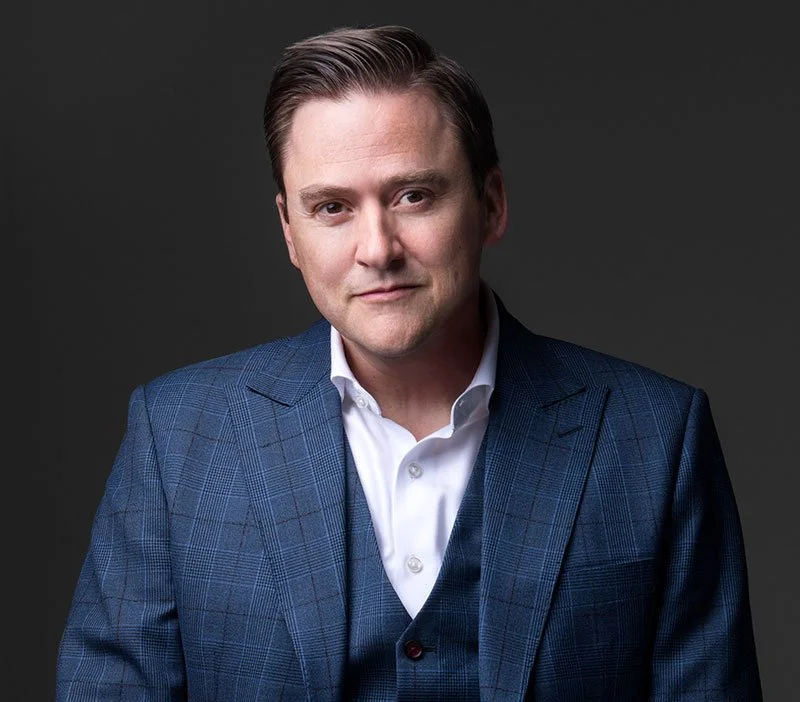
Greg McKeown
Author and Speaker
Greg McKeown is a British-born American author, speaker, and consultant based in Southern California. He is the author of the New York Times bestsellers "Essentialism: The Disciplined Pursuit of Less" (2014) and "Effortless: Make It Easier to Do What Matters Most," and co-author, with Liz Wiseman, of "Multipliers: How the Best Leaders Make Everyone Smarter." McKeown is the founder and CEO of McKeown, Inc., a leadership and strategy design agency. In 2012, the World Economic Forum inducted him into its Forum of Young Global Leaders, and he hosts a podcast focused on essentialism and personal effectiveness.
Greg's LInkedInGreg's WebsiteGreg's Podcast
Aaron Dignan

Rodney Evans
Listen now:
Episode transcript:
Greg McKeown:
One of the clever things he does is he creates buffer in his schedule every day, where he says, okay, we're going to have two hours of time that isn't committed to other people, but is committed to himself. So, he has space to think. He breaks them into four half an hour segments, so it means that he knows to expect the unexpected.
[Intro music]
Aaron Dignan:
Hey, everybody. Welcome to the show. This is Brave New Work, a podcast about reinventing our organizations and the search for a more adaptive and human way of working. I'm Aaron Dignan, and I'm joined by my freshly-back from vacation co-host, Rodney Evans.
Rodney Evans:
Aren't I so tan? Hi, everyone.
Aaron Dignan:
So tan, so much.
Rodney Evans:
So tan.
Aaron Dignan:
We are also joined by Greg McKeown, the author of several books, including New York Times bestsellers Essentialism and Effortless, that are mainstays on the Brave New Work bookshelf, as well as, the host of the What's Essential podcast. So, Greg, welcome to the show.
Greg McKeown:
It's so great to be with you. Thank you.
Aaron Dignan:
On today's episode, we're going to talk about how these concepts, essentialism and effortlessness, can be applied to teams and systems. But before we get into that, we're going to apply ourselves to a check-in round.
Rodney Evans:
We are. We're going to check in. I know I need it today. So, we'll begin this episode like all the others to get present, to hear from each of us, to get rolling with this question. What is a piece of trivia that you love to share at parties? We will go Aaron, then me, then Greg.
Aaron Dignan:
So, one that I have recently been getting into is nerding out about the fact that the rods and cones mix in our eyes are different, and so, we all see color differently. And so, this argument about like is it blue, is it red, is it green, it's a little bit greener more than... It's like, that's all a waste of time because you might literally have a slightly different instrument in your head than I do. And so, we're all perceiving color relatively.
Rodney Evans:
I love that. Also, my husband jokes about this constantly, because he's always like, it is not purple. It's blue.
Aaron Dignan:
I mean, one of you has bad rods and cones at the end of the day.
Rodney Evans:
One of us is right, and it's probably me. Mine is music trivia. So, there is a lot of debate on the internet about exactly what the truth of this story is, but the version that I like is that, after the Beach Boys released California Girls, Brian Wilson said to Paul McCartney, that he couldn't write a better rock song.
And Paul McCartney, then, penned back in the USSR, which if you listen closely, is sort of, chorus by chorus, a spoof of California Girls, and if you listen to them side by side, it is an amazing juxtaposition and joke between those two bands.
Aaron Dignan:
That's so great. Paul answered.
Rodney Evans:
Who's supposedly had a very loving rivalry.
Aaron Dignan:
I love that.
Rodney Evans:
Greg, what about you?
Greg McKeown:
Those are so much more interesting than anything I have to offer. This is the worst. But something that's been on my mind for some reason recently, was talking about the population of countries, which countries have the most people.
Aaron Dignan:
Yeah.
Greg McKeown:
Right? And so, people can predict, number one, right, that's China, predict number two, India. Although, even that, people can't predict how many necessarily.
Aaron Dignan:
Sure.
Greg McKeown:
You know, China's population is now 1.4 billion.
Rodney Evans:
That is astonishing.
Greg McKeown:
India is just behind 1.38 billion, which is just unbelievable. Number three, people don't always know. Number three, United States, at about 330 million. So, huge, huge differential.
Aaron Dignan:
A billion.
Greg McKeown:
Yeah. Yeah. Right. What's number four? Do you know, without checking, no cheating.
Rodney Evans:
I have no idea.
Aaron Dignan:
That's going to be like Indonesia or something.
Greg McKeown:
Oh, dude, it is Indonesia.
Rodney Evans:
Is it?
Greg McKeown:
That's crazy.
Rodney Evans:
Wow.
Greg McKeown:
Well done. What's number five?
Rodney Evans:
So fun.
Greg McKeown:
Okay, can you do number five?
Aaron Dignan:
No idea. Russia?
Greg McKeown:
Pakistan.
Aaron Dignan:
Oh, okay.
Rodney Evans:
Oh. Okay.
Greg McKeown:
Okay. Number six, Brazil. Number seven, Nigeria, Bangladesh, and then, Russia is number nine.
Aaron Dignan:
Wow.
Greg McKeown:
It really changes your sort of mindset of the world. I mean, Bangladesh has 164 million people. That's massive.
Aaron Dignan:
Geez.
Rodney Evans:
That is massive.
Aaron Dignan:
Yeah. I really thought it was Russia.
Greg McKeown:
You could keep going, right, because it's sort of interesting to me, at least. But not as interesting as your great answers were.
Aaron Dignan:
Well, I think everyone's walking away today with some nice new facts.
Rodney Evans:
Everybody's ready to reenter society and go to a party, armed with these wonderful pieces of trivia to entertain their fellow guests.
So, today's topic is essentialism and effortlessness at scale. Greg, we've been flogging your book over here for years, Essentialism. When people who are interested in the work we do, ask me what is the one book to read, yours is the book that I tell them.
Greg McKeown:
Wow.
Rodney Evans:
Besides Aaron's. So, hopefully, that's helped with your numbers. Anyway, let's start by asking-
Greg McKeown:
I've been wondering what that phenomenon was...
Rodney Evans:
It's just me.
Greg McKeown:
... like in the data, and now, I know. Now, I know who it was. Thank you.
Rodney Evans:
Fantastic. You're very welcome. It always gets good reviews.
What is essentialism?
Rodney Evans:
So, I'd like to start by asking you, for those listeners who aren't familiar with your work who I have not sent your book to, what do you mean when you say essentialism?
Greg McKeown:
Essentialism is a way of thinking, it's a mindset. It's to look through life through a lens of what's essential and what's non-essential. Instead of getting conned into the sense that everything is equally important. If everything's equally important, then we just try to rush through life doing as much of it as possible. If you start to sense that a few things are vitally important, but just a few things, and most other stuff is meaningless, trivial in comparison, then, it changes your whole orientation in life.
It's the equivalent of thinking your whole life... It's like you live your whole life in a coal mine, and then, you suddenly wake up to discover, the whole time, it's been a diamond mine. The whole strategy of your life changes because you say, well, now, it's about figuring out those few disproportionately-important things and making sure that we spend time on them disproportionately. That is essentialism.
Aaron Dignan:
That makes sense. And it is something I think we all need to hear again and again and again. The subtitle of that book is The Disciplined Pursuit of Less. And so, there are, I think, a lot of assumptions about work and productivity and innovation and what it means to be a good citizen of this world that might be wrong assumptions that need to be unraveled to do this work.
So, how do you think about the assumptions that most of us hold that we need to let go of to practice that?
Greg McKeown:
The dominant assumption of productivity is non-essentialism, or the undisciplined pursuit of more, to use Jim Collins' term. And so, that's, again, back to the coal mine. It's just going, my job is to get as much from point A to point B as possible. And, really, because of that, I don't think of the work I do as being about productivity at all. It's not about doing more things, it's about doing more of the right things.
And so many of the systems we have set up inside of organizations, inside of teams, inside of family cultures, inside of our own behavioral systems, just based on what I think is broadly speaking a con, we've been conned, and we've set up systems around that con. And the con sounds something like this. If you can do it all, you can have it all. But the con is multi-level because you cannot do it all. That's the first problem.
And even if you can, or if you start to approximate that, it doesn't lead to you having it all. So, both parts of that assumption are flat out and totally wrong. They're just as close to a lie as I can almost imagine. What happens when people try to do that, when they try to live that way is they burn out.
And, in a sense, that's how I think the world is right now, is there's two kinds of people in the world. There are people who are burned out and there are people who know they're burned out. And it just robs people of the sort of fulfilling life that is possible, of actually making progress on the things that matter most, of making a higher contribution in life, of finding joy in the journey all along the way. Instead of what life could be as I just described, people feel stretched too thin at work or at home. They feel busy, but not necessarily productive. They feel that their day is being hijacked by other people's agenda for them.
This is all non-essentialism at play. And so, we have to find it, root it out, replace it with something that more closely approximates the reality of our lives, which, I'm putting forward is essentialism.
Why nonessential things crowd out what matters
Rodney Evans:
So, it's funny, I just got off a call right before this one, where I had this very conversation about who is driving the bus of your schedule. And what I'm curious to hear your take on is, I do feel like most of the people that we talk to in a day, and I include talking to myself in that group, is aware of the dynamic that you're talking about. Is aware of the non-essential that creeps in and that takes over, and that forces us to mortgage our present for our future.
But why do the non-essentials sort of taste so delicious, and why do we fill up on them, so that there's really not a lot of room left for what's important?
Greg McKeown:
Well, there's lots of reasons for that. I mean, the system is significantly-stacked in non-essentialism's favor. Let's take the last 20 years as we've gone from being connected to hyper-connected. There's been, let's say, maybe trillions of dollars now by the major technology firms and the greater ecosystem to make it effortless for us to be distracted.
And it is as close to effortless as almost anything now, Just think of how unnatural of a state that is. Even though it feels so normal now, how much work has had to be put in to building a system that means that I can access any information on Instagram, on Facebook, on Twitter, on social media and so on, or any other app of choice. It could be YouTube or ESPN, endless infinite options.
Aaron Dignan:
Millions, literally, millions.
Greg McKeown:
Millions, literally. This is a tremendous, absolutely massive change in the human condition. Peter Drucker put it that way, he said, in two or 300 years from now, he says, when people look back at our time with a sense of history, it won't be just e-commerce or some particular fragment of technology that will stand out as the news. He said, it is a fundamental change in the human condition. For the first time, almost literally in human history, people everywhere have choices, exponential increase in choices. And he concludes society is totally unprepared for it.
And that's really what it is, I think, at the core here, is that there's been this huge exponential change, and yet, each of us have about the same skillset we had before the change. So, we have not evolved at anything like the pace of the evolution outside. So, even now, the news is still the internet. So, even though, now, we have a whole generation that has grown up with smartphones and with this huge ecosystem, so that we have a sense that we know about it. We really don't. We're still not prepared for what is happening to us constantly.
And you can point to lots of big societal symptoms that illustrate this. And so, one thing we have to now develop an upskill in is our selectivity. Our selectivity has to match the moment, has to be as extreme as the circumstances that we find ourselves in. So it's not sufficient to say, well, I'll just try to be selective about what I do. It's, we have to have criteria that are really extreme in order to be able to find the signal and the sound to find the thing that's actually essential and to pursue it.
Aaron Dignan:
It's funny you say that, because I was reading a tweet from Andrew Wilkinson this week, and he was talking about breaking his dopamine addiction, and the reality that all the things you just talked about that we've created, it's not just that they're distraction opportunities, but literally, that a lot of them have been designed and refined to hijack the brain's dopamine system, and also, to remove friction from doing other things that are very natural for us, like feeling a social obligation to meet with someone when they ask.
And now, I have Calendly, and so it literally just takes a copy and paste of a link, and suddenly, there's a meeting made. The friction out of the former process of that is so much, that I feel like, yeah, the deck is stacked incredibly against us. Even knowing all the things I know and having read the book, I still struggle to overcome that.
Greg McKeown:
Yes, and it's no secret, like I'm not saying something that the companies involved would deny.
Aaron Dignan:
Right.
Greg McKeown:
This, is, whole books have been written, a whole industry exists. And I'm not actually some luddite about any of this.
Aaron Dignan:
Right. Right.
Greg McKeown:
I've spent 15 years working with Silicon Valley companies. I think there's not a major tech company I haven't worked with in some capacity. And what is possible through them is still extraordinary. And so, the question is how are we using it? Are we using it, or being used by it? Maybe, we say it this way, that the technology makes for a good servant but a poor master.
And so, really, that's where being an essentialist suddenly has the power of relevancy because the circumstances call forward different types of leadership, different orientations. I mean, there's a classic example within British history of certain circumstances making Winston Churchill incredibly relevant. And then, once those circumstances, once the war had changed, suddenly, he's thrown out of office because suddenly that approach is no longer the relevant approach.
And in a similar way, essentialism might not always be the strategy, the leadership approach, the self-leadership approach, but it just happens to be that, right now, this is what's called for. I mean, you can ignore it all right. You don't have to become an essentialist. Sometimes, I only half jokingly say, well, look, if non-essentialism is working for you, just keep going. Double down on it even. Don't sleep at all. Just endlessly try to do everything for everyone without really thinking about it. See how it works out for you.
In fact, I remember talking to someone at LinkedIn, an employee there, and we were having a lunch with a few different people, and she said, "My New Year's resolution", this was before she'd heard of essentialism, "was literally to say yes to everyone and everything without thinking about it". Literally, that's what she tried to do.
And of course, I was very interested. I was like, "Well, how did you-
Aaron Dignan:
I believe there's a Jim Carey movie about that.
Greg McKeown:
Yeah. How did it work out for you? And she's just like, "Not well. Not good". So, now that we're on LinkedIn you compare that to Jeff Weiner over at LinkedIn who is an essentialist. I mean, he was CEO there for 10 years, and certainly tries and strives to be an essentialist. He does all sorts of things. One of the clever things he does is he creates buffer in his schedule every day, where he says, Okay, we're going to have two hours of time that isn't committed to other people, but is committed to himself.
So, he has space to think. He breaks them into four half an hour segments. So, it means that he knows to expect the unexpected. He doesn't know what it will be of course, but it allows him to think, and sometimes, it's just catching up on email, or sometimes, it's dealing with an emergency or something that's come up, but it allows his day to not feel frenetic and frantic where he's living it by default. But instead, he's living by design. He's enjoying that journey more.
And so, he said to me, "I've spent maybe one day in a decade feeling just constantly stretched too thin". Like a day. Maybe you just don't believe it, but that's the power that, at least, is possible, from not suddenly saying no to everyone and everything. I mean, I didn't write a book called "No-ism", but where you start to take responsibility for the prioritization of your life.
How to identify and prioritize what’s important
Rodney Evans:
So, on the flip side of that coin, you mentioned burnout earlier, and I think a lot of humans are acknowledging burnout for the first time, even though, certainly, we understand it is not the first time for most people.
That being said, it can be quite difficult without a practice around it, to tap into one's own desires and needs, so that if there is space, there is some kind of voice that tells us what we want and what is essential. How do you generally help people identify their essentials in the first place?
Greg McKeown:
Well, one of my most recent answers to that question came from great books process I'm going through. It's not that I haven't taken learning seriously in my life, but I still find myself appalled at what I don't know. And I'm really on a sort of renaissance experience of trying to do something about that.
And so, reading the Iliad or the Odyssey, Crime and Punishment and trying to get more archetype, like an architectonic view of the world, so I can understand it. And in that process, came across really fascinating insight from Socrates who was, of course, known at one time as the wisest man in the world, which he refuted, but then, made this point. He said, "But if I am, it's because I've always had a demon with me," like demon damon, but not quite how we'd normally think about a demon now. "But there's somebody with me, and the damon never tells me what to do, but always tells me what not to do".
And that was literally key, it's well-documented, key in a whole variety of decisions that he made. And the whole... I mean, the word decision comes from the Latin to cut or to kill. So, the idea that a decision is what you say no to is inherent in this example from Socrates.
And so, that's, some ways, what I want to say to people now, is don't even worry at first if you don't know what it is, if you don't know what is essential today. At least start paying attention to what it isn't. And just, when you know what it isn't, don't go that way.
I had an interesting experience with this. I was in... Well, you can cut this out if you don't want it, but it was a story, I was teaching essentialism and effortless to a group of senior leaders. And one of the practices I taught them, and then, did myself that day was, today, what's the most essential thing you want to do today? If you could only get one thing done today, what would it be? And then, underneath it, to say, let's say three why's. Why is that important and why is that important, and why is that answer important?
So, you're going deeper into the reasons your thing matters so much. And my most important thing was to get home safely and well rested to my family. That was the priority goal for the day. And that was insightful for me in some ways, but the why became more insightful, and I realized, well, if I don't get back there well rested, I'm going to miss what really matters.
And so, getting into the why, I think, is helpful. It turned out that that was more interesting than I expected it to be, because as I got to the airport that night, it was also the middle of storm Ida. I got completely stuck in the airport. You couldn't get out. You couldn't fly out. They closed the tower. It wouldn't cancel the flight, everyone was just... I mean, people were not, let's say, on their very best behavior.
You have water coming in through the roof, you got flooding on the streets, the police closed the roads and the highways. After a while of all of this going on, I'd managed to get a reservation at a hotel that you could see from the airport, and I thought, well, if I just get there, then, I'm going to get a good night's sleep, then, I'll be safe and it'll be fine. And I took not unreasonable steps, but persistent steps to see if there was a way to get there. And you just couldn't get there. And I tried... eventually, somebody said, "Well, if you just take this one road, it's a 10-minute walk and you can make it there", and the weather is raining, but nothing worse than rain, it appeared.
And as I went to take the steps forward, maybe I took 10 steps forward or so, and then, I could feel this clarity, do not do this. And I still just sort of ignored it and took another few steps, and I felt it again, very clear, do not do this, a sort of damon experience, right? This is what Socrates is talking about. And so, I don't know what would've happened if I carried on that journey. I followed it. I went back, retraced all my steps, took the air train back to the terminal I'd been in before. Waited out. Everything was fine, everything was safe, got home safely and well rested in the end to the family.
That's what to listen to. To know what's essential, to listen to... Don't over-complicate that. You already know something about what's important, but especially pay attention to what not to do. And if we get quiet, that's inside of us, I think.
Aaron Dignan:
So, it sounds like you've just described a kind of intuitive version of the explore–eliminate–execute process that you outlined in the book. Would you add anything to what you just shared to flesh that out more?
Greg McKeown:
Well, explore, eliminate, execute is a mechanism for making decisions around what matters most. A non-essentialist tends to explore less than an essentialist, paradoxically, because a non-essentialist just grabs onto the latest thing and tries to go big on everything.
Aaron Dignan:
Right.
Greg McKeown:
And an essentialist is considering, really broadly, learning broadly but committing selectively. And when they select, they go big and for a long run. It's like Warren Buffet when he's trying to make decisions into what to invest in. He knows he can't be right hundreds of times. He always knew that from the beginning. For some reason, he understood that at the beginning of his career. And so, he said, my job is just going to be to explore perpetually. And that's what I do all the time. That's what I spend my life doing. That's what Berkshire Hathaway does.
We're not interested, he said later, in taking, leaping over seven foot fences, we want one-foot fences we can step over. He described their investment strategy as bordering on lethargy. Of all words to use for the most successful investor in modern history, lethargy. But that's the idea, is that you're exploring until you know exactly right. If it's not a clear yes, it becomes a clear no. And when that thing is clear, he says, we just go big and we keep it for the long run.
And in his case, what it means is that they're eliminating 99 out of a hundred things more. The ratio is probably even lower than that. He says the difference between a successful person and a very successful person is that a very successful person says no to almost everything. And so, he's exploring, he's eliminating constantly. And then, when it comes to execution, he wants the right people, the best managers in the world and the best-run companies in the world. And then, he says, we work with people we trust and we trust them completely.
So, when you get to execution.... Think of the way that he executes in comparison to most people. When he decided... Now, this is, now, we're into sort of more effortless territory. It's a story that I captured in there. When Berkshire Hathaway was interested in buying McLane Industries from Walmart for 20 something billion. So a massive purchase, right, by any estimation.
And, I mean, just think of how hard that execution would be, just from doing your due diligence. You might spend six months with a whole team of lawyers, going through every contract, every lien, every number in the book, to make sure that it is as you've described it. And instead of all of that millions of dollars, all you'd expect, he said, and to me, this is pretty breathtaking, he said, "We have one meeting for two hours and a handshake". That's it.
We knew that Walmart would have it exactly as they said it would be, and they did. And that's where you suddenly, it all starts to make sense. Instead of jumping in, committing without clear thought about who you're working with or what you're going to do as a non-essentialist does, instead of just trying to do it all and never eliminate anything, as a non-essentialist does, and then trying to force the execution when things don't start to work as you wanted them to, so you're constantly kept off balance. And repeating that again and again, you see this alternative approach: explore broadly, eliminate extremely, and then, have your execution as a result just flow effortlessly to you for a long, long time into the future.
Warren Buffet's a good example of the explore, eliminate and execute structure I write about.
How essentialism changes across life phases
Aaron Dignan:
He is also a good reminder for me of a question that I wanted to ask today, which is, Warren Buffett's a pretty old dude, and I find that the arc of a life changes what is essential, but it also changes what you have the ability and the option to say yes and no to. And I feel like I've noticed, at least, somewhat a pattern in my own life of more "yes"es as a young man to things, just to find out, sort of as an explorer, if you will, but like a broader life stage of explore, and then, more of a need for "no"s after you have achieved a few things and have found that you now have a lot of options and a lot of possibilities.
How do you evaluate that, or how would you counsel someone at different ages how to relate to the idea of essentialism? Or do you see that it's the same throughout?
Greg McKeown:
I certainly think that the application will be different, not just through the age differences, but every circumstance, what's important now will be different to me than to you and all through our careers and so on, but the questions are the same. And what you're trying to do, of course, is explore, be open without getting too committed too fast. Explore until you go, "Yes, that's definitely the right path for me."
And that can happen very young for somebody. One of my daughters, for example, was certainly not older than 10 when she had... She's asking all these questions. I mean, it was in the air, what's your highest point of contribution? What would you do if you could do anything? What are you built to do? These selective questions were in the air because we talked about them all the time, and she once left as a note after she'd gone to bed late, she'd stayed up brainstorming this. And she had had this eureka moment, I want to be a director, and I've always wanted to be a director. I didn't have language for it until now. She's young having this insight.
And that was deep in her. And ever since, that is what she has done. That is what she's pursued. So, she's able to continue the explore-eliminate-execute within a known field. And of course, that's to tremendous advantage, because it means she's able as a teenager to do internships with film crews. She's able to... When she goes to college, which she is now at university, she's immediately within the first month of being at university applying to the media arts program. She knows that already. She's already done most of the GEs she needs to do, because she knows what the focus is. It's a tremendous advantage.
It doesn't mean you stop exploring, eliminating and executing. It's just that you get to do it more efficiently within the thing that you feel drawn to do. And so, I think that what I really would encourage people to do, wherever they are in their lives and as young as possible, is to ask these questions. Because the current school system does not require it at all. Does not ask it at all. And so, the inefficiency is really immense and discombobulating.
Aaron Dignan:
Well, good factory workers don't ask questions, Greg, so, it's...
Greg McKeown:
Yeah. I mean, there's a... I don't know if you've, you've read, I think his name's... Robert Grotto, I think, is his name. I'd just been reading one of his books recently and it's like the underground story of American education. He was... I think I'm getting this right, three times teacher of the year in New York City, I think, and twice Teacher of the Year for the state of New York. Right? So, like, you know, that's something.
Aaron Dignan:
He's a good teacher.
Greg McKeown:
And then, at the end of that, he writes an op-ed saying, "I quit," I think. And he went on to spend 10 years, at least, 10 years writing the book I'm currently reading, about the underpinnings with the origins of the current education system, and it's just... I mean, actually... once I started reading it, I found myself having a physical reaction to it, like almost... I won't say shaking, that sounds a bit too dramatic, but my body was having a sort of vibration of something like anger.
Because I realized, even just from my own experience, what he was describing that we've constructed an educational system... Yes, as you say, it's a factory based system. I mean, that's pretty clearly true, but also, a system that disconnects everything so that if you wanted to confuse somebody, this would be a good way to do it. Because nothing is connected. So you're just really doing exams and test-exam, test-exam. There's a sort of process to this, and they're all separate. Your history is over here, and mathematics is over here, and your sciences are over there, as if this is all separate, and none of that's true.
I mean, this is all... The world isn't separate in that way. And then, you separate them into classes of equally-aged people, and then, you put them in rows. I mean, that's not what learning is. He contrasts an example... I'd never heard of this example before, but of the founder of Virgin Empire, Branson, Rich Branson, his mother, he's always talked about his mother. I've heard him talk a lot about her. But apparently, when he was seven years old, she just dropped him off a long way from home, and just dropped him... Seven years old, and said, "Okay, your job's to get home".
Rodney Evans:
That's amazing.
Greg McKeown:
No mobile phone, no technology, right?
Rodney Evans:
Right.
Greg McKeown:
Just, you go home. And it took him like eight or nine hours, I guess, to come home. But by the time he was home, he knew stuff. He understood how things worked, and he knew how to ask people stuff, and all of this. Now, that might sound just too extreme, but the idea that you don't have to wait until someone's 35 to start actually asking the questions about what really matters to somebody's life, and you don't have to wait until you're a third done to even be grappling with them. You can start at the beginning.
Whatever moment you are in life listening to this, you should be asking these questions. That the saddest praise I have received in writing Essentialism was from a man who wrote, "I wish I had read this book 50 years ago". He meant praise by it, of course, there is some praise in it I think, but really, it's a tragedy, too. And we can just start now, what is my essential mission in life? What isn't it? And if it isn't this, let's stop doing it, and pursue and said something that is really within me.
It took me until I got to law school to discover that. I quit law school because I just had no interest. I wanted to teach and write within the field of self-leadership and potential. And life is so different once I ask the right questions. It's been a totally different type of life. And so, I think that that's what I would say, wherever you are, start asking the questions now, and it really let them lead you, rather than just a race to nowhere. I've got to get the grades to get to school, to get to college, to get a job, to what? To get to middle age, have the crisis and ask the questions then.
Rodney Evans:
Absolutely. Absolutely. And there's so much social pressure around those particular hardened paths. It's incredibly difficult, I think, for people to even take the space to question, and to pause and say, what if the road, journey that has been laid out for me since I was in utero is not the one that is the pursuit of my life? So, I appreciate the provocation to start that early and often.
How Essentialism and Effortless work together
Rodney Evans:
We've been talking a lot about Essentialism, and that book was published quite a few years ago, in 2014, and Effortless has just come out a few months ago. It does feel like those books are companion pieces, and we just wanted to hear from you, how you conceived of Effortless and how you see those books sort of talking to each other?
Greg McKeown:
Essentialism in one word is prioritization. Effortless in one word is simplification. Essentialism is about focusing on the right things, and Effortless, about doing them in the right way. And that really matters, because the way we approach what we do is as important as what we do.
There's a lot of people who know what's essential but are overwhelmed by it. So, they either start down the path and give up, or they do like we do when we see a PowerPoint slide that has too many words on it, it's like 500 words on it. You don't read 300 words and give up, you just do a pre-scan like, am I ever going to read this? No, I'm never going to read that. And it's like people pre-scan essential intent, essential goals in their lives. They pre-scan, oh, no, I cannot do that. I know I'm supposed to exercise. I know that would be really good for me. I just cannot do that. That's way too much.
And so, they give up often before they begin and they give themselves up instead to the trivial, and that's one way of thinking about this paradigm, is that people are trapped between the trivial things that are easy and the essential things which are hard. And of course, sometimes, the essential things are hard. I mean, I sort of get that, but sometimes, we just make them harder than they need to be.
In fact, we believe, the more important thing is, the harder it will be to do it. And so, of course, we signal to our brains to search for strategies that approximate that. I was just talking to somebody just recently who... I said, "Okay, what's something essential for you that you're investing in?" And he said, "Well, eating healthy, especially for lunch". I said, "Well, tell me what happens". "Well, I get to noon and I'm hungry and I don't eat. So then, by 2:00 or 3:00, maybe, 3:30, I'm so hungry, I, then, go and get fast food".
Rodney Evans:
Mm, right.
Greg McKeown:
I say, "Okay. Well, how could we make it effortless to eat healthy?" He said, "Well, I could probably get one of these apps, where I just get the food delivered, healthy salad delivered every day at set time". I say, "Okay. Microburst. You're allowed to have 10 minutes to make progress on it. What could you do in 10 minutes of focused effort? Time yourself to do it, what could you do?" And there's this long pause and he's like, "Oh, yeah, I could do it all. I could find the app, sign into it, select the food, put in my payment information and be done. I could literally have it done within 10 minutes". I said, "How long has it been a problem?" "10 years".
So, that's an illustration. And what we're up against when we hear these words, like effortless and easier, is quite a strong compelling thing inside of us that says, "No, it can't be like that. That's not how it is. The world isn't like that". And that's partly because of a Puritan ethic that doesn't just value hard work as a virtue, which, I think it is a virtue, but where it goes too far in distrusting the easy. There can't be an easy solution.
I mean, think of what that does. Think of how many options are suddenly off the table for, otherwise, overachievers, for insecure overachievers. They suddenly over-complicate everything. Everything is harder than it needs to be, because they distrust it. And this idea like easy is not the same, does not equal lazy. Easy is something that doesn't require a lot of effort. Lazy is that you aren't willing to put in effort.
And so, that mindset shift where we start to say, well, what if there is an easier solution? And what if I'm open myself to that? That can change everything. I mean, just think about what would happen... For people listening to this conversation. If the trivial things became harder and the essential things became effortless, what would that do? What would life be like? That is the premise for effortless. And I think it has the power of relevancy right now, because of what I call now the 10x dilemma. Everyone wants 10x better results. Nobody listening to this, literally, no one listening to this, can work 10 times harder.
So, if you want to break through to the next level, but you're already burning out, you can either give up on your essential goals, and a lot of people do, or you can find an easier, smarter, better, lighter path. And I think that matters.
The trade-offs behind a sustainable work week
Rodney Evans:
So, Greg, in Effortless, you share, "Do not do more this week than you can completely recover from this week". I love it. And for what it's worth, and personally, probably, a better practitioner of this than most, what do you see this looking like in practice, and how do we see systems getting smarter about making trade-offs so that that's possible?
Greg McKeown:
Well, I don't think societally we have been smarter about this at all. The only real good news I can see over the last 18 months, is that the leaders I speak to and the CEOs I talk to, suddenly, the idea of wellness really is on their top three list. So, for out of necessity, there are many leaders who are much more serious about this, because they can see it's mission critical.
But I think that a lot of the pandemic has actually removed the kinds of boundaries that would help us, yeah, the very few boundaries that were left pre-pandemic were gone. And so, this is why people say, well, it wasn't that I was working from home, it was that I was living at work, where they live in a Zoom, eat, sleep, repeat-lifestyle. Look at their Fitbits at the end of the day, and it says 300 steps.
Rodney Evans:
Sure.
Greg McKeown:
That's the lifestyle. So, the rule of thumb that you've mentioned, I mean, you can start even simpler, which is, just don't do more today than you can recover from today. And, of course, you violate that. We do. But if we violate that over time, it is close to a hundred percent predictable, that you will burn out and you won't even know it. You'll just start burning out your own discernment, your own health, physical health. Your relationships will start to become harder. Your discernment at work, what projects take on will become harder.
And so, the simple things to do is, in addition to the rule that you've already mentioned, to have boundaries to say, "Well, what are the things that, once I do them, I can be done, I will feel satisfied? These are the most important things. And once they're done, I say, okay, no more sneaky work."
My wife and I use that language, like, if we're going to go sit in the hot tub, let's not be on our phones or buying something on Amazon. We're just going to actually relax, recuperate, repair. And it's like a slingshot for the next day, because then you are hitting the next day with better discernment.
I mean, most of us have experienced this at least sometimes, that difference between that feeling of, you've lost your keys, you're exhausted, you get an email from your boss and irritates you, it sounds critical. And daughter asks you, "Can you help me braid your hair?" And you resent that. That's sort of the sense of your life. And then, you eat a good meal, you have a hot shower, you get a good night's sleep, and look at how different the world is. Look at how different the experience is.
You find your keys right where you left them. You can respond to the email with grace. You totally understand their intent now. You interact better with your family. I mean, this is sort of the difference and the value proposition of living the rule that we just said, like don't do more than you can recover from today. That means having a boundary. It also means, actually, developing the rest and recuperation competency is to rest and relax like it's a responsibility. Because it is.
Aaron Dignan:
I have a bit of work to do in that arena. So, it's a nice-
Greg McKeown:
Yeah, you laughed twice.
Aaron Dignan:
It's a nice message at the right time. Right.
Rodney Evans:
It's an avoidance laugh.
Aaron Dignan:
It is. It is. It's an "I feel seen" laugh.
Greg McKeown:
It's not... I feel seen, it was a like I've been found.
Aaron Dignan:
Right. Found out.
How organizations discover their essential intent
Aaron Dignan:
I do want to... My own issues aside, I want to zoom out for our last conversation here, because we do spend an enormous amount of time on this podcast talking about organizations, and we've spent a lot of time in this conversation talking about individuals and their journeys. And no conversation with you would be complete for us without a discussion of the concept of essential intent.
And in your book, you outline this framework that kind of pulls apart and clarifies the distinction between vision and values and quarterly objectives, and this new concept of essential intent. And we have, since then, no exaggeration, spent countless hours with teams and leadership, talking about what their essential intent might be. But because it was about two pages of your book, we've had to invent a lot of the way that conversation goes.
So, I wanted to finish the conversation today by asking you, how do you talk about that concept with organizations, and what have you learned about how to do that right?
Greg McKeown:
Well, the first is to be really clear with people about what it isn't. And what it isn't is most vision, mission statements, right? Like that's what not to do.
And that doesn't mean people shouldn't go through the process of creating vision and mission statements.
Aaron Dignan:
Right.
Greg McKeown:
In general, I find companies will have a healthier culture if they have done that than if they just haven't even taken the time to do it.
But the problem is is that most vision and mission statements aren't fit for purpose. And the test is, would the most junior person who is newest to the organization be able to govern themselves in making trade-offs between one activity and another based on that statement?
And if the answer's no, well then at some level, well what's the point? Why have a general statement there at all? What does it do if it doesn't inform decision, if it doesn't inform trade-off? So, that's the test. And that, of course, is the hard part of creating one, is that you actually have to make trade-offs. The problem with vision and mission statements aren't that they don't use the English language well, it's that they didn't make the trade-offs. They didn't actually decide anything. So, they just made, you know, "Well it's a nice general thing that we all agree with. Okay, let's just put all those things."
Well, that's not what you're going for. You're looking for great wrestles, compassionate debates, and it requires a culture of listening. And none of these things are things that people are actually good at. And so, as I've tried to work with organizations, you can make a lot of progress in quite a short amount of time if all the right decision makers are in the room, and if you create a kind of Mad Lib structure.
And the Mad Lib structure is the following, verb, population, outcome, date. What do you do? What is the priority thing you do? What is your competence? Population. Who is your priority customer? Of course, everyone wants to serve everyone. Internal clients, external clients, stakeholders, everybody. But who's your priority customer?
Like let's look at all the different stakeholder groups, and you prioritize them. Of course, it is easy to say they all matter. Well, yeah, of course. The question isn't whether lots of things matter. The question is if they are at odds, if you must make a trade-off between them, what trade off will you make? So, it's a prioritized list of your customer groups, so that you can clearly state your highest priority customer. And the same can be done... You can do this for each of the Mad Lib sections, right?
Verb, what do you do? Well, there's 10 things you do. Okay, fine. Put them all there. But prioritize them. Customer groups, okay, all the customers. Now, prioritize them. Outcome. What is the priority thing you do that each of these customer groups gets from you, from your service? What's the most important thing to them? And then, the date is a questionable thing in some ways, because... But it is helpful.
It's saying... It makes it into a tangible goal. Like within two years, we will have achieved this. Within three years, we achieve this. Five years, 10 years, whatever. Suddenly, it takes it out of the realm of general and into the realm of specific what we really mean to do, what we're trying to achieve. I think that's the structure that helps people think through this fastest.
What I have noticed is that, even when I work with a team and they make a lot of progress in that first conversation, it's not that I expect them to have total clarity within a few hours of work, but I noticed that if they go forward without facilitated help, they will end up making a really general statement at the end. They'll still tilt back to that.
And I've had it sometimes where somebody will reveal a statement to me, go back and work with a company on something, and, oh, we worked on this for months. Here it is. And that can be an awkward moment, right? Because it's like, yeah, you've made a great general statement of vision. Okay. That's not an essential intent. It's a good thing you've done, but it's not an essential intent.
Essential intent has clarity to it, what you are going to do, what you aren't going to do in that priority order? So, I find the Mad Lib structure is helpful, but you just have to keep bringing people back to that.
Aaron Dignan:
I love that. And I think it would be apropos to, now, as a refreshed essentialist, draw things to a close with that insight and that reflection. Greg, where can our listeners find out more about you and your work?
Greg McKeown:
I've been thinking a lot about how to help people listening to this have a sort of a system, and we're only in phase three or four on a 10-phase plan, but there's a free set of resources, right? A one-minute Wednesday newsletter. People can sign up for it, gregmckeown.com. There's an academy now that we're building, essentialism.com, and people can be part of that community.
There's a podcast, the What's Essential podcast, so that's a weekly touchstone to be able to help bring them back to how to do what's essential as effortlessly as possible. Of course, we are utilizing social media platforms as well that people can get a daily, you know, trigger, a queue for this type of thinking. Those are some of the tools that we've tried to create, to create the support people need, because, otherwise, they'll get dragged back into the undisciplined pursuit of more.
Rodney Evans:
Awesome. So, for all of our listeners, go pursue less. And Greg, to you, thank you so much for coming and joining us today.
Greg McKeown:
It's been my pleasure. Thank you for having me.
Rodney Evans:
For all of you out there, if you love what you're hearing and all of our illustrious and brilliant guests, a review would mean so much to us, or even better, forward our show or Greg's websites to somebody who needs them.
Aaron Dignan:
And last but not least, a quick tip of the hat to Taylor Marvin for making all three of us sound good today. Brave New Work is produced by The Ready, where we help organizations around the world change the way they work.
Get in touch with us by emailing podcast [at] theready [dot] com. And as for you, thanks for listening. Now, go change something.