
Depthfinding Ep. 2: The Sky - Threats and Opportunities
About this episode:
Original Air Date: January 27, 2025In this miniseries, we’re exploring Depthfinding—an easy-to-grasp framework designed to help leaders and teams solve their gnarliest cross-functional challenges.
This week, Rodney and Sam look at the Sky—the external forces like market shifts, technological disruptions, and political changes that shape your organization. While most companies are comfortable staying heads-down in the day-to-day, failing to look outward creates costly blind spots that lead to org debt, misaligned strategy, and even existential risk. Cultivating a regular practice of looking up and outward is the key to successfully meeting this moment, and all the ones to come.
This episode’s theme music is Yaggadang by BG & Coyote Radio
Downloadable tools mentioned in this episode:
Workbook: The Depthfinding Starter Guide
Workbook: The Essential Intent Workbook
Session: Free Sky Practice
Mentioned in this episode:
“building a bridge to the next thing”: AWWTR Ep. 43
operating rhythm: BNW Ep. 118
liberating structures: BNW Ep. 49 with Keith McCandless
“red team”
Essential Intent: BNW Ep. 90 with Greg McKeown
In this episode:

Rodney Evans
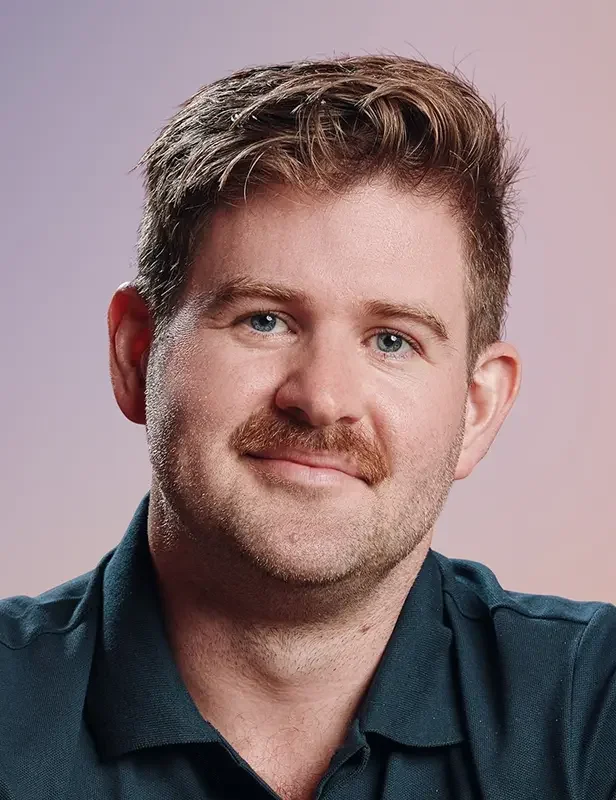
Sam Spurlin
Listen now:
Episode transcript:
Rodney Evans:
Hey everybody. Welcome back to the show. I'm Rodney Evans and that guy post-vacation is my co-host Sam Spurlin.
Sam Spurlin:
So refreshed, so just ready to go.
Rodney Evans:
Back from that cruise life.
Sam Spurlin:
That's right.
Rodney Evans:
I love it. We didn't get to really talk about what you did on your cruise, but I'm imagining drinking out of a coconut and playing shuffleboard on the lido deck. Am I close?
Sam Spurlin:
You're not too far off. I mostly just hung out where the free hot dogs were.
Rodney Evans:
On brand. Well, welcome back to At Work With The Ready. This is a podcast about modernizing organizations as the future of work meets the present moment.
Sam Spurlin:
And this is our second episode of our mini-series on Depthfinding.
Rodney Evans:
Yeah, I just listened to the first one and I really enjoyed it, so I'm looking forward to getting into it again. But before we dive in, we must check in. Sam-
Sam Spurlin:
Must.
Rodney Evans:
... what you got?
Sam Spurlin:
What I got for us is what did Jack get You for Christmas?
Rodney Evans:
I love that we're doing this, because Jack doesn't know and he has no control, and he's already left the recording room, so he can't stop us.
Sam Spurlin:
Yeah, exactly.
Rodney Evans:
Jack surprised me with a very large box that was a variety pack of small Deep River potato chips. One of the topics that Jack and I bonded over earliest on in our friendship/co-workership was our shared love of potato chips. And if you could see the number of text exchanges that Jack and I have had sending each other photos of potato chips, it's a lot. 20% of our relationship content is potato chip based. So I'm working my way through the Deep River snacks and the unboxing video that I sent to you... like I could not have been more thrilled.
Sam Spurlin:
It was maybe the happiest I've ever seen you.
Rodney Evans:
It was the happiest I've ever been.
Sam Spurlin:
Nice.
Rodney Evans:
What did Jack get you for Christmas, Sam?
Sam Spurlin:
Well, there's a theme here, a food-based theme, because Jack bought me something that I didn't even know existed, which is a Snickers as big as my forearm. It was a loaf of Snickers, basically you have to cut slices off of it. And boy howdy, have I been cutting slices off of it. I have discovered that this is not a thing I can keep in my apartment, because I just keep it out on a cutting board and as I walk by, I just cut off almost entire Snickers at a time and that is not a thing that should become part of my routine.
Rodney Evans:
Yeah, that's not just like finger food.
Sam Spurlin:
No, it's not. And I literally today just finished the second one.
Rodney Evans:
Wow. Well, our presents were as thoughtful as Jack always is and also so delicious, and not the most healthy. It doesn't matter. No, because we're having a great time.
Sam Spurlin:
Thanks, Jack.
Rodney Evans:
Thanks, Jack.
Why companies struggle to sense and respond to the external environment
Rodney Evans:
So this week we are going to talk a little bit about the Sky. If you remember from last week, that's the weather that's floating above your ocean in Depthfinding. And specifically we want to talk about the pace of change in the Sky, because what we find in our work is that the external forces that are acting on your organization, whether that's technology, changes in the labor market, changes in the political climate, changes in the actual climate, things are moving out there faster than we are able to adapt in here.
And that disconnect, I mean I would argue, is a huge reason for organizational change, for organizational transformation, for organizational debt, for tension, for burnout, for a million other things. What we know is that responses to what is happening in the Sky are always cross-functional, as are the strategies that are going to be required to really adapt to any kind of force like the one that I mentioned. But our organizations are not really designed to do that and know your matrix reporting structure will not save you, nor will your OKRs. So we're going to talk today about how these sort of novel problems addressed with trad moves are just making everything worse. And that's sort of the primer, that's the lead in. So I guess I'll just start by asking you, Sam, what do you see particularly in your client work around the Sky stuff?
Sam Spurlin:
Yeah, so a thought that I had literally for the first time as you were just doing that lead in there, is that I think this metaphor of the Sky in the zones is great, because the sky in actual life, I think most organizations don't think about it very much. It's always there and it's always affecting things, but very rarely, maybe only when things are particularly difficult, do we actually become aware of what is happening around us. And that's the overarching thing that I see in most of the clients that I work with, is just a general lack of conscious attention and time spent on trying to understand what is happening in the Sky and why.
Rodney Evans:
Yeah, I agree with you. I see the same thing. Why do you think that is?
Sam Spurlin:
So two things come to mind for me and I think they'll probably show up in a lot of the examples that we talk about today. One is that I think most organizations are so well suited to consume all available attention on internal stuff. Just being a person in an organization will take up all of your attention and none of it will be left over for the stuff that feels outside of what you have to deal with on your day to day. And then, the second thing is that I think sometimes we avoid Sky, because if we're truly interacting with and understanding with, and trying to make sense of what is happening in the Sky, we will be forced to ask very uncomfortable questions about what we are and aren't doing in our organizations. And I think a lot of times we'd rather just let sleeping dogs lie and not take a look up at the Sky, and just operate with the inertia that we naturally have in most organizations.
Rodney Evans:
I think that's true, and I think the hard reality is of being in, especially a leadership role in any business, is like every business decays. It just does. And the way that you know how it's going to decay is by paying attention to what's going on out there. And the way that you build the bridge to the next thing is also by paying attention to what's going on out there. But in order to do that well, you have to at least admit that your thing that has been successful or gotten you to this point, or whatever, is going to die. Everything does.
And so, it's like I was asking a friend who's an exec at a company for advice about a particular problem that I was having, and she was like, "I just don't think that the person that you're describing is paranoid enough for being in that role." And she was talking about external paranoia and I don't think that it is useful or healthy to be in a position where you believe that the sky is falling. Nobody wants that and you also don't want to be like the Kodak story that misses the digital revolution.
It's not that hard to miss. To your point, day jobs are busy. Our organizations, particularly older organizations which is a lot of our clients, are so rife with process and bureaucracy that was built for a different age, that was built for the Information Age probably, but even in some cases the Industrial Age. All of the time and attention of leadership is generally going to servicing the organization so that it functions in squeezing as much possible value out of the existing core business as possible. And then, whatever is maybe left over gets thrown at what the fuck is going on out there?
Sam Spurlin:
That's why we have an "innovation team." Don't worry about it.
Rodney Evans:
An innovation team or why we have a strategy consultancy to tell us what signals to pay attention to. And we're going to talk about this, but I also just think it is a habit to build that's not so easy to build.
Why the external market is about more than threats
Sam Spurlin:
You made a point that I think we should emphasize, because when I first started thinking about Depthfinding and the Sky in particular, my mind immediately goes to the threats part of it. This is where the threats live, so be aware of it. Scary dinosaurs and birds are in the Sky, and they are coming for you. But there are also opportunities and I think what organizations are best at are probably noticing threats, because that's where you have the fear, but there's this whole other side, the whole opportunity cost of things not done that are also in the Sky and you don't know to pursue those if you're not regularly engaging with it, and trying to make sense of what is happening around you from an opportunities perspective.
Rodney Evans:
Yeah, and it's funny, I listened to our first episode, and I realized you and I both constantly refer to the Midnight Zone as being negative feelings. And actually, it was not defined that way. It was defined as the full lived experience that every person has internally.
Sam Spurlin:
That's just about us.
Rodney Evans:
I know, maybe this is more about us than it is about the world, but I think the Sky is the same thing. And what's interesting that I'm realizing literally in this moment is, the way we describe this in the framework is, the Sky is your external why. It is the reason that you are going to aim for whatever you're going to aim for in the Sunshine Zone, and the Midnight Zone is your internal why. And so, that's where your motivations lie. And you know as a psychology scholar, whys are pains or gains, and humans have a tendency to filter for pain or to anchor to pain, or to over index on pain rather than gain. And it's interesting, because when I was thinking about this, the first Sky examples that came to mind were opportunities, like the opportunity for an acquisition, the opportunity for AI-enabled blah blah, the opportunity for incubating a new product. But as soon as we start talking about it, the things that come up are existential threats first. And I think that's just human nature.
Sam Spurlin:
Yeah, it is not about having one or the other, but having a balance of both and using each as your entry point into thinking about things like, "All right, what are the opportunities?" And then that leads to threats, and then you can also do it the other way around as well.
Why every role and function has its own version of the Sky
Sam Spurlin:
One of the things that I've been thinking about with Sky is that, right now we keep saying "the Sky," which is good shorthand and maybe is the best way to describe it, but I had the idea that we're really kind of talking about lots of different skies.
Rodney Evans:
Totally.
Sam Spurlin:
The way we've been talking about it I think is kind of the organization's Sky, but that is across everything. But I'm wondering what does the Sky look like for a functional leader? What's the HR Sky right now? What's going on in the HR world? Repeat for any and every function in an organization, do you think that is a useful way to think about Sky as well?
Rodney Evans:
I absolutely do, and this is where other models that I've seen that talk about the external environment really anchor to "the" external environment of the organization, and I think that usually puts us in a very industry state of mind. But to your point, I think everybody's Sky is probably a little bit different and I think in the healthiest organizations that I have seen and been part of, different teams and different leaders are paying attention to different trends and different forces.
And I would hope that the finance folks in a large organization are looking at slightly different articles then the product folks, because the forces acting on any organization are going to be different. And then, as you get further and further toward the center of the organization, your customer is different. And so, those are different skies. HR is a great example. What was expected of HR by its organizational Sky 20 years ago is very different than what's expected today. I was in a conversation with somebody yesterday and she was like, "Yeah, all I'm hearing now is be in strategic workforce planning, workforce planning, workforce planning." And she's like, "10 years ago workforce planning wasn't really the thing."
Sam Spurlin:
Yeah, you're helping me see how the individual practice collected together creates something different. S o I was thinking about the Sky is really an individual thing. It's up for each of us to do our individual work to understand the Sky, which I do think it is, but it is through the way that I talk about my interpretation of the Sky and the way you talk about your interpretation of the Sky, that we actually create a new and better, different take on what is actually happening, and bring in other members of the team and have this going on across the organization. You have this collective sense-making of what is actually happening, more so than any one person could articulate or hope to understand on their own.
Why Depthfinding is a team sport, especially in the Sky
Rodney Evans:
Totally. And that's why Depthfinding is a team sport and it's meant to be, like anything we've ever done at The Ready, the idea of participation and of divergence and then convergence and coherence. Those ideas I think are evergreen and this is a place where, done well, you get out of the idea that there is one right answer or one correct response to what's happening in the external environment, because one CEO was told by one board that it must be so, and you get into honestly a more creative space, that's like what quiet signals should we be paying attention to? I have a lot of conversations where someone will point out something that feels pretty edgy, but intuitively I'm like, "That's something to watch." And this is where the texture of this practice comes into play. And to your point, I just don't think that most leadership teams in particular make a lot of time for it.
Sam Spurlin:
And what you're not talking about there is just like, well, the Sky is not just here's the list of the trends that we have to be aware of. I like to use the word texture, because I feel like we're talking about a much more nuanced, almost tactile experience of you've been interacting with what is happening in your discipline, in your function, in your area of expertise, in your industry on such an ongoing level for enough time that you can even have an intuition. Nobody has an intuition about a trend that they only know the headline for. And if you do, then I don't trust your intuition at all, because it's not based on anything-
Rodney Evans:
Exactly.
Sam Spurlin:
But the slow ongoing accrual of knowledge and experience, and takes in your world, that is interesting. I think that is more so what we're talking about.
How Sky work drives lasting motivation for change
Rodney Evans:
Absolutely. And I think that's how we get smart on what to respond to. You said something when we were planning this up yesterday about transformation projects that we have done at The Ready, that did have a Sky-based why in contrast with those that didn't, and I thought that was really interesting.
Sam Spurlin:
Yeah, you seem to agree with my take on this.
Rodney Evans:
I do.
Sam Spurlin:
That's good enough for me.
Rodney Evans:
I totally agree with your take.
Sam Spurlin:
So that's all I got to roll with.
Rodney Evans:
Endorsed!
Sam Spurlin:
Basically we have some projects where we are coming in and there is a very real threat or opportunity in the organization's Sky, and that has kicked off some sort of initiative or some sort of effort that has resulted in us coming in to help with it. And those projects contrasted to somebody in an organization had an idea or there's some sort of just purely internal thing that they're trying to fix, those projects not having quite the same staying power. Or not even that, it's like the ability to commandeer the attention of people in that organization. It's much easier to get people to make time to work with you when it's connected to a very real Sky thing, than it is if it is purely just an internal, like wouldn't it be nice if we could make things better? Which is hard for me to say, because I am super motivated by making just internal shit better.
Rodney Evans:
Totally.
Sam Spurlin:
What's better than that? But if you haven't connected that to something larger, I do see those projects not necessarily sticking around.
Rodney Evans:
I just had a conversation with someone right before the holidays who had wanted to work together about a year ago and didn't have the juice to get it done, and now they just announced a really significant acquisition. And she's like, "Well, now everybody sees the particular way in which we're fucked, so now we can go."
Sam Spurlin:
Now we can do it, yeah.
Rodney Evans:
Now we can do it. Same teams, same tensions, same OS, same almost everything except now there is a Sky based lever that is shaping everything that happens below.
How Sky thinking draws on your imagination
Sam Spurlin:
Yeah, no, I love that. I have so many more things I want to say about the Sky, but I'm wondering if they're best saved for our examples. What do you think?
Rodney Evans:
Yeah, save your stuff. There was something in here that said a shower thought that I didn't read. So you're going to put that in your pocket for later.
Sam Spurlin:
All right. I'm just going to hit you with a thought. Maybe we'll come back to it.
Rodney Evans:
Okay.
Sam Spurlin:
But the thought that I was having is that if you think about the Sky as the context in which the content of the organization reacts to, and the context for everything is the Sky. What it made me think about is things like the liberal arts, something like fiction... a leader who has a robust fiction reading habit, who engages with things like that, I think I want to argue that they are likely to have a more sensitive and nuanced take on the Sky as we have been talking about it, than somebody who completely doesn't. That's not saying you have to read a bunch of fiction in order to get the Sky, but I'm saying it doesn't hurt. I don't know, I'm just curious of how that hits you.
Rodney Evans:
I mean the first Sky practice that I started when I took this role was a practice of consuming science fiction, which I had never done before and I don't particularly enjoy, but it just felt like to do this job well, it was really important.
Sam Spurlin:
Yeah, okay. That's cool. Read some fiction and maybe then it helps you think about what is happening socially or economically a little bit differently in your world, as well.
Rodney Evans:
Well, I think that Sky practices are imaginative in nature, because you can use data and you can use history and you can use patterns, but you have to then imagine a future that may or may not exist. And if you spend no time exercising the muscle of imagination, it's going to be super fucking hard.
Sam Spurlin:
Yeah.
Rodney Evans:
Yeah. I love that.
Sam Spurlin:
Yeah, that's cool. All right. Well, shower thought has graduated to actual thought. I don't know.
Rodney Evans:
Podcast thought.
Sam Spurlin:
Shower thoughts aren't lesser, but podcast thought. There you go.
Example 1: Strategy artifacts disconnected from the market
Rodney Evans:
Okay. So from here, what I really wanted to do to start to give people a little bit of texture around this one, is just talk about a couple of examples where the big event that led to a whole bunch of other stuff further down was a Sky thing. Or if it wasn't a big event, because it isn't always, sometimes to your exact point, it is a sharpened perspective that emerges over a long period of consideration and consumption, and discussion, and debate of what is happening out there. But regardless, we have a couple of examples to talk through just to give you a sense of how we see Sky stuff relating to the rest of the depths. So why don't you kick us off? I feel like you have an interesting...
Sam Spurlin:
Mine is like an anti-example.
Rodney Evans:
Yeah, yours an example of what not to do. That's all right.
Sam Spurlin:
The example here, when I thought back through my last couple of years of project, especially projects that involved interacting or really working very closely with executive leadership teams, the thing that united a lot of these experiences was a stated desire from that executive leadership team to do more strategy work, to think bigger picture, and basically none of them having any sort of rhythm or practices or rituals around that work. So this kind of composite example is really the example of the lack of Sky work. You'll have to help me go through this, because in some ways it's hard to talk about, because we're talking about the lack of a thing, but let me just describe what was going on in most of these projects, then we'll play around with it a little bit.
Rodney Evans:
Yeah, cool.
Sam Spurlin:
So almost universally, these leadership teams on their own identified this as a gap. I find that most senior leaders when asked will say that they don't spend enough time just thinking big picture, and trying to sense what is happening.
Rodney Evans:
A hundred percent.
Sam Spurlin:
We don't have to push them into that observation.
Rodney Evans:
Yeah, they're not, most of them are like, "No, no, no, we're dialed."
Sam Spurlin:
Yeah. And we talked a little bit about why that doesn't happen. The number one answer for all of them is that all of these leaders spend all of their time dealing with shit in their own organization. So my first thing is if you want to do more Sky work, there's an element of fixing your house? If you spend all your time dealing with escalations and broken ass systems, and interpersonal conflict, like when and where and how are you supposed to have the energy, to be like, "What is this science fiction book tell us about what we could be doing in the future."
Rodney Evans:
If your Twilight Zone has no practices for attending to or making sense of, or responding to what's happening in whatever your particular Sky is, you're not going to do it.
Sam Spurlin:
Yeah. And other than a guilt that they feel like their role should be doing more of it, the thing that was actually showing up for their organization was just strategy articulation and artifacts that nobody gave a shit about. Everybody could tell that there's not really a deep insight to the strategy that is being espoused. And we're all very good at doing the song and dance of this is the strategy and we're going to talk about it, and everybody get in line, and everyone act excited about it.
Rodney Evans:
Cut to the actual song, yeah.
Sam Spurlin:
And the half life on the excitement for something like that is very, very short. February, we're all stoked about the new strategy. By May, nobody can find the deck. And by September we're talking about next year's and with no memory of what it was before. And I think even the leaders who created it, they are the best at doing the song and dance, but I think even deep down they know there's not an insight here, and why we have to do this, but there's not really anything in this exercise that is going to help us as an organization.
How to define an external why beyond “more money” or “change the world”
Rodney Evans:
I mean, preach. The number of really difficult, not difficult, I would say uncomfortable conversations that I've had with leaders in a strategy session, where they have made a declaration usually about a revenue number or a number of users for a product, or whatever, and I've been like, "Those seem good. Why?"
And they're like, "Because then we'll have more money." And I'm like-
Sam Spurlin:
Because bigger.
Rodney Evans:
... "But why?"
And it's pretty rare to come across a leader who can tell you. I'm not saying that to be critical, I'm saying it because I don't see it as part of a strategy practice. I think it's really important. And if just growth is the whole why, like fine? But boo.
Sam Spurlin:
And also, we could do that process so much faster. We don't need weeks and months to play. We could spend-
Rodney Evans:
Just "make more."
Sam Spurlin:
Make more.
Rodney Evans:
"Make more, but also spend less."
Sam Spurlin:
And do more next year.
Rodney Evans:
"Make that part bigger between them, between the top and the bottom." Yeah, and then the lazy man's version of it, I feel like we got a decade of "change the world through blah blah." And I'm like, fuck that too.
Sam Spurlin:
Synergistic solutions. Change that world.
Rodney Evans:
Please don't. You know what I mean? It was like to change the world through ride-sharing, change the world through... And it's like, oh, okay,
Sam Spurlin:
That's the kind that masquerades as like Sky work, but really is just as devoid as "get bigger, more faster."
Rodney Evans:
It's just as lazy. It's just the less capitalist version. So I'm putting a fine point on this not to be a pain in the ass about it, but because I think it's missing, because it's not asked of us and because it's really hard to do, and because when you're in the leadership seat and someone does ask you that question, I've been that person, it feels immediately like what they're asking you to do is show your math on your strategy, and justify why you picked it. And that's not really what they're asking. What they're really asking is like, "Why this instead of something else? What do we get if we do this?" And that is a question worth having an answer to as a leadership team.
Sam Spurlin:
Yeah, and it's not the type of thing that you uncover and develop, and really beat up in one 90 minute session.
Rodney Evans:
No.
Sam Spurlin:
Or strategy day.
Rodney Evans:
No, no, it's not. No, it's not.
Sam Spurlin:
Yeah. Yeah.
How to build a sensing rhythm for your role’s Sky
Rodney Evans:
So I feel like you're nailing a lot of what is Sunshiney about this and where the disconnect is there between the declared aim and what it responds to. There's already a break there. What about further down between sort of a generic declaration and then how it actually gets executed, and then how people show up to that?
Sam Spurlin:
Well, yeah. So what I was thinking about in the Twilight Zone type of stuff, basically what are our ways of working that help us actually do this better? So what has been true across all of these projects... Have you heard of this thing called an operating rhythm? We like them, a fan of them.
Rodney Evans:
I haven't. Tell me more.
Sam Spurlin:
See all the episodes that we've done about them.
Rodney Evans:
I'm intrigued. [Laughter]
Sam Spurlin:
But meetings get a bad rap, but I would argue you could look at your calendar and see what your priorities are. So let's start by protecting some time for Sky work, even if we don't know what that actually means yet. And you could do a lot worse than getting your team together for every Friday for an hour, and somebody brings an article and we talk about it, somebody shares a video and we talk about it, I don't care. But basically, it's spend that time doing anything except the tactical stuff that you spend most of your time thinking about and build a rhythm of raising your gaze up to the Sky and making sense of what you are seeing there as a team, as a good starting point at least.
Rodney Evans:
I love that. I also think that while you're busy changing your operating rhythm, really schedule time to talk to people that don't work at your company.
Sam Spurlin:
Yeah.
Rodney Evans:
It's really easy to get into an echo chamber. That is true of every company I've ever worked in or around. And I generally find that I ask people questions that I'm having a hard time answering and everyone will give you their opinion. And so, I just ask people shit all the time, all the time. And over time, I've found the people whose opinions I feel like are the most applicable to our organization and our work. So I just bug them the most. But it's not happenstance. It's like I have my own metric for how many of those conversations that I have in a month, and I do consider it part of my job, not like an ancillary thing that may or may not happen.
Sam Spurlin:
What I love about this topic in this part of Depthfinding as kind of an individualist by just inclination, there's a lot of individual habits that you can develop here that really can go a long way. So doing what you just described, carving out an actual reading and thinking time, having a journaling practice where you are writing down your thoughts about what is actually happening, you're maybe making predictions in writing and then going back and checking them over time. There's so much to be done as an individual, where you don't need the buy-in of literally anybody else really level up your ability to interact with the Sky.
Why Sky work isn’t just for leaders
Rodney Evans:
Yeah, you know what I just realized also? I feel like in a lot of transformations that I've been part of where there is a Sky motivator, there's like one or a couple of leaders who are really locked in on it and are sort of dragging the organization's attention toward it. And I feel like they're doing the work that you're talking about, but they're missing the routine, the Twilight Zone routines, where we all see the problem together and we all agree that this is the next evolution for us, because obviously this is the meteor that's coming toward us.
And this doesn't just, to the earlier conversation, not just the leadership team. If you're a product team inside of an organization that's making apps for the employees, your Sky is the workforce and their changing needs, but there is a little bit of a one-two punch of individual consumption and reflection and opinion formation, and then enough synthesis and coherence that it doesn't feel like I'm the only one who's going like, "Look over here, look over here, it's coming, look over here!" Because that's exhausting and you'll never get the kind of momentum the way that you do when a group of people is in conversation with the external environment, and has agreed on what they are sensing and how they want to respond.
How to think like a strategist without a “strategy” role
Sam Spurlin:
Totally. So just a couple of things in that more Midnight Zone layer.
Rodney Evans:
Yeah.
Sam Spurlin:
So what is going on? I mean, I think sometimes people just aren't curious and you can really dig into why that is. Maybe people would be curious if they had the time and the support to actually follow that curiosity. Maybe they've been smacked on the nose too many times for being curious. There are OS kind of things going on that are keeping them from that curiosity, but that is definitely present in the Midnight Zone for folks when we talk about this. I think a really powerful one is just the importance of self-conceptualizing yourself as a, I put it in quotes, but a strategist.
It is part of your job and your role, even if it seems very far away from where the strategy is happening, to be thinking like a strategist, to be understanding and hypothesizing about, because things like this are happening in the external environment that's showing up for us internally like this, and here's what I think about it and here's what I think is going to happen. I think you can begin to self-identify in that way without making any grand pronouncements or really changing that much about what you're doing, but just starting to care about or think about this as part of what your role requires, I think is an important step in this direction.
Rodney Evans:
Totally. And if what Sam just said makes your palms a little bit sweaty, this has never been easier than it is in this moment, because obviously full disclaimer, check your privacy settings. Don't get fired. Disclaimer over. When I am doing this work, which I do all the time, I'm like, "This is my persona, this is my company, this is what we do. This is the type of client organization that we work with. What should I be paying attention to?"
Set aside an hour to have that conversation with ChatGPT and I guarantee you will come away with insights, and it will not be a heavy lift. Now from there you do have to develop your own sense of taste for what lead to follow and curiosity to do so. But it's not like you have to start with a blank Google box anymore or somebody being like, "Look over here." Now you can get personalized curated Sky information anytime you want to in a conversation with an expert that understands the entire internet. Nobody has an excuse anymore.
Sam Spurlin:
No, not at all. I think we got a lot of juice out of essentially an anti example.
Rodney Evans:
It was an anti example, but we were still able to talk about all the things we wanted to.
Sam Spurlin:
An actual example, maybe?
Example 2: How The Ready’s Sky is changing
Rodney Evans:
Maybe an actual example, yeah. So we have some really interesting ones from client organizations, but because a lot of them also don't have.... yet, they don't have the moves yet, that I think they should be making. I'm going to talk about The Ready instead actually, because the thing is folks, y'all probably know this from listening, the way that we work at The Ready is always going to be edgier than what our clients are going to do. And that is by design and it's the nature of the beast. We just have freedom at our size and in our structure that most orgs don't. So I give you these examples not because client examples aren't interesting, but because they're not as extreme and I think there's more inspo, and I can also just talk about anything I want to talk about related to The Ready, which obviously we can't do with our client stuff.
So the big shift at The Ready, what we've been paying attention to and what I've really watched for a couple of years, not alone at all, but with other people, and we have hundreds if not thousands of data points from competitors, adjacent industries. I've talked to several friends who are investors in future of work tech about this from our clients, is the appetite for "ways of working" as the thing has really waned, despite the efficacy, despite the direct correlation between dollars, efficiency, engagement, etc. And ways of working. Mostly clients don't have the patience and the fortitude to stick with it enough to actually shift their OS, without a forcing function from the Sky and a declaration in the Sunshine Zone. They just don't. And that to me, in some ways didn't always feel intuitive. What felt intuitive to me was like what you said earlier, which is like people know work is fucked. People know that old ways of working aren't serving. All of the data backs up that this is like a multi-trillion dollar problem, bureaucracy, org debt, sludge. People keep writing books about the problem and that's sort of where it stops. And so like intuitively, the Sky is showing that this is in fact a giant threat. It's not sufficient. It is not a sufficient force to organize a business around frankly. And so, just like over a couple of years and paying a lot of attention to how work has gotten done and what client projects have had the biggest impact, and repeat customers, and things like that, we absolutely still believe in and deploy all of the things that we always have. But now the aim is very much at a specific, usually cross-functional, not always, usually cross-functional problem that is declared in the Sunshine Zone. And making this shift has really required us to think differently about who we listen to and have different kinds of advisors. And I'm paying a lot more attention now to people who aren't so wonky in the self-management space.
And we are carving out a third thing that's not self-management stuff and is not trad consulting the way that a big consultancy "does organizational design", and is a third thing. And that has required different aims, different sources, different conversations. Our Twilight Zone work now, about 50% of our operating rhythm is external facing and 50% is internal looking for this very reason. And we've created a lot of practices, like some have been org-wide. We worked on critical uncertainties together. That's a liberating structure. At retreat, we recently did a likelihood and likeability matrix of all of the things that we think are coming. We've done red teaming to start really thinking about what business would eat ours.
It's just starting to notice based on a lot of data where the category is moving, whether that's the category we want to be in, whether we want to create our own category and what the OS needs to be for us to do that. And that's really fucking hard work. I don't want to say that it is easy or that it is perfect, or that we are nailing it, cause none of that would be true, but I think this is how you do it?
Why some of your Sky lives inside your own company
Sam Spurlin:
Yeah, I mean I think so too. And a observation that I was going to share is that, so we have the Source team, which you are obviously a part of doing a lot of this work, but it is not happening exclusively within Source.
Rodney Evans:
Nope.
Sam Spurlin:
And I think that is the right way to go about doing it. Having some folks who are really, really focused on it, but also everybody having a shared accountability to also be noticing these trends and talking about it, and showing up to invited spaces, to share those observations and thoughts with the people who are really pushing a lot of this work forward. It feels very fluid even though there is a smaller concentrated group where more of that work is happening.
Rodney Evans:
I mean, that's a really good way of thinking about it. You have to have some people who have the capacity in the day to actually get after this. It can't be everybody's job or it's nobody's job, like anything. But to your point, I consider our existing client projects and the transformers delivering them part of my Sky.
Sam Spurlin:
Yeah.
Rodney Evans:
So when I am forming these opinions, some of it is from external advisors, some of it's from reading, some of it's from my past clients, some of it's from prospects. A bunch of it though is crowdsourced from The Ready to be like, what are you seeing? And you see how many projects now are related to op model. That's just because of this kind of sensing work that has happened internally and the way things have shifted. And so, I say that because I think you're exactly right and I think anyone who has Sky work as part of their role, and I think probably the more responsibility you have for strategy, the more time you need to be spending on this. A really significant input is our members who are delivering our business, and I do think of it as three vectors that I am always paying attention to. I'm paying attention to external content and advisors. I'm paying attention to actual clients and customers, and then I'm paying attention to what our own workforce says. And between those three sensors, you get a pretty interesting bunch of data to break together.
What to do after you’ve gathered Sky signals
Sam Spurlin:
And then, what do you do with that data then? How do you start to make sense of it and make decisions about it, and actually do things in the Sunshine and Twilight Zone with that?
Rodney Evans:
Well, it's interesting, because to me, and I'm curious if you see this differently, I actually don't think that most Sky practices, whether you're doing future scenario planning or you're doing red teaming, or you're doing sense, or you're talking about an article that you all, or whatever the thing is, I don't think it's super wise to actually rush to planning around it. So if you think about the work that we did around Critical Uncertainties at retreat, which was an org-wide exercise that we spent a lot of time on. Jack can link to the Critical Uncertainties, Liberating Structure.
It's great if you haven't done work like this before, it's a really easy place to start and you can do it with a lot of people. And then, we worked on crafting some possible scenarios. And then from there the expectation is people will reflect on those, use them to steer. I've probably looked back on them or ported them into every Sky meeting that I've been part of since, and I've seen them show up in that way. But what we're not trying to do is go like, "Okay, well that scenario is the one, so what does that mean for the Gantt chart?"
Sam Spurlin:
Right. Everybody line up behind this one scenario. We decided, we voted on this is the one that's going to happen, so we're going to do it. No, it's a much more amorphous, ambient type thing, which I think a culture like ours can handle, because I think we've done a pretty good job of trying to root out kind of false urgency in places where we don't need to have it. Whereas I think in a lot of our clients, there is an expectation that if we're going to do the absolute arm wrestle to get a group of people into a room for half a day, we're sure as shit going to turn that output into something as soon as possible. Otherwise, what are we actually doing?
Rodney Evans:
I know.
Sam Spurlin:
I mean, I have found myself kind of-
Rodney Evans:
So tricky.
Sam Spurlin:
... getting into that with clients in terms of like, yeah, you're right. We did a thing. We got to make sure we can prove a show. It was worth our while. We had to really advocate for this. But sometimes, especially in this type of work, it is more of a slow burn. It is a, we're making a stew here, not making an omelet. And I want to say both are delicious, which is breaking down my metaphor, but we want stew in this state. We want to develop those flavors.
Rodney Evans:
Both are delicious, but only one is fast.
Sam Spurlin:
That's true.
Rodney Evans:
And honestly, I also come out of Sky meetings sometimes with my own little small type A voice being like, "But where are the next actions? Should this be in a board somewhere?"
And it's like, if you need to do that, fine. But I prefer the practice of at the end of one of these times together as a team or even with clients, holding a little bit of time for individual reflection rather than spinning up a bunch of shit to do that may or may not move the needle. I will tell you that in the arc of the last year, what this sense-making and Sky practice has resulted in is a new Essential Intent and all of Depthfinding, but it wasn't was like, we need a new ICP, we need a new framework. Somebody go make one. I just don't think that's how it goes.
Sam Spurlin:
Yeah, I think you are right, and I think you're putting your finger on some of the Midnight Zone stuff, those little voices that either need to be quieted or on the positive side encouraged. There are the positive...to our point earlier, Midnight Zone doesn't always have to be negative, even though that's where our brains go. I'm wondering, do you have any of the more positive Midnight Zone-y type stuff that has shown up in The Ready's work on Sky?
How Sky work helps the Midnight Zone
Rodney Evans:
I mean, I think that the thing that's been super exciting and enlivening is first of all, once it becomes a practice that any group at any level is doing together with any consistency, it becomes much less scary and you just get much better at it. And the conversations end up being really fun. I really look forward to the next Sky meeting, where we do this kind of conversation and where we map out possible futures for ourselves. So it's the kind of expansive and sort of creative space that I think anyone operating in an environment today should be in regularly.
And I also think that, I'll only speak for myself, but I bet there are a lot of people at The Ready who would say they've had this experience. Now when an idea becomes really clear and it keeps knocking at my door, and I'm ready to share it with the team that I work with most, I never have the experience now of feeling like, "Okay, well now I got to go sell this to them and I got to try to get them excited about it."
It's like if I'm the one with the articulation, and it's not always me to be clear, I'm just talking from my experience. If I'm the one in the moment with the articulation that's like, "I think it's this."
They're like, "Yeah."
And it's not because they're deferring and it's not because they don't know any better, it's because they are coming to the same conclusion, because we've been on the same exploration of what the fuck is going on out there. And then, when one of us posits a guess at what the play is, the rest of us go like, "Yeah, that seems right." And that feels like magic. That feels like a magic trick.
Sam Spurlin:
That's cool. I'll just kind of take it from my own perspective. I only know my own Midnight Zone really well. So when I am really engaging well with the Sky or the multiple skies that show up in the holes that I hold, there is this sense of confidence of self-assuredness in the actions or deliberate inaction that I am taking. And I think come back to something I said earlier about a Sky practice is really about developing your senses. I think anytime you are able to sense the environment that you are in, you are able to move through it with more confidence, and that makes me excited to always invest a little bit more time and effort into doing the work.
Rodney Evans:
Yeah, it's like echolocation. And also, for what it's worth, when personally I feel like I've been the one to articulate a bet and then there's been some rough sledding, it's really helpful to be able to anchor back to all of the time spent stewing, validating in conversation with the environment, rather than being like, "Well, that was a whim that I had one day and now that it's wobbling, I guess it was a bad one."
Sam Spurlin:
Right. And that's not to say that if you do Sky work, you never strike out.
Rodney Evans:
Of course.
Sam Spurlin:
You're going to strike out. You're still going to have those things that just don't work out. But I think the posture that you're already naturally in is one of experimentation and you know that it was a well thought through, well-supported bet, even if it didn't work out. And you probably have a long list of other bets ready to go that are now slightly better informed based on how the previous one went.
Rodney Evans:
At least you know why you did it.
Sam Spurlin:
Yeah. There's a lot of just doing random stuff in a lot of organizations and we just kind of go along with it.
Rodney Evans:
That's so true.
Sam Spurlin:
All right, Rodney, we've been going for a while. Think we should wrap it up?
Rodney Evans:
I think we should wrap it up, Sam.
Sam Spurlin:
All right. Thank you everyone as always for hanging out with us for a while. Please like, rate and review us on your platform of choice, and if you have a gnarly cross-functional problem you'd like to hear about on this show, shoot us an email at depthfinding [at] theready [dot] com.
Rodney Evans:
The music for this series is Yaggerdang by BGA and Coyote Radio. This show is produced by our favorite Santa Claus, Jack Van Amburg, and engineered by Taylor Marvin. Our team at The Ready makes it all happen by helping companies solve their biggest problems out there, so we can share stories with you right here. Thanks for listening.