
FoHR Ep. 8: AI and HR, Part 2 - A Third Way Between the Hype and Fear
About this episode:
Original Air Date: September 25, 2023Was it ever possible for our first AI episode to not be a two-parter? Probably not. So we’re back today with more thoughts on AI and the Future of HR.
In this miniseries, Brave New Work’s Rodney Evans is joined by friend-of-the-pod and Ready OG Sam Spurlin to dive into how HR can become more resilient, efficient, and equitable.
Last week, they dove into the AI pool to begin filtering out the noise about how this coming wave will impact all of us. Today on episode 9, Rodney and Sam keep swimming around the deep end. Which reminds us: If you haven’t yet listened to last week’s episode, do that first for some important context (and jokes)!
Downloadable Tools from The Ready:
Mentioned in this episode:
“Meg’s episode” (discussion actually takes place in Hebba’s episode starting at 44:27): FoHR Ep. 6 with Hebba Youssef
In this episode:

Rodney Evans
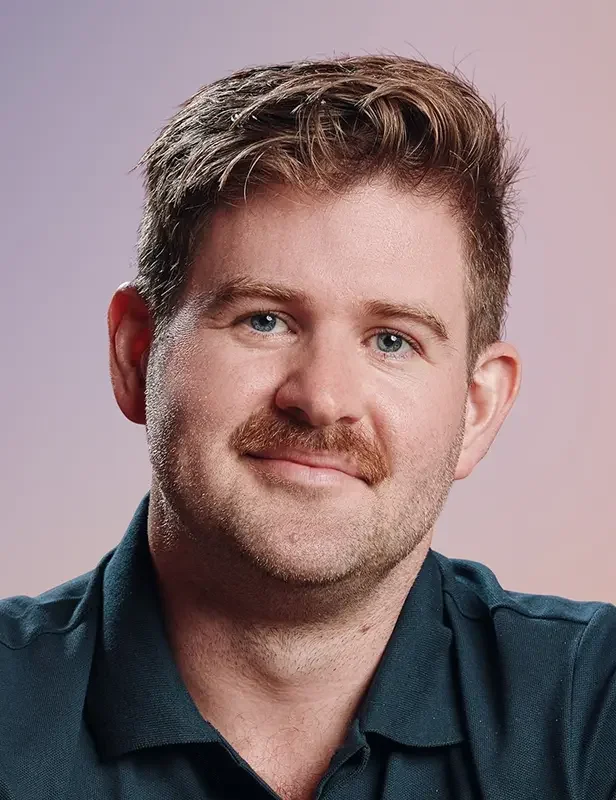
Sam Spurlin
Listen now:
Episode transcript:
Rodney Evans:
Hey, everybody. Welcome back to our miniseries all about The Ready and the Future of HR. It's me, Rodney, and Sam. Hi, Sam.
Sam Spurlin:
Hi, Rodney. How are you?
Rodney Evans:
I'm good. Do you see what's written next to your name? Our producer is fully trolling-
Sam Spurlin:
Are you talking about the sassy banter?
Rodney Evans:
... Sam in the comments.
Sam Spurlin:
Oh, "I like triathlons and hot dogs," is what I've been told to read in the script, and I already established this with our producer that I will read Anchorman-like anything put in front of me. So that's what we're going to roll with.
Rodney Evans:
Sam's whole personality, triathlons and hotdogs and hockey.
Sam Spurlin:
That's true. That's true.
Rodney Evans:
Yeah.
Sam Spurlin:
The trifecta.
Rodney Evans:
The Sam Spurlin trifecta. That's not what we're talking about today. I think we've done enough of that already. Today we're doing part two of the conversation about how AI can unlock level five in the maturity model. We're picking up right from where we left off. So if you didn't listen to part one yet, you might want to go back and do that. And before we dig in, we will, as always, do a check-in round.
Sam Spurlin:
Rodney, we are walking through the forest, going for a nice little hike.
Rodney Evans:
Oh Lord.
Sam Spurlin:
You see a big rock. You flip it over. What are you hoping to see?
Rodney Evans:
Treasure.
Sam Spurlin:
What kind of treasure?
Rodney Evans:
Buried treasure, like from a pirate. Like if Spanish pirates came and they had a big old trunk and it was full of golden coins.
Sam Spurlin:
Nice. I've been using this check-in question for the past three days and finally someone says treasure. So thank you for doing that.
Rodney Evans:
What do other people say? What else is there under rocks?
Sam Spurlin:
Well, would you like to hear my answer?
Rodney Evans:
Yeah, sure.
Sam Spurlin:
I want to see a cute little snake, but not a bitey snake.
Rodney Evans:
Ew, that's the last thing I want to see, Sam.
Sam Spurlin:
Not a mean biting snake. A cute little snake-
Rodney Evans:
That's nice, Sam.
Sam Spurlin:
... who's just kind of happy to be there. That's what I'd like to see.
Rodney Evans:
Okay. So just to be clear. You're flipping over a rock and you can hope to see literally anything, and you're hoping for a cute little snake? That's your greatest desire?
Sam Spurlin:
Hey, Rodney-
Rodney Evans:
Hey, Sam.
Sam Spurlin:
... which of the two of us is more likely to have their dreams met?
Rodney Evans:
I mean, you because yours is the worst one.
Sam Spurlin:
Mine is rooted in reality, and really keeping my expectations in check is really one of my core competencies, so I'm going to roll with that.
How AI can solve HR’s historically unwinnable battles
Rodney Evans:
All right. We're checked in. Let's talk about AI. So there are a couple of things that, to me, particularly for HR, have just been unwinnable battles that I'm feeling really optimistic about. One is the feedback battle, unlike the performance management battle. And we talked about this in an episode with Meg briefly, but I do just fundamentally think that the way that organizations work right now, the fact that our livelihood, our safety, our medical benefits, et cetera are all tied up in our employment, at least in America, means that the incentive to belong and to not get kicked out is incredibly high, which means that the incentive to know for real what's going on and how you're doing and if you're failing and what needs to change is low.
And it's not just low for the employees. It's low for the managers too. There is not a lot of upside to real candor in most places, and that is just the truth. As a result, we have complicated emotionally avoidant systems, and I don't think that there is a human solution to that. I think the only solution to that that really starts to move the needle is me interacting with technology that does not have any power over my circumstances to tell me the truth because I think that is the only place that I could theoretically process that without immediately being in existential threat.
Sam Spurlin:
Yeah. I like the privacy of making sense of the feedback with a technological tool. That's really interesting because even in the best of circumstances, another human being that you have potentially a long history with, the first move is always first the checking of the emotional valence of, "How do I feel about this?" And that's immediately a distraction from the objective sort of feedback that you're trying to get. So yeah, I wonder then if talking to an AI and receiving that feedback we'll remove that emotional valence. I think maybe is the answer to that because people seem to be having some pretty emotional reactions and conversations with AIs, which is very interesting as well.
Rodney Evans:
It's very interesting, and my hope is through exposure and practice and over time we get there. But I also think that part of it is also I've interacted with a couple of AI tools that help with sentiment analysis with communication that you're creating, and where that information and that analysis comes from I don't know and it's not germane to this conversation, but Sam's reading of my tone through Sam's lens and trauma saying that I'm being too assertive or too aggressive or too direct or whatever versus the AI's reading of my sentiment is very different. It is a very different experience.
I think part of why feedback has been so confounding is we'll never get rater bias out of it and part of it is that we are constantly trying to make sense of opposing data points. And I've found this to be true in some of this tooling that I use where I think I'm just being polite or conversational and the AI is like, "This language is hedging." Basically like, "Say what you want to say." You know what I mean?
Sam Spurlin:
Yeah.
Rodney Evans:
And so I think in the feedback realm there is just a quantity of data and a removal of a lot of our most human tendencies that might allow us to really increase our self-awareness in a really wonderful way that doesn't completely fuck up our psychological safety.
Sam Spurlin:
Well, and not even just the removal of stuff, but I'm thinking about this massive potential around personalization. The AI knows how I best respond to feedback and it's able to give it to me in a way that I get maximum benefit from so that I can internalize it and be a better human. Yeah, that'd be cool.
Rodney Evans:
That'd be really cool. So that's one area. The knowledge management thing we've obviously touched on, but it's just like we have got to have a living way to know what the fuck is going on in our organizations, and there isn't one.
Sam Spurlin:
We need this today.
Rodney Evans:
Listen, I know, man.
Sam Spurlin:
Right now our AI is, I go on Slack and I say, "Hey, everyone, do we have a this?"
Rodney Evans:
"Hey, everybody."
Sam Spurlin:
And then some people will say, "Yeah, here you go," and they'll give me a link. That's great. That's basically what an AI does. And right now I'm distracting a bunch of humans who should be doing better things. I should have an AI who can find the thing for me.
Rodney Evans:
Except an AI does it properly. Whereas I'm just like, "Here's the first thing that came to my mind. I hope it's right."
Sam Spurlin:
Yeah. And it'll give me it without the snark, which is what I often receive from some people, some named Rodney, when they say, "Here, idiot, is the thing."
Rodney Evans:
How dare you!
Sam Spurlin:
I know.
Rodney Evans:
How dare you. That was pre-vacation Rodney, Sam.
Sam Spurlin:
That's right. This is new Rodney.
Rodney Evans:
This is new Rodney. This is New Coke. Yeah. So I feel like the knowledge management thing is just, again, complicated solutions, uncomplicated solutions. And then the third one is just the other thing we've already touched on, which is there is not a good solution really for resource management whether you are talking about humans or dollars. The dollar side is obviously better because it is less complex than the human side.
But when you are trying to run a services business and understand where the time goes and how to allocate it, holy shit, it is a never ending well of despair. I've been in it now for going on 12 years and I have seen all of what's out there so far from a solutions perspective and haven't found one yet. So it is the tooling for a dynamic talent marketplace that just does not exist.
Sam Spurlin:
Yeah, absolutely.
Rodney Evans:
So those are the three things that are solving current problems that I know have not been solved and that I don't believe there is a internet-based traditional technology that will ever solve because they would have by now. And so I'm waiting for the AI overlords to sort me out.
How to face the fear of your job being automated
Sam Spurlin:
And what I would say is if you are listening to this and you're thinking, "Oh, Rodney just described my job or a part of my job that I have," I would say I hear you, and I would also argue that humans are not best suited for the thing that we just described for all of the reasons. And by freeing somebody up from doing that, what I'm really excited about is what do we now do with this new capacity? Human beings who now aren't having to do, truly this complicated sort of information managing stuff, what could you do now? And let's not just fill your space, what you're capable of doing and the experience that you have, with just bullshit. Let's have those folks do things that the AI is not great at right now. One of those things, at least for the foreseeable future, is going to be double checking the AI's work so it didn't make any shit up.
Rodney Evans:
Sure. Yeah. So Sam, I want to talk more about this, "I'm going to lose my job," thing because in a lot of the conversations that I'm having with the Future of HR folks in the world, client folks, not Ready folks, this is a big concern. It's not just about AI, but just in general it's like, "Well, if we were to move this work to a platform team, then what would I do?" or, "If we were to carve this out and try to find an automated solution, then what value am I bringing?" et cetera. And it's like we just spent two episodes talking about the new skills that will be required and you should be doing that stuff.
But for someone who is sort of staring down the barrel of potentially being automated out of a role, and to be clear, I don't think this is going to happen mañana, but if a solution appeared that, for example, automated a significant portion of your working week and you knew that on Monday you were going to start having a lot more white space in your calendar, let's say that you were going to suddenly have 10 or 20 hours appear that did not exist before, what would you do?
Sam Spurlin:
You should be on cloud nine. All of our clients, if that was suddenly their situation-
Rodney Evans:
You would.
Sam Spurlin:
... would be so stoked. No, I think that's totally reasonable. I mean, the first thing that I would tell someone is, "Feel your feelings." That's a thing at first. I am not going to sit here and say, "Everybody buck up, and if your job gets automated away, go learn how to code and make an AI." What the fuck? That's not a thing.
Rodney Evans:
Yeah, absolutely not.
Sam Spurlin:
So feel your feelings. Know that it's okay to feel that sense of loss. There are some really complex skills that took a long time to develop that are in the sights of AI right now. So that's the first thing. And then the second thing, and you kind of implied this in this scenario, is that smart organizations aren't going to lay these people off. They are going to suddenly have really smart, capable people with capacity to do other things. And there's plenty of things I think that AI can't do that only humans can do, especially in these incredibly early days of AI. Maybe in 100 years that's a different story, but none of us have to worry about that because we'll all be very dead. So I'm curious what you can go find to do in an organization when you suddenly have that significant amount of time to go figure things out that an AI can't necessarily. I don't know. You're chomping at the bit with some better takes on this. I'm very curious what you have in your head.
Rodney Evans:
I would love to know what led you to that conclusion. A couple things. One is I really appreciate that you said sit in the discomfort of it because when you say, "I think a lot of our clients would be like, 'Fuck, yeah,'" I actually disagree with you. I think a lot of people in a lot of organizations complain about their busyiness and they complain about their wasted time, but what that kind of pace and schedule and cadence of work allows for is not a lot of choice and not a lot of decision.
And you can just be on the floaty of your shit day and come home and be like, "Well, another one in the can." And it's like, even operating at a task level or at a reactive level or at a firefighting level allows you the dopamine hit of being like, "A thing had to be done, and I did the thing, and now it's done." A lot of us are quite addicted to that feeling. I have worked with executives who through our work together have found a lot of time, and they fucking panic because they have time to think for the first time in 20 years and they don't know what to do. I have been there and that is a legitimate psychological minefield to be on when you're like, "Oh shit, my job now is to think and learn, and I haven't done that in 20 years."
Sam Spurlin:
I 100% agree with you and I disagree with Sam of two minutes ago and I agree with you.
Rodney Evans:
Yeah, screw that guy.
Sam Spurlin:
We could totally do an entire episode about two things, which we won't, but I just want to say them because I very much agree with you.
Rodney Evans:
Maybe we will. Hit me.
Why “busy” and “productive” can be avoidance, not real work
Sam Spurlin:
So two of the most common tension cards that show up with every client are we have too many meetings and they're bad, and we have too much email. I very much believe, and I will not generally say this to a client the first time I meet them because they will kill me, is that neither of these tensions have any shot in hell of going away because you all love email and you love meetings, and you will never let go of them.
Rodney Evans:
Yeah. And It's like I don't think that they actually love them-
Sam Spurlin:
No. Of course not. They hate them.
Rodney Evans:
... but I think they love avoiding something more uncertain and messy and unknown. And it is an easy way to avoid it because you're like, "I'm cleaning out the old inbox."
Sam Spurlin:
Senior leaders get off the hook too for the organization because they don't need to have a super clear strategy because nobody has really the time or energy or space to actually take action toward it. If we didn't have emails and meetings, then people would be asking questions about, "Well, how do I best use my time in service of what we're actually trying to do?"
Rodney Evans:
That's right.
Sam Spurlin:
And that's a hard question to answer.
Rodney Evans:
That's right. We're not going to do a whole lot on deep work and strategic thinking right now. But what I would tell you is I've learned a lot about this in the last bunch of months as a lot of foundational things at The Ready, as we've made a pivot, have gotten sorted and shored up. And frankly, as a team that I work with has just grown in expertise and capacity and ability, I am finding myself with more time on my calendar and It's really appealing to fill it up with stuff that will make me feel like I'm being productive, and I'm really trying, and mostly succeeding, in not doing that and instead in having more conversations with people outside of the organization and reading more of a variety about what's happening in the environment and spending time walking without AirPods in and thinking deeply about problems that I see in our system.
It's not really that comfortable. And I have lots of moments, I had one of them this morning in our all company meeting, where I'm like, "Do people think that I don't do any work here?" Because that kind of work is not always so visible. But actually, I see the outputs and the benefits of that work every single day in our system. It's just not obvious. It's just not always obvious that the conversation that I had with someone that sparked the thinking about how we would do this thing differently came from me going for a swim. It's like, I know that that is for a lot of people just like, "Oh my God. Shut up. I cannot even." But again, knowledge workers, wisdom workers, insight workers, you have to have time to get the inputs and then make the meaning in order to move the system, and you can't do that if you're just in push the lever, get the candy all day.
Sam Spurlin:
Well said.
Rodney Evans:
Well, thanks for coming to my TED Talk, man. I don't know. It's Friday afternoon. Feeling existential in nature.
AI experiments you can run without your company’s buy-in
Okay. This was a far-ranging conversation, Sam, but it is meant for people who are interested in the future of work and the Future of HR and the future of AI. If you are maybe an HR person, but maybe just another person in a company that does not seem to be doing their own experimentation with Ai, what should you start doing?
Sam Spurlin:
Okay. Yeah. I mean, start by getting an account at ChatGPT. Google ChatGPT. It'll be one of the last things you Google for... No, I'm just kidding. Go to ChatGPT, get an account, start messing with it there. Once you are in and start just having conversations, I think you should look at what you do in a typical week and try introducing AI to parts of it. So for me, that has looked a lot like, I spend a lot of time making templates or thinking through meeting designs or a facilitation plan. Throw an instruction like, "Hey, I need to run a 30-minute meeting with this group of people to get these outcomes. What have you got for me?"
Rodney Evans:
Love that.
Sam Spurlin:
I'm not saying copy and paste what it gives you, but I am saying you may be surprised by what it does give you and maybe it gets you 20% of the way there, or 30% of the way there, or 40% of the way there. That is interesting and may give you some new insight into what the tool is capable of and give you new insight into what it means to be good at your job because I think it's fairly easy to get stale and, "These are the moves that I always do." And AI will inevitably give you some things that you haven't thought about. So figure out what You're already doing in a day-to-day capacity and try to introduce a sprinkling of AI.
Another really common one is AI is great at summarizing information. So if you have to read long memos, articles, start looking for some AI tools that are good at summarizing and see if you actually do start to create some capacity in your day because you're able to do things a little bit faster, and give yourself a little treat and then maybe find some other interesting work to do at that time, as we just talked about. What else? What would you recommend someone do?
Rodney Evans:
I mean, I think those are really good ones. And also use it for some fun stuff too.
Sam Spurlin:
Yeah, do fun stuff.
Rodney Evans:
Do fun stuff, because when we were really dug into book writing last year, I was using AI a lot for devil's advocate and summarization and prompting questions and things like that. For me, the real on-ramp was actually the dream interpretation thing. I was like, "This is kind of boring and this thing is kind of dumber than me and it's okay," but I was very impressed by what the technology could do. But I didn't particularly enjoy my interaction with it until I found a really fun thing like dream interpretation and then I was like, "Oh, now I get it. Now I get why this is exciting." So find your version of that that's exciting.
Sam Spurlin:
My version of that was, "Give me a logical driving path to see as many civil war battlefields within 100 miles of where I live."
Rodney Evans:
That is fascinating. Why would you want that?
Sam Spurlin:
I'm a history guy. I live in Virginia. I got to see some of these places.
Rodney Evans:
You got to see it. Ed was on a real Midjourney journey for many months where, I mean, the number... He would just be like, "Look at this thing I'm in." I was like, "Oh wow, hun, that's great." But then he started using... I think it was Midjourney, I'm not sure which AI, but to design tattoos.
Sam Spurlin:
Nice.
Rodney Evans:
And now he's deep in AI flash tattoo land. I don't know. The point is find a thing that you give a shit about and then see what it can do because it's a lot more fun-
Sam Spurlin:
That's right.
Rodney Evans:
... to learn that way than by making-
Sam Spurlin:
That's true.
Rodney Evans:
... a maturity model with it.
Sam Spurlin:
We did it. Rodney, what the hell are we doing next week?
Rodney Evans:
Are we taking the week off?
Sam Spurlin:
I don't know.
Rodney Evans:
Oh, I can't read the script. We've established that Sam read scripts and me not so much. Only you get the week off.
Sam Spurlin:
Oh, I get the week off. Right, okay. Yes.
Rodney Evans:
It's just you, not me. We have another guest episode next week. It's a surprise. It is exciting. You should tune in. It's going to be kind of a big deal. Yeah. So don't skip that one. And then Sam and I will be back. In the meantime, please keep sharing these episodes. You all are really doing a wonderful job of passing these around. We are hearing about this series from a lot of people on the internet and in person and at clients, and we really, really appreciate the pass along of these Future of HR episodes. Please keep it going.
Sam Spurlin:
Yeah. If you're new to the show, you could consider leaving a review on Apple Podcasts. It helps.
Rodney Evans:
Sam left one and everyone should go see it.
Sam Spurlin:
I did leave a review for this show. Thought it was accurate. Thanks as always-
Rodney Evans:
And what did it say, Sam? Are you going to tell them what it said?
Sam Spurlin:
It said-
Rodney Evans:
It made the rounds already at The Ready.
Sam Spurlin:
... "The new co-host sounds handsome and smart. Five stars."
Rodney Evans:
It made me laugh so hard.
Sam Spurlin:
Thanks as always to Taylor Marvin for making us sound awesome. This miniseries is produced by The Ready where we help organizations around the world change the way they work. You can get in touch with us by emailing fohr [at] theready [dot] com. And as for you HR leaders listening right now, let's change ourselves.