
Ep. 2: Your PowerPoint Deck Is Not a Strategy
About this episode:
Original Air Date: January 22, 2024It's January! New beginnings? Ambitious plans? Giant commitments to change? They’re on everyone’s mind. Companies included—since now’s the time when glossy PowerPoint decks are so eagerly rolled out. And those PowerPoints? They’re always brimming with promise for the year ahead.
But there's a glaring disconnect between those slides (all 73 of them) and eventual success we often don’t address. Because how frequently do those meticulously crafted plans pan out? Does the new agenda account for the day-to-day running of the company? Is the plan flexible enough to handle economic curveballs? (We remember 2020, right?)
The reality is that “traditional strategy” often resembles New Year's resolutions; they’re imbued with good intentions but ultimately destined for disappointment.
In this episode of "At Work with The Ready," (new year, new podcast name!) co-hosts Rodney Evans and Sam Spurlin explore our deep-rooted conditioning toward conventional planning methods (despite their shortcomings), share what a more complexity conscious approach to strategy looks like, and give you moves to start busting up the annual cycles of frustration, stagnancy, and finger-pointing.
Mentioned in this episode:
Getting Things Done by David Allen: BNW Ep. 39
“90% of leaders admin strategies fail based on implementation”
“Essential Intent”: BNW Ep. 90 with Greg McKeown
“Japanese pancakes”, straight from Sam’s Instagram feed
“even/overs”: BNW Ep. 44
Weighted Shortest Job First (“WSJF”)
“Looping”
“scenario planning”: BNW Ep. 34 with Kevin Kelly
“op rhythm”: BNW Ep. 118
In this episode:

Rodney Evans
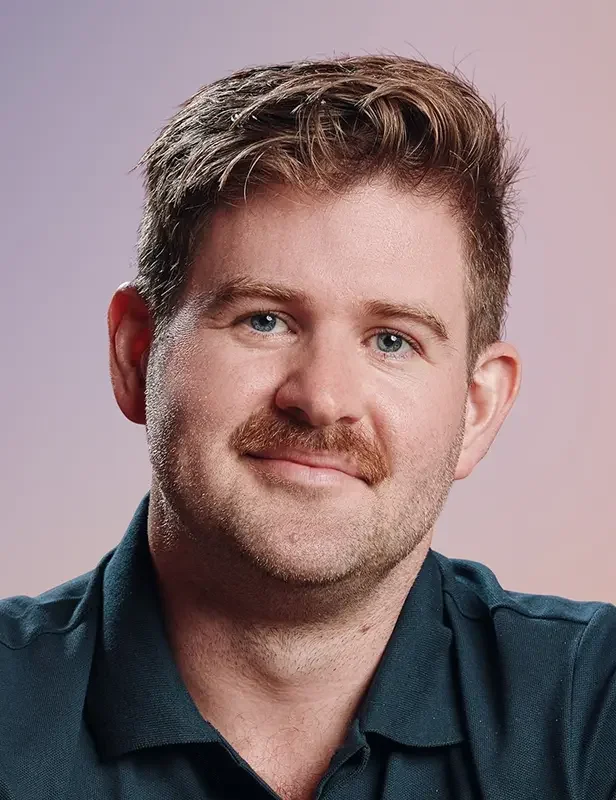
Sam Spurlin
Listen now:
Episode transcript:
Sam Spurlin:
We don't hate all planning. Tell us a little bit about scenario planning.
Rodney Evans:
I like scenario planning. Is that good? Hey, everybody. Welcome to the show. I'm Rodney Evans and I'm here with my co-host, Sam Spurlin.
Sam Spurlin:
What is up, Rodney Evans?
Rodney Evans:
Oh, you know Sam, new year, new us.
Sam Spurlin:
New year, new you?
Rodney Evans:
We'll see. I mean, when I'm this jet-lagged and basically dissociating, I do feel like a different person. So, my identity has left my body. So, yes, in a manner of speaking.
Sam Spurlin:
Are you open to a suggested New Year's resolution for you?
Rodney Evans:
Yeah, I am.
Sam Spurlin:
How about be nicer to Sam?
Rodney Evans:
I've considered it. And I'm not sure that's the one.
Sam Spurlin:
You know what? It probably is not good for the show. Let's be honest.
Rodney Evans:
It's not good for the show. Also, it's not good for your ego. I am here to keep you humble.
Sam Spurlin:
Yes. Notorious egomaniac, Sam Spurlin.
Rodney Evans:
That's what everybody's always thinking about you. It's just like "Sam's great, but that ego is just out of control."
Sam Spurlin:
Totally out of control.
Rodney Evans:
Yeah. That's not really your brand. So, I don't even want to use the word "announcements", but we have news. We have a little bit of news because this is the first episode that you and I are officially doing of our new version of our old show. Do you want to tell our friends who are also our listeners, what our new show is going to be called?
Sam Spurlin:
I would love to do that. Can I get a drum roll or some sort of anticipation building?
Rodney Evans:
That nice?
Sam Spurlin:
That sounds good. The new name is At Work With The Ready.
Rodney Evans:
Yay.
Sam Spurlin:
Yes.
Rodney Evans:
Sam came up with that, everybody.
Sam Spurlin:
Thank you. I was going to go there. You know, ego, bring that back around. I came up with this one. Pretty proud of it. That's all.
Rodney Evans:
Sam came up with it, and then we put it in a tool to crowdsource support from The Ready and there were like 50 suggestions, but Sam's idea, which was anonymous, so you were not swaying the people.
Sam Spurlin:
It was anonymous.
Rodney Evans:
Because they didn't know it was you and if they had, you might've gotten fewer votes, to be honest.
Sam Spurlin:
That's what I was about to say.
Rodney Evans:
Sam's idea won by a landslide. So, you can still find us in the same feed. You don't need to do anything, but you'll see some new branding and that is one very exciting bit. So, as we previewed in our episode with Aaron where we officially passed the mic torch, we are going to change up the format a little bit of the show and here's the MVP that we're starting with and spoiler, this will likely change over time, but we're always going to do a check-in because we love check-ins and because we want you guys to be doing check-ins for all the reasons that we always say.
We are then going to describe a common organizational pattern that we see over and over again. Why? Because clients are always asking us what's typical, what we see, what we notice, et cetera. And because we fundamentally believe that these patterns in organizations occur and are reinforced for reasons.
So, we'll name the pattern, then we'll talk about the good and bad of that thing and why it persists, what you might decide to try instead if that pattern isn't serving you well, and then key hot takeaways from each of us. That's the idea. Sam, anything to add and/or want to check us in?
Sam Spurlin:
There's nothing to add to perfection. So, let's move to the check-in round.
Rodney Evans:
Chef's kiss.
Sam Spurlin:
Check-in round. Rodney, what is your personal relationship with planning?
Rodney Evans:
What I am so tempted to do is actually answer this question for each other because I would love to know what you think my relationship to planning is, but I will answer. You know what? I do planning like I do org design. I like to have containers. So, there are certain things that are in my calendar that are for the most part, if they're not non-negotiable, at least they're like the big rocks that all of the little rocks get put around. And those are things like my Source meetings, therapy, swimming, those are the big ones. Oh, probably this podcast...ha ha! And then everything else happens around those things.
And that tends to be how everything. That's how my weekends go to. It's like this night we have a dinner, this morning I have band, and then there's a lot of white space, but there are some big rocks to plan around. So, I don't like to have detailed plans, but I like to have some chunks that feel structured to look forward to and to anticipate and to prepare for.
Sam Spurlin:
That's remarkably wholesome.
Rodney Evans:
Really?
Sam Spurlin:
I think so. I feel like it's a very healthy relationship with planning.
Rodney Evans:
I think I have a pretty healthy relationship with planning. I think that there was a time in my life that I really believed that the plan for future me was going to come true and that future me was going to be better than current me. And I just have been alive for long enough to know that that's not what happens.
And so, now I'm like, "Oh, no, this is the me now and this will also be the me if I do dry January or if I do a triathlon or if I quit my job or whatever. I'm the common denominator." So, I think that shift in my mindset really changed my relationship to planning probably about 12 years ago.
Sam Spurlin:
Okay. Cool.
Rodney Evans:
Yeah. What about you?
Sam Spurlin:
So, when I asked that question, my mind went to a more macro point of view. So, like a planning on a multiyear basis.
Rodney Evans:
I would never.
Sam Spurlin:
And the takeaway is I don't do that anymore because I used to be a very consistent journaler. So, I would go back and read journal entries from young and naive Sam where I'm making these grand plans for what I was going to do with my life and the things that I thought I wanted to accomplish. And then I would realize that I didn't do any of things and I'm so glad that I didn't and why am I spending so much time trying to figure that out when I really should be trying to steer a little bit more in the moment.
And that's not to say that I live my life just on the edge of chaos because, although my profile in Slack does currently say chaos agent, that is very tongue in cheek.
Rodney Evans:
I was just going to say, said no one ever about you one time in your entire life.
Sam Spurlin:
Yeah, yeah. But actually on a more micro level, I think I'm actually quite similar to you in that. I mean, I really do take a major page out of the Getting Things Done book by David Allen. That book and that philosophy really sets the tone for how I think about what is my work? How do I keep track of my work? What do I do next? What's the next? What's the action? Sort of thing. But I have I think since originally reading the book probably back in 2007 and since working with David on the revision of his book, I have made it my own as well.
Companies spend all their time “making the strategy”, not executing the strategy
Rodney Evans:
Nice. Awesome. All right. So, we are checked in. Shall we describe our very first pattern of the year, of the show, of the moment?
Sam Spurlin:
Let's describe this pattern.
Rodney Evans:
Hit it.
Sam Spurlin:
Okay. I feel like there's a tiny preamble that I'm going to throw at the front here, and we may keep it, we may not, but when we sat down to design this first show, we originally just landed on strategy. There's a whole bunch of stuff that we see organizations do really poorly and sometimes really well under the bucket of strategy.
However, as you can imagine or if you've ever walked down the business book section of a bookstore, there is so much to talk about with strategy and we didn't want to just do a what is strategy or what framework is best or anything like that. We wanted to try to narrow in on a more specific thing that we see going on with our clients and other organizations when we say they're doing strategy poorly. Does that make sense, that preamble a useful table setting?
Rodney Evans:
Yeah. I dig it.
Sam Spurlin:
All right. Cool. So, what we landed on for the pattern that we want to describe here is that often, the "doing of strategy", and I don't know if you can hear the air quotes that I put around that.
Rodney Evans:
The making of the plan.
Sam Spurlin:
The making of the plan, the doing of strategy becomes an end in itself in a lot of these organizations. And that shows up in lots of different ways. So, I'm going to give you three specific things here, Rodney, to see if you agree with the details around what it looks like when strategy is being done only as an exercise in itself.
So, the first thing is that a lot of times what an organization is calling strategy is really just planning. It's taking things that they already intend to do and arranging them in a way where we can be really clear about who is supposed to do what at what time, what's coming first, what's coming second. And that plan is used in lots of different ways, but generally it is used as a bit of a threat or a hammer to hit people with throughout the year as inevitably things change around the plan or we don't hit certain milestones in the plan.
And given the nature of the world, the further we get away from the writing of that plan, the harder it is to actually stick to that plan if we have any sense of what is happening around us.
Second. Strategy becomes a moment in time endeavor. It is strategy season. It's time to do the big strategy-
Rodney Evans:
Got to bake the donuts!
Sam Spurlin:
Time to do the big strategy refresh. We got to do the workshops and the thing and make eight versions of the deck and then review it. It's a moment in time. That moment may be long, especially for the folks who are involved in it, but it is done at a concentrated point in time as opposed to throughout the year.
And then lastly, I guess the best way to describe it is that the strategy is completely divorced from the operating system that created the need to articulate what we're going to do and it is divorced from the operating system that is fundamentally needed to operationalize it. So, it is done in a vacuum with no real sense of what we need from the rest of the organization to actually make it come true and no, we're just going to try harder is not the answer to that.
Rodney Evans:
Yeah. Sweet.
Sam Spurlin:
Do you see those things happening?
Rodney Evans:
That feels pretty consistent with what I see in the world. And I think to me the TL;DR before we get into why this is all over the place is strategy, the asset becomes an abstraction that is unrelated either to the external environment or to the internal operation. At which point, the fuck good is it?
Sam Spurlin:
Yeah. Mostly for hammering. Well, I mean, and the most obvious example of that is how many organizations have you been a part of or seen where when people say "the strategy", they're literally referring to a PowerPoint deck and not the conglomeration of behaviors and thinking and activities that will allow us to achieve a goal, but literally words on a PowerPoint deck that none of us have internalized and we need to double check every time we refer back to it.
Rodney Evans:
Yeah. They're not talking about the direction that the organization is going or the header that the org is on. They're talking about something is-
Sam Spurlin:
Bets making ... Yeah.
Why having “the plan” feels so comfortable
Rodney Evans:
Yeah. They're talking about something that was reviewed in a town hall. So, as all of you have maybe inferred, Sam and I believe that patterns like this one, persistent organizations for reasons not because people are stupid or lazy or don't see the failings, but for real rational and often complex reasons. So, Sam, what are some of the reasons that you see out there that "doing strategy this way" is the way?
Sam Spurlin:
Yeah. I think one of the biggest ones is that god, it feels good to have a plan.
Rodney Evans:
It feels so good.
Sam Spurlin:
It feels so good to have a plan. I love having a plan.
Rodney Evans:
I'm going to be amazing by come summer.
Sam Spurlin:
I mean, if I just follow this plan, all I got to do is follow this plan and whoooo...look out.
Rodney Evans:
Look out.
Sam Spurlin:
And I think the not tongue in cheek answer is that being on the edge of the unknown is scary. The edge of chaos is a discomforting place to be. And if you can create an artifact that you probably worked really hard on that gives you the sense that you have your arms around the unknown, that just feels good. And you know what? Let's do things that feel good.
Rodney Evans:
Yeah, man. It's so much easier to argue over the recipe than taste the food. I mean, so much easier. It's just like I think that's going to need more salt. Who fucking knows? Not me. I haven't even turned on the oven. Yeah. I think that's right.
To your point about it being a moment in time, it takes something that feels very complex and makes it feel very tidy and very organized. There's a lot around strategy that feels like the ocean. You could just never even see the edge or the depth of it. And it's like now I have to understand the entire environment and my entire organizational system and all of the market trends.
And it's like that gets overwhelming really, really quickly. And what feels a lot easier is we'll go to a conference room in Jacksonville for four days and at the end of it, we'll have bullet points that we've all saluted. That feels, whew. That just puts my nervous system right at ease.
So, the problem with strategy as we see it is the reason it is that way is because it feels better and it feels easier and it gives us a sense of control, a sense of more certainty, protection from the reality of what is to come. And also, when we're in the planning, when we're in the recipe conversation, we can't be wrong. Really. It's all conjecture at that point.
Sam Spurlin:
Totally.
Rodney Evans:
So, everybody gets to be in ideation and in ambition and in perfect futures, and nobody really yet is off pieced and hell yes, I'd love to just stay right in there.
Sam Spurlin:
Yeah. Plus, it's fun. You're going to do your strategy retreat, maybe not at the office, go somewhere nice, think big thoughts, write them down.
Rodney Evans:
Just go the beach.
Sam Spurlin:
Hey, it's fun. And a lot of us. Not us, The Ready is fun all the time. But a lot of folks spend a lot of time doing not fun shit. And if you get to be a part of a strategy process where you get to think big and you're actually being asked to think creatively, whereas maybe the 90% of the rest of your time you don't have that opportunity, hell yeah. Let's dig into this fictional make-believe strategy process because it's a good time.
The cost of “traditional” strategy processes
Rodney Evans:
It's a good time. But the land of make-believe has some real downsides. And we know this because some data that Jack gave us showed us that about 90% of a group of executives surveyed admit that their strategies fail based on implementation. So, it's not going great out there in terms of how that PowerPoint turns into impact or results. So, let's talk about what the costs are of doing strategy in this traditional way.
Sam Spurlin:
I think a huge, huge one is that it is really, really dangerous to think you understand an inherently complex and unknowable domain and acting as if you do. And a plan that we have all bought into the illusion of can set you up to be incredibly unprepared for when that plant starts to go awry, which is almost an inevitability.
So, you're not in this posture of sensing and responding what is actually happening. Your head's down trying to make a thing that you wrote down a couple of weeks ago or a couple of months ago or many months ago, a reality which just takes you out of understanding what's really happening.
Rodney Evans:
Yeah. The other piece that's related to that is so much strategy work that I have been part of is in addition to the regular running of the business, which is also just so unrealistic. when what's in that PowerPoint deck is all bolt-on, but everybody is full up on their day jobs. It's unrealistic for a variety of reasons, but from an execution perspective, it's particularly unrealistic because it's like, "Yeah, Jacksonville was dope. Monday, I have to go back to my desk and do my job, which already takes 50 hours a week. So, at what point am I going to digest and internalize and execute upon these very lofty neat-o ideas that we had?"
Sam Spurlin:
Totally. Because that strategy process that we followed didn't have a part where we took a bunch of things off the table.
Rodney Evans:
Yeah, no.
Sam Spurlin:
We played Tetris with everything we want to do and we left with everything fitting together without realizing that the in-between cognitive load of switching tasks and projects and things that are inherently contradictory to each other that we can really just skate by in a room when we're looking at them on a list, that all becomes much more real when you get back to the day job.
Rodney Evans:
100%. And I think that leads us to one of the other big issues with how trad strategy is done, which is that I often don't see it really drive prioritization and decision making in the day-to-day. And I have some recent experience with this on source at The Ready, which is like we have just gotten tighter and tighter and tighter on what our half year outcomes look like and how that relates to our Essential Intent and what should change and what doesn't.
And I was in a conversation this morning where we were talking about the prime business, which for us is working with small and medium-sized companies and we were like, "Does that really fit with what we said for this half year? It doesn't. It actually doesn't."
And it was one of those moments where there's nobody in the room who doesn't want to do that thing. But when you do no-shit strategy, it is provocative and what it provokes is not doing a bunch of stuff that you would really like to do.
And that's what I don't see enough. What I usually see is when that conversation happens, the counter move is for the exec team to go make the bullet more vague so that it includes the thing that we all were really excited about rather than being like, "Okay, maybe not that now," or "if that was an oversight, then maybe that bold point is wrong," but the answer is never both end.
Sam Spurlin:
Then what it does hopefully is that it drives some finishing behavior. If we want to do this other thing, let's finish this other thing and clear up some space. And finishing could include the deliberate decision to just stop and not actually take it to some completion state. But it's not just, "Well, we can fit it in. These people are smart, they'll work it out."
Rodney Evans:
Or they'll work harder.
Sam Spurlin:
Yeah. And this is my main takeaway. Working harder is not a strategy. I've got to remember to clean that back out at the end.
Rodney Evans:
Okay. Put that shit on bumper sticker.
Sam Spurlin:
Put it on a T-shirt and confuse everybody around me.
Rodney Evans:
So, I feel like we have a lay of the land on what the thing is, why it has become a thing, what feels really good about it that makes it attractive and makes us do it even though it doesn't really serve us? And what's some of the organizational costs of that? And honestly, the individual costs too, because nobody likes the feeling at the end of the year of going to review their year looking back at that strategy deck from January and being like, "Oh shit, uh oh! We never looked at it again. Now I've got to write my performance review."
Sam Spurlin:
The super fucked up thing about that though is what if you had an incredible year?
Rodney Evans:
Right! Totally.
Sam Spurlin:
You did a bunch of really great stuff that opportunities that you did in June that you had no way of knowing were coming in January and yet we get to sit here in December and feel bad about ourselves because we didn't do the plan that we wrote in January? Like, oh, what a degrading experience.
Rodney Evans:
Yeah. Or we look at that and go, "Yeah, but we made the right decision and the plan was wrong." At which point it's like, well cool, then let's not just make a new plan. Let's change our approach to strategy.
New moves to fight your worst strategy impulses
Rodney Evans:
How should they do that, Sam? What should they do instead?
Sam Spurlin:
So, it's so simple just to do other thought.
Rodney Evans:
So simple. Just overcome everything you know and have learned and been socialized to your entire career. Also, all of human behavior. Also, ignore avoidance and adopt risk taking behavior and tame your id and you're good.
Sam Spurlin:
Piece of cake.
Rodney Evans:
JK.
Sam Spurlin:
If you can't do those things, here are some ideas. We tried to comb through the work that we've done recently and some of the greatest hits that we bring to the clients. We've seen clients there are other organizations do really well. So, we have a few things and actually there are full podcast episodes about some of these, which I'm sure we will link to in the show notes.
Rodney Evans:
Yes, please, Jack.
Sam Spurlin:
So, I'm not going to dive super deep on all of them. And the first three you could think of with the pithy sentence of just have a strategy stack.
Rodney Evans:
Yeah. Like a stack of pancakes.
Sam Spurlin:
Oh, absolutely. A stack of pancakes.
Rodney Evans:
Also, side note in Japan, they make a thing called souffle pancakes that wobble in the middle.
Sam Spurlin:
Dude, they're all over my Instagram.
Rodney Evans:
Love that.
Sam Spurlin:
My Instagram is almost only Japanese pancakes. It's amazing.
Rodney Evans:
I mean, they're very special.
Sam Spurlin:
Do they taste as good as they look?
Rodney Evans:
I think better, because when it arrived at our table, I was like, "I don't know about this." And then I was like, "That is the most delicious thing I've ever put in my mouth."
Sam Spurlin:
Yeah, okay. Damn!
Rodney Evans:
Sorry. The whole tastes like the middle of a popover. It's the perfect food. It's the perfect food.
Sam Spurlin:
That's amazing.
Rodney Evans:
I'm sorry you weren't there. Anyway.
Sam Spurlin:
Now, that we're all thinking about what we would rather be doing, which is eating amazing pancakes.
Rodney Evans:
Souffle pancakes, but instead strategy pancakes.
Sam Spurlin:
Let's talk about strategy.
Building your “strategy stack”
Rodney Evans:
So, I've futzed around with a lot of different frameworks for "doing strategy", creating the assets around strategy, which is separate from the inputs. It's the last step is what we actually write down and share. And the strategy stack that I think every business needs looks something like a long-term vision.
So, where do we want to be in 10 years, five years? I think the smaller the company, the shorter that horizon, because if you're a startup, if you haven't raised an A round, let's not worry about where you're going to be in 20 years. If you're a teenage company like us, I think probably a five-year horizon makes sense. But we do look out to about 10.
So, a long-term vision that is not really quantifiable but that feels directionally correct. A midterm aim. So, this is where we want to use something like an Essential Intent or a strategic challenge that really grounds what we are trying to do on the horizon of one to two years. Then short-term outcomes. So, what do we want to do by the end of the quarter that we believe will take us toward that midterm aim?
The idea being that these things work in loops with each other so that if our 90-day outcomes prove that something about our midterm aim is off, we futz with it. If something about our midterm aim changes, we might revisit the long-term vision, et cetera, et cetera.
And at the most granular level, we want to use a tool for prioritization. There are lots of them out there. We like even/over statements. I think I've used things like Weighted Shortest Job First in strategy work and in prioritization. There's lots of ways to get at this, but that to me is the pancake on the bottom. So, it's long-term vision, midterm aim, short-term outcomes, prioritization tool. To me, that's the stack.
Sam Spurlin:
Totally. And you can hear it in the way you just described it by saying things like looping, this is not a onetime thing. It's not that we get together for a really fun two-day workshop where we do all of this stuff and then we're good until next year. It is often up to quarterly basis where we are coming together looking at our Essential Intent, asking ourselves, have we learned anything over the last quarter that tells us either that we are on the right path with this and we should just leave it alone? Or have we learned something that tells us actually our essential intent is no longer accurate. It's no longer the best articulation of what we are here to do? And being okay with making that change.
And sometimes I think people hear that we get together to do strategy or we recommend getting together to do strategy quarterly. And they're like, "Are you insane? That is so much talking about strategy." And it is if you have the mental model of traditional ways of doing strategy that require an insane amount of work from a bunch of people.
If you're doing that, yeah, you can't afford to do that quarterly. If strategy is an ongoing conversation within the organization across all different levels, then we can dip into that conversation in a more deliberate way and we can dip out of that conversation. And that's really more what we're talking about.
Rodney Evans:
Yeah. And I think the further down you go of that stack of pancakes, the more frequently you talk about it. So, the top pancake is long-term vision, maybe we only do that once a year. If the middle pancake is midterm aim, maybe we do that every half year or every quarter, I don't know, in terms of revisiting.
If the third pancake is short-term outcomes, we probably are talking about our outcomes at least once a month. But I'm on teams where we look at our outcomes every week just to be like, are we doing the things that we said we were going to? And even/overs on my teams, we look at every single week to go, are we using the prioritization filters that we chose to guide our behavior and make decisions.
I guess just to tie the two points together, the most important thing is not the pancakes. The most important thing is how it works in your OS and what the conversations are that you have about them and the frequency of those conversations and the content of those conversations should relate to the horizon of the thing you have made.
Sam Spurlin:
I'm sorry I tuned you out after you said the most important thing is not pancakes.
Rodney Evans:
Sam's like, "Wait, but pancakes."
Sam Spurlin:
Wait, what?
Rodney Evans:
But also pancakes.
Sam Spurlin:
Yeah. So, that's the strategy stack, but I'm wondering if there are a couple other things that maybe we could dip into real quick. We've been slagging on planning hard in the beginning, but I think we have a more ... We don't hate all planning. Tell us a little bit about scenario planning.
Explore scenario planning
Rodney Evans:
I like scenario planning. Is that good?
Sam Spurlin:
Yes. That's it. We wound it up.
Rodney Evans:
Perfect.
Sam Spurlin:
We're good to go.
Rodney Evans:
I appreciate scenario planning. And again, just like the stack of pancakes, I'm not going to give you a specific tool and be like, "This is the one, the only one." If you do some Googling around scenario planning, there are lots of ways to get at this, but we like exercises like red teaming where we imagine how a competitor would put us out of business. We like exercises where we look at trends like AI or labor refactoring or supply chain issues or climate change or political unrest.
Sam Spurlin:
Global pandemics.
Rodney Evans:
Global pandemics, por ejemplo, and talk about how those might impact our business and what it might mean, and also how it might help our business. There are lots of different frameworks out there, but just trying one of them to understand possible futures and have a conversation with the team that you share work with is really important because it's both a way to inform what the stack of pancakes ends up being. And also, it's a way to test lots of different perspectives.
And this isn't the kind of thing in my opinion and I'm curious about yours, to me, the best scenario planning conversations I have, I don't come out of and go, "Okay, now here's exactly what we're going to do." I come out of them having a lot of insight and a lot of new thoughts and new ideas and new curiosities and new roads to explore. And sometimes, those things show up immediately and sometimes they show up never. And the point isn't a reductive exercise where we do scenario planning and then we look at our 90-day outcomes to go, "What now?"
Sam Spurlin:
Yeah, yeah. No, that was going to be my exact point. We're connected by the brain right now.
Rodney Evans:
It's because we're wearing the same outfit.
Sam Spurlin:
It's true. We are. We are. You don't do the scenario planning so that you have the binder written scenario A and you put it on the shelf so that if scenario A happens. We pull out the binder and we see what to do. It is a way to explore the world around you so that you better understand your current moment and what adjacent possibles you have open to you in terms of what you might want to do next. And forcing yourself to take that oppositional or other outside perspective when doing the scenario planning. It just helps you do that better.
Rodney Evans:
Yeah, 100%.
Where leaders are letting their strategy down
Sam Spurlin:
All right. Rodney, one last idea here that we want to explore. Tell us what you see leaders not doing enough of.
Rodney Evans:
Yeah. So, I sort of alluded to this at the very beginning, but I don't often see exec teams of big or small organizations spending quite enough time paying attention to market trends and particularly quiet signals that are coming. And I understand that because it feels as someone who holds that role now, not alone but does hold it, it can feel quite overwhelming to be like, "Oh, what am I going to curate a feed on Twitter and join a networking group and have advisors?" And it can feel like a lot.
Sam Spurlin:
It's just sit quietly and think maybe for a moment or two.
Rodney Evans:
Just sit quietly and think about the future. Yeah. It can feel like a lot, a lot, and but, it also is often overlooked. So, I don't think that people ... Again, it's similar to scenario planning. I think people are a bit too reductive about doing external landscape looking and they expect to either buy a PowerPoint deck from a management consultancy and be like, "Okay, now we're going to backward plan from that." Or "We're going to buy this piece of research and then that is going to directly inform our strategy."
And maybe it will, but the exercise is about learning and possible futures and sensemaking with a team based on inputs that do not come from inside the house. And I don't think this has to be as hard as people make it out to be. I'm at the point in my career right now where I have probably four or five advisors and four or five regular news sources that I stick pretty closely with for diverse perspectives, for people who know us well enough that I can go, "Here's the thing I read today, what do you think about that for us?" And they can smartly tell me, "You should ignore that" or "You should drop everything and get after that."
And so, look like anything else, I don't think that this has to be a massive undertaking and you don't need a new plan for assessing the external environment. But the best leaders I know, and I had a conversation with a former client not that long ago, ("Hi Lauren!”) and I told her at the time that one of the biggest things that I learned from watching her, she was the COO of a large company and she was constantly doing this pacing dance between the external and the internal.
So, it was like, here's what's happening externally or here's what a competitor's doing, or here's what I'm seeing or noticing, okay, what does that mean for us and for our org and for what we might try and for the next experiment? Okay. How did that impact the market and the customer and the metrics?
It's this dance because you can't navel gaze your way to success. But I've also worked with a CEO in my career who was so singularly focused on what his competitor archenemy was doing that he completely lost the plot of his own organization. So, you got to keep those things in tension if you're someone who has a hand in setting strategy for an org or a function or a team.
Sam Spurlin:
Yeah. I think that's really well said. And I think the main watch out here is just not letting this become its own ball of spaghetti that you just let it turn into a big old project when just a little bit of salt actually makes it just mwah.
Rodney Evans:
I love that in our last episode, you gave me such a hard time about ball of spaghetti and now you have said it twice to me today and Sharon said it once. So, I'm just saying, metaphors are useful for a reason, even if you make fun of me.
Sam Spurlin:
Rodney, I have a personal intention to use ball of spaghetti in every episode that we do from here on out.
Rodney Evans:
Oh, god, please don't do that, Sam.
Tip #1: Hold an initial sensemaking meeting to get started
Okay. So, we've talked about what the pattern is, we've talked about what to try instead. Now, before we wrap up, let's talk briefly about the how. So, what's the first move or the best move in your opinion, Sam? What's your hot take?
Sam Spurlin:
Yeah. Just to bring the listener into our process a little bit. Rodney and I have not planned this out ahead of time. I don't know what Rodney is going to say and she doesn't know what I'm going to say kind of by design. So, I'm curious. I'm glad I'm going first, because in the future when you go first I'll just say, "Yeah, what Rodney said."
Rodney Evans:
Plus one.
Sam Spurlin:
So, my thought about the smallest meaningful step to starting to do this better is I have a very logical brain. So, it goes to, if you don't currently have an op rhythm where these conversations can happen, that's probably your first meaningful step is to get some time on the calendar with the people who should be having this conversation.
And I leave that deliberately vague. I think at a team level, you have strategy, and a function, you can have strategy and of course at the full organizational level. I think it doesn't really matter where in the organization you are to start developing the muscles of being strategic and having these strategic conversations.
So, first meaningful step, get some time on the calendar. Call it at least two hours, no shorter than 90 minutes to have a quite spacious conversation about making sense of what's happening externally and also internally within the organization.
There's lots of prompts. I'm sure you could find out there, have ChatGPT write you a quick little facilitation guide. It doesn't really matter. Light structure will go a long way, but just get some time on the calendar to start practicing these conversations because I do think it is a muscle that you have to develop and the first time you do it, it's going to be weird. It's not going to feel right and it's not probably going to be amazing. The insights are not going to be just raining down upon you, but it's something that you get better at the more that you practice.
Rodney Evans:
Shout out to Colin who has infected The Ready with "a light structure."
Sam Spurlin:
Oh, really? I wasn't even thinking of Colin.
Rodney Evans:
Because that's how he's incepted you. You don't even realize.
Sam Spurlin:
I spent all day with him on Tuesday. He did it without me even realizing. Wow.
Rodney Evans:
Yeah, I know. It's miraculous the way that that man implants language in your brain and then you just say things without even knowing it.
Sam Spurlin:
Kudos to you, Colin.
Rodney Evans:
Good job, Colin. Yeah. This might sound wacky.
Sam Spurlin:
Love it already.
Tip #2: Talk about your strategy stack with someone outside your org and learn from them
Rodney Evans:
But mango sorbet coming at ya. No matter where you sit in the organization, if you make a version of your strategy stack of pancakes, find somebody outside of your immediate domain and show it to them and ask them what they think about it.
Now, ideally you would show it to someone that knows anything about what you're talking about. That's fucking cool. And I'm saying this because I realized that I am in a very privileged position where I have really, really smart advisors and I just have access to a lot of people who know a lot of things. And not every person listening to this podcast is in that situation.
And that should not stop you from if you are a functional leader who has never shown your work anywhere before saying, "Look, I listened to this thing about Essential Intents. This is what I'm thinking about for the finance division in 18 months. Brother-in-law at a barbecue who works in finance, what do you think about that?" Just start the conversation. Start getting used to asking really good, really honest questions about your true uncertainty.
Because anyone who is trying to carve out a direction has it. We all feel it in our guts. It keeps a lot of us up at night to try to know whether we are steering correctly and getting used to saying to someone who you admire and respect, "What do you think of this? Do you think I'm on the right track here?" Is just a skill. It's just a skill to develop.
And I think what most people will find is that people are quite generous with their advice and their ideas and their opinions, and I have never had someone say to me, "No, I don't want to talk to you about what you're trying to do with this business over the next two years."
Sam Spurlin:
What I love about that is that it forces you to write strategy that is de jargonnafide-
Rodney Evans:
100%.
Sam Spurlin:
... so that you can show it to other people. And if you can only articulate your strategy by getting really in the weeds in a way that no reasonably smart person could understand, then you probably haven't gotten to the essence of the thing. And that's a great thing to develop.
Rodney Evans:
That's right. It also keeps you from doing metrics as a strategy or projects as a strategy or jargon as a strategy or vagueness as a strategy. If you have to teach it to somebody else, it can't be total bullshit, which is a service to you.
Sam Spurlin:
Yeah. Cool. All right. I think that is a perfect place to wrap it for our first official episode of At Work With The Ready. Even feels good to say. Good mouthfeel.
Rodney Evans:
Flows right off the tongue. Good mouthfeel! Gross. This was really fun. Please leave us a review. Please send new topics to podcast[at]theready[dot]com. This is all an experiment because that's how we do it, but we would love to hear what you want to hear more about from us.
Sam Spurlin:
This show is engineered by Taylor Marvin. Produced by the best, Jack Van Amburg.
Rodney Evans:
The best.
Sam Spurlin:
And created by The Ready, a future of work consultancy. Thanks for listening. See you next time.