
Ep. 47. The Chaos Tax Is Slowing Your Org Down
About this episode:
Original Air Date: April 20th, 2026Everyone talks about slaying bureaucracy and cutting organizational sludge but there's an equally pernicious force that doesn't get nearly enough airtime: the organizational debt created by too little structure. The chaos tax is real, and it's usually being paid by everyone except the person creating it.
In this episode, Rodney and Sam unpack the founder-led chaos pattern: why it happens, why it feels like speed to the person at the top while feeling like paralysis to everyone else, and what minimum viable process actually looks like in practice. They get into learned helplessness, productive friction, the hidden cost of unilateral decisions, and why the call for structure will probably have to come from outside the house.
Tools from The Ready:
The Ready’s OS Canvas
The Ready’s Proposal Template
Mentioned in this episode:
"Sparticus Merlin Spurlin": Check in round from AWWTR Ep. 45, P2
“Founder Mode episode”: AWWTR Ep. 22
”RACI”: AWWTR Ep. 10
”participatory meeting structures”: BNW Ep. 49 with Keith McCandless
“consent vs consensus”: BNW Ep. 74 with Ted Rau
”Action Meeting episode”: BNW Ep. 80 with Sam Spurlin
In this episode:

Rodney Evans
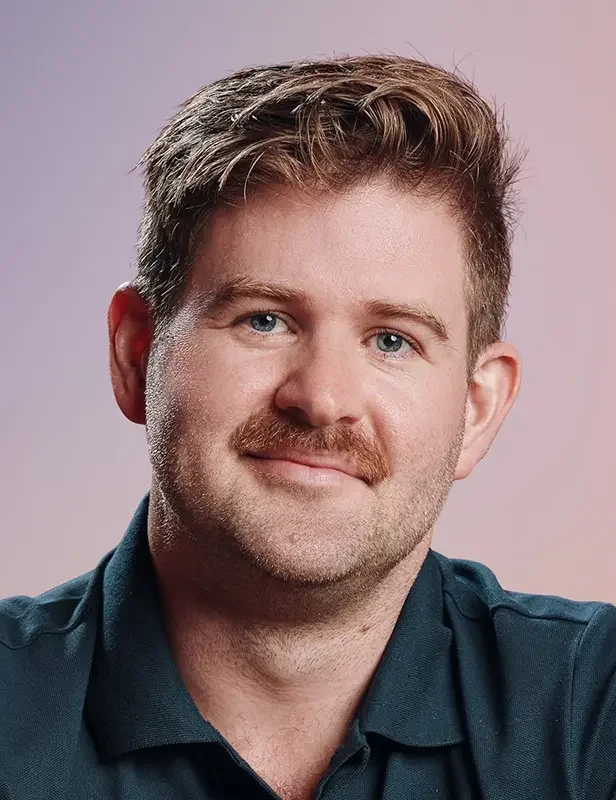
Sam Spurlin
Listen now:
Episode transcript:
Sam Spurlin:
The founder does not necessarily experience the slowness. They are optimizing for their own kind of comfort and experience—
Rodney Evans:
Because they're only living their own schedule and their own perception of time?
Sam Spurlin:
Yeah. So to them, it feels like we're moving fast, we're doing things, people are coming to me for things, I'm making decisions. And I think in a lot of cases, they are very out of touch about what is happening beyond their immediate domain.
[Intro music]
Rodney Evans:
Hey everybody. Welcome back to At Work with Ready. I'm Rodney Evans and that guy is Sam Spurlin.
Sam Spurlin:
Hello everybody, and hello, especially to you, Rodney Evans.
Rodney Evans:
Should I start calling you Spartacus on this show? Should we just soft launch Spartacus?
Sam Spurlin:
Really confuse people who kind of pick and choose which episodes? I mean, I'm all for it.
Rodney Evans:
Look, how else would they learn they need to listen to every show?
Sam Spurlin:
That's right. Spartacus Merlin Sperlin over here.
Rodney Evans:
That's right. So AI is rewriting work as we show up to do it every day. We feel like the future of work has arrived and now the question isn't, what are you going to do about it? It's more like, what are you doing to redesign your work?
Sam Spurlin:
Work design is no longer optional and the teams that treat it like a side project are actively being left behind. The ones that treat it as essential will keep up with the pace of change.
Rodney Evans:
So today we are going to talk about something very related to the pace of change, which is this idea of professionalism versus entrepreneurialism. This idea came from one of our colleagues. And a lot of times on this show, we talk about slaying bureaucracy and removing sludge from systems and the concept of organizational debt, but there is an equally pernicious force, which is the org debt created by chaos and the slowness created by lack of structure. And so today we're going to get into that, but before we do, Sam's going to check us in.
Sam Spurlin:
Yeah, I'm going to use an appropriately serious check-in question for the seriousness of what we are about to talk about. Rodney, if you could hang out with any cartoon character, who would it be?
Rodney Evans:
Oh, wow. That's really hard. You go first.
Sam Spurlin:
Okay.
Rodney Evans:
I have to look up his name.
Sam Spurlin:
Okay. My first thought went to Winnie the Pooh. I feel like he'd just be a chill hang. I feel like we would just ... Stress would be low. We'd probably eat some good food and we'd just hang out and I think it'd be good for my cortisol.
Rodney Evans:
Yeah, he's a good vibe, I think.
Sam Spurlin:
Real good vibe.
Rodney Evans:
Generally.
Sam Spurlin:
Yeah.
Rodney Evans:
Oh, I love that. Okay. I was just on safari in Kenya. And for those of you who have not had this experience, first of all, it's great. And second of all, Kenyans are very tuned into The Lion King and what it has done for the safari business. It's not an eye-rolly thing. It's really like, look, there's Simba. Anyway, I was reminded of Lion King a lot during this trip. And I think that the character that I would like to hang out with was ... Is his name pronounced Timon? The one played by Nathan Lane.
Sam Spurlin:
Is it the meerkat?
Rodney Evans:
Yeah, the hilarious, spicy little meerkat that was always getting in trouble and being around.
Sam Spurlin:
I love it. In the context of this podcast then, that makes me Pumbaa, the warthog.
Rodney Evans:
Yeah. Fun fact about Pumbaa, Sam. Do you know what the word "pumbaa" means in Swahili?
Sam Spurlin:
No.
Rodney Evans:
It means stupid because those animals are so stupid that they apparently will run in one direction and then forget as a group why they had run there.
Sam Spurlin:
Wow. This is just feeling more and more appropriate.
Rodney Evans:
You're like, it's me. You're welcome. Okay, that was fun. Also, generally I hate animation, so that was a particularly challenging check-in question, but I feel like we got there.
Sam Spurlin:
Oh, you really stepped up to the challenge then. I appreciate you setting that hatred aside and meeting me where I brought us.
Rodney Evans:
Look, I'm a team player. I appreciate that.
Sam Spurlin:
That's right.
The Pattern: Why a lack of structure creates organizational chaos
Rodney Evans:
Okay. So here's the pattern. I'm making it up on the fly because it's early and there hasn't been enough coffee. For those who feel an allergy to structure and process, there is a desire to keep things fast and unconstrained. And there is a belief that that lack of constraint keeps things moving and keeps them unencumbered when in fact it creates a chaos that is just as slow, if not slower, than some minimum viable structure or constraint would be, which leads to the feeling of urgency and more creation of chaos. And I feel like both you and I have worked with a lot of these people in our lives who are just like, "You're not going to tell me shit." So why don't you start us off?
Sam Spurlin:
Sure. I'm going to try to take the positive angle of this. So the impulse that this I think is speaking to, it's a real thing in the sense of, "Oh, we are growing. We used to be this small, tight-knit group of people who could just sit around a table, make decisions, boom, bang, boom, we're good to go." And as you grow for good reasons, that becomes more and more difficult. And I think every startup has this deep fear of becoming the bureaucratic behemoth that they know could be in their future if they're not careful and they kind of believe might be inevitable. So the incredible pushback against, "We don't want to become this thing" often results in the massive swing in the pendulum to the other direction. It does create slowness in the organization.
Why founders mistake their experience for everyone’s experience
Sam Spurlin:
However, the senior leader, the founder does not necessarily experience the slowness. They are optimizing for their own kind of comfort and experience.
Rodney Evans:
Because they're only living their own schedule and their own perception of time.
Sam Spurlin:
Yeah. So to them, it feels like we're moving fast, we're doing things, people are coming to me for things, I'm making decisions. And I think in a lot of cases they are very out of touch about what is happening beyond their immediate domain. And therefore they don't see the problem the way someone does who's three layers down in the organization, has been waiting for a decision for weeks, thinks they got the decision, and then they found out a week later that actually we're going in this other direction because the founder had a conversation in a hallway with somebody. That experience from those two different angles is very, very different.
Rodney Evans:
It's such an insightful place to start, Sam, because I think so much of this has to do with the experience of that founder type and that person believing that their experience is the experience of the organization, which it's not. And the dissonance between, to your point, the rest of the consumers of the organization and that person. And I think so much of it does have to do with where things start. So I think founders or, we'll just call them founders for the purpose of this episode, because this is often the archetype, they do feel like, "Pew-pew, I'm calling shots. I'm doing stuff." And people are like, "Yeah, you said you were going to give me that a week ago and I've been waiting, and then you're also going to be on my shit for why it's taking me so long when it took you a week to say yes or no." I also think that there is part of this where in the early days when founders wear so many hats, they really do know everything that's going on in the organization and they still think that they know everything about their business and they don't.
And so that also I think is one of these biases that's just really disconnected from the rest of the org where they're like, I can call the shots. And it's like, "My man, you have not been in your platform or in your product or out in the field in four years. You should not be making unilateral decisions about this."
Sam Spurlin:
Yeah. Well, and I think that really speaks to the shift in that role as an organization grows and changes. I think what makes a good early stage founder does not necessarily always translate into the larger organization. I think there's always folks who are pointed to as the counter to that: Zuckerberg still at Meta, back when Steve Jobs was alive at Apple. But I think with all really known organizations and case studies like that, we over-index on them and we think, "Well, it worked for them. So it can work for me, obviously. I am also Steve Jobs, so let me also design this organization as kind of an Ironman suit around me just to make me more capable." And I think very rarely does that work particularly well.
Rodney Evans:
Having interacted with a lot of these guys in my career, truly dozens, what they want is control. They say they want speed, but what they feel is responsibility and pressure. And what it translates to is I want control over all the things, and ultimately I want to be the decider. And I feel like it's convenient to say that it's about not being overly professional or not being overly bureaucratic. It's like, "I'm a cool scrappy founder and we work fast here and we break things and bureaucracy is for dorks." And I'm like, Okay, that's a soundbite in your organization that lets you keep acting like the hub in a wheel, but is not true, A, and also is not particularly useful, but process is a really easy thing to mock and being structured and having disciplined habits and sticking to routines, I think is a very easy thing for that archetype to be like, "Boo, that's stupid.That's for dorks."
Sam Spurlin:
Yeah, especially if you are thinking about the worst version of process, which where my head is to is, I don't know, the binder of a process that you have to follow to make a very simple decision or something like the incredibly intricate documentation to do anything. Yeah, I agree that is garbage.
Rodney Evans:
Nobody wants a RACI. We know.
Sam Spurlin:
But people, I think, often don't have any experience of anything else. So everything gets lumped into "process is bad" bucket.
Rodney Evans:
I think that's right. And in fairness, a lot of times when you see an organization scaling and some of the adult supervision is hired, they're often people who have come from much larger organizations and do have a tendency to overdo it on process. And so I can understand why the perception becomes, how did we go from "I'm making a hiring call over a beer based on my gut" to "there is a seven-step documented with required questions and a rubric and too many things"? It's like I understand why that happens so frequently is because the pendulum swings to the bad kind of process, which is any more process than you actually need to get a good outcome.
Sam Spurlin:
Yeah. Yeah. Anything beyond minimally viable process and not just process for process sake.
Rodney Evans:
Exactly.
Why growth is unavoidable if you want diversity of thinking
Sam Spurlin:
And one of the things that this brings up for me is thinking about why do we want to get bigger as an organization? Why are we hiring? Why are we growing? And what are the trade-offs that are inherent in that? And I would make, I think the argument that part of the reason that you grow as an organization and you hire people is to increase the diversity of thought in the organization. To have more people thinking about more things. If we accept that that is part of the reason why we are growing, it doesn't make sense to have the founder or the senior leadership team trying to hold on to the early days where they were kind of the end all be all of what happens in the organization.
Rodney Evans:
Well, it's interesting, Sam, because I cannot think of a CEO I've ever met who has said they are growing even in part for diversity of thinking.
Sam Spurlin:
You think it's more just for amplifying what already exists? Or what do they to say? I think it's like we can—
Rodney Evans:
Do more stuff with more people
Sam Spurlin:
Right.
Rodney Evans:
And make more money. I mean—
Sam Spurlin:
Diversity of effort, I guess, not necessarily diversity of thinking. "We're bringing more people in to do more stuff."
Rodney Evans:
To do more stuff. But I think that diversity of thinking as a reason for bringing in people would be really smart.
Sam Spurlin:
Right.
Rodney Evans:
I'm making the argument that they should be thinking that way. They should be like, let's have some people who come from the kind of company that our customers work for or that come from the region we're trying to grow into. I think that is a very interesting principle for hiring, and I've literally never heard someone say it. They're just like, "We got to do marketing. We don't have someone here who does marketing. Let's hire a marketing person." But actually, I think you're exactly right. It's like the worst leadership groups I've been around are the ones that believe that the frictionlessness and speed that they experience is positive. They think that because it's easy and fast, they are also right. And usually that kind of frictionlessness and speed, to me, is usually a marker of group think more than anything else. Most teams that I see come to really good decisions about direction or about strategy or about priorities have to fight their way to it.
And there is real wrestling and there is friction and there is tension. And so I think that I'm going to think a lot about what you said even in terms of hiring at The Ready, because I actually think that having that be a criteria or having that be an aim, "We should have more diversity of perspective on this team than we do," is something more leaders should consider. You're just going to get to better decisions and better outcomes.
Sam Spurlin:
And minimally viable process can be the scaffolding that allows that friction to happen in a productive way. That's true. There's the friction of we get in a room and we just talk and kind of debate and hopefully something interesting falls out the other side. Or you could have a rhythm that we know we come together every two weeks to do this specific type of meeting that has structure that allows us to fill that structure with that debate, those hard conversations. And that I would argue is great process. And it allows us to channel that productive friction in a way that allows us to do something with it, as opposed to just creating little balls of chaos throughout the organization.
Why you have to “choose your slow”
Rodney Evans:
Yeah. And this is something that I've struggled with personally in moments. I have had the feeling at times in my role stewarding a company that the divergence that happens in large groups can make me feel a little squirrely. It can make me be a little bit like, "I just want to end this and go away into a dark room with people who I agree with and make a call."
And here's what I ... I'm saying this out loud because I feel like probably a lot of people who have leadership responsibility who are listening to this have had this experience where they're like, "This would be faster if I just decided and we didn't use even a very good structure like you're describing," which usually things that The Ready and things we do are good process. They're not overwrought. They are participatory facilitation structures to get to divergent perspectives. Even so, I will have the impulse to be like, "This will be faster and better if I could just be left alone to make the call." Here's the thing though, you got to pick your slow because it might be faster in that moment to not be waiting around in the muck with a whole bunch of people who have different levels of competence, different levels of information, different levels of interest, different opinions.
It might feel very slow to engage with those people, and it probably will be, but if you don't, you will deal with them on the back end. So if I just go into a dark room-
Sam Spurlin:
In a slower way, I would argue.
Rodney Evans:
In a slower way. Exactly. If I just go into a dark room with Ashley and make the call, then afterward, I'm going to spend six months trying to explain and influence and persuade and understand other people's perspectives.
Sam Spurlin:
And hearing things that you maybe think is actually really good, valuable feedback that you wish you had heard earlier to incorporate into your thing, but now it's kind of too late.
Rodney Evans:
Too late. That's absolutely right. I think leaders a lot of times, unfortunately, underestimate how smart the people are around them because in large sessions that are built for divergence and cultivating multiple perspectives, I can't think of the last time I was in a session like that at The Ready, at least, where I didn't hear something that surprised me and I thought was really smart and that influenced the outcome.
Example: What consent looks like in practice
Sam Spurlin:
Yeah, totally. I think what's really important to emphasize here, just to make sure people understand is that what you're not describing is a session at The Ready where somebody is presenting a way forward or an idea or a strategy or whatever, and we are getting to consensus in that meeting. This meeting is not about getting everybody on board in most cases. It is about surfacing reactions and feedback and letting people share feelings about a thing. There are lots of different valuable conversations to have around a piece of work or an idea early on, but it's not about, let's leave this room all 100% agreeing that this is the thing that we're going to do. And I think in a lot of organizations, the only way we know how to make decisions is through consensus. So if we're going to bring a contentious thing to a larger group, you may be thinking like, "Well, we're never going to get to consensus on this." And that's okay. That's actually an impossible goal to achieve. And if you think that's what you have to get anytime we are having a open conversation about a thing, of course you are going to resist that. That is not fun. That is a horrible way to spend 90 minutes because it's probably an impossible task.
Rodney Evans:
I totally agree. And this is why we believe in consent rather than consensus and sort of the bar of "safe to try". But I think more to your point is the wrestling with something. So first of all, again, for people who haven't worked with us directly, Sam and I are not talking about brainstorming. I literally do not ever have a meeting where it's like, "Let's just talk about this. Let's just get all the..." No, we're not going to just get all the ideas out on the table. It's a fucking waste of time.
I'll give a really good example. The Ready is right now really trying to figure out what our business model is for the current shape of the company and the kind of work that we're doing, which has changed in the last year. Both of those things have changed in the last year.
And Ashley, our finance steward, did a really nice job coming up with essentially four possible business models, all of which have trade-offs, sort of lean into only for the next six months. And so we expect that our H2 is going to look different than our H1 for a variety of reasons, and these things would require different experiences of the members of The Ready. So it's like, "Should we scale in this way? Should we reduce over here? Should we have a different kind of employment model?" Blah, blah, blah. She brought these four business models to the whole company. She made a Loom and explained to them and brought them to the whole company. And then, I don't know, 45 minutes was spent in smaller breakouts just talking about what it would take to bring each one to life and what the trade-offs would be.
We are not going to pick a business model as a whole company. That's not really necessary. But afterward, Ashley made a really quick poll in Slack that was like, "Based on how that went, which would your preference be? " And there was very, very strong signal for one, and incidentally, it's the one I would've picked. And so it's like, these are the moments where now as we do that thing, people aren't going to be like, "Well, why did we not change this? Why did we not hire that person? Why did we not fire this team? Why did we ... " Because they were there in the conversation about the pros and cons of each of those models. They didn't have the authority to choose and they don't have the authority to override the decision, but it's a very different posture than either, "Let's all get in a room and talk about our business model. What do you think?"Don't do that. Or "Ashley and Rodney are going to figure this out in a dark room, and then we're going to try to just Wonder Woman your questions for the next six months about why it's this."
Sam Spurlin:
What I love about that, and also what is part of a standard proposal template at The Ready, was the idea of listing out alternatives that were considered, but not chosen. So I think that is usually the biggest unasked or unobvious question that people have when being presented with something. Like, what else did you all think about? And if you don't share that, even some just basics, people assume you're stupid, or assume that you have-
Rodney Evans:
That you haven't thought it.
Sam Spurlin:
Or assume ulterior motives for choosing the thing. And I think it takes a lot of negative air out of a situation to be like, "Here are three other things that we also considered and briefly why we're not going down that path," as opposed to just leaving that completely in the ether.
Rodney Evans:
Yeah, absolutely. Because to your point, when in more traditional settings, someone comes with the baked solution or recommendation to get approval and it's in a PowerPoint deck and it's very polished and it's done in a presentation format, the first questions at the end, and those questions come usually before someone has even finished is, "Well, but did you think about X?" And so this is a way, again, using minimal structure to, in 45 minutes, do what would take months of triaging work.
And I think to your point, Sam, before about the perception of time, I feel like people discount all of those one-off conversations that come after a decision has been unilaterally made as not being time-consuming, when in fact they're more time-consuming because they require context switching and reexplaining the same thing to tons of different people. But mentally, I think people are like, "No, no, we made a fast decision, and then that stuff doesn't count in terms of speed.
Sam Spurlin:
The six weeks or 15-minute conversations three times a day is not real time.
Rodney Evans:
Right. Whereas I'm like, what if we had just spent an hour all together once? It's ultimately less. I'm not good at math, but I'm pretty sure.
Sam Spurlin:
Sure. I think let's say yes.
Chaotic orgs are brittle orgs
Sam Spurlin:
Another kind of area to think about in terms of the chaos that can be created in an organization is just what's the emotional weather like in a chaotic organization? I think pick your favorite negative adjectives here. And what I generated is the emotional weather in a chaotic organization tends to be quite brittle. People are pretty high strung. People are anxious. There is some creeping cynicism usually, and that type of environment is not going to be particularly resilient to unexpected things happening. So even if you don't buy any of the stuff that we've been talking about, but you want your organization to be able to handle the unexpected, a bunch of burnt out, brittle, cynical people is not what you want to be handling that sort of thing.
How the cycle of learned helplessness and founder paranoia works
Rodney Evans:
Yeah. I would add to that that you end up with a group that is profoundly experiencing learned helplessness, which is very related to brittleness. But in this sort of chaotic cycle where decisions and judgment is overly centralized, it does not take long. It doesn't take very many reps for people to just give up and be like, :Steve's going to make the call no matter what he says and no matter what I do, so fuck it. I'm going to just wait." First of all, I'm going to just wait for instruction because it's coming. And second of all, even after he makes the decision, I might just wait and see if he actually remembers it because it's fifty fifty that he won't. And third, I might just wait and see if he prods me about it later because he changes his mind all the fucking time and he might not even remember that he made this be my priority last week, so I'm going to just see if this actually sticks.
And I worked with a founding team for a long time, many years ago, and this was even true at the leadership level. I would have conversations with the head of sales and I'd be like, "So how are you thinking about this? What do you think we should do? Blah, blah, blah, blah." And he'd be like, "Oh, let's just wait three weeks and see if we hear about it again. Because I guarantee he just said that shit, he will not remember it and he'll change his mind tomorrow. And if in three weeks he asks me for an update, then we'll do something about it. But my rule is basically, unless he asks for an update, it's not real, and so we can just ignore it." And I was like, "Wow. Wow, wow. You make a new million dollars a year. This is a wild place to work."
Sam Spurlin:
Well, in a situation like that, everybody is not sitting around twiddling over their thumbs doing nothing. People will find ways to fill their time and I guarantee it's not going to be in the most productive ways. It's going to be kind of fiddling around the edges or counterintuitively, it's going to be creating unnecessary process. I don't have a thing ... We're waiting for this decision that's going to maybe or maybe not happen in three weeks. I can throw some meetings on a calendar, I can get people in a room to talk about some stuff. I got to make it look like I'm doing something here, so let's go make some action, which is not the same thing as being productive or actually creating value for the organization. So through a founder not wanting to create extra process, they have created the environment where people are incentivized to fill their time with bullshit.
Rodney Evans:
With nothing. Yeah.
Sam Spurlin:
Yeah.
Why chaos glorifies unsustainable heroic behavior
Rodney Evans:
Well, with something, but to your point, not valuable things. And that reality, and if you haven't seen it personally, on this I can guarantee that what Sam is saying is true, reinforces the founder's paranoia that they have to do everything and that they have to call off all the shots because even though they say they want empowerment, none of these fuckers can actually do any important work if they're not breathing down their neck. And so it's such a vicious cycle because they actually do get what they expect. They do get what they expect.
Sam Spurlin:
Yeah, that's tough. That's tough. It's tough. And even one layer of more toughness to this is that in a environment like this, I do think there is a glorifying of heroics that happens. Totally. And you know what? That can kind of feel good if you are in that system because at least you know ... Usually heroic action of some sort is a bunch of effort, a bunch of time grinding on a thing that just happened to emerge. That is clear. At least if you have an opportunity to be a hero, you're like, "Ok, I know what I need to do. It may suck. I don't necessarily want to do it, but I understand it." And that can be a ... I don't know if addictive is the right word, but it's a thing that people are drawn to.
Rodney Evans:
For sure. And I think the flip side of that is there is a lot of pressure on the role of CEO or founder. And I think because of common wisdom and quote unquote best practice, I also think it can feel very uncomfortable even if you don't have hero tendencies to willfully ignore things. And I've had the experience myself when an outsider has come into The Ready and they're like, "You don't approve that stuff before it goes out?" or "You don't talk to that client that pays millions of dollars every year? or "You don't..." And I'm like, even I who feel pretty comfortable in my way of working will have moments where I'm like, "Oh shit, am I like doing it wrong?"
Sam Spurlin:
"Should I be doing that?"
Rodney Evans:
"Should I be doing that?" And so I think it's this hard dance. And again, I'm thinking now of another founder that I coached for years and I was very close with. And it's this hard dance of he actually really believed in a lot of the principles of self-management and he was a very thoughtful guy and wanted to play the empowerment game truly and have a leadership team that could do more than the sum of its parts. And every time an investor or a board member was like, "So hey Doug, what's happening with that release?" And he didn't know what it said on row 94 of the roadmap. He'd get into a little bit of a spin and be like, "Oh no." But if you want to know what's on row 94 of the roadmap, it means now you're the guy who's in the fucking roadmap that you shouldn't be in.
Because how are you going to do the strategy level work that needs to be done and the vision level work and the inspiration level work and know the release date of every feature in your product roadmap? You just cannot be both no matter how big of a hero you are.
Sam Spurlin:
Yeah. And my head always goes to, there is some minimum viable process that at least gets you closer to that without having to be the micromanager standing over shoulders or being in places where you shouldn't be. But we have the tooling, the rhythms, the cadence to be aware of the most important things. And I know I can get that information in a calm kind of systems way and not just have to be throwing my way around as a founder to go find that information or feel like I should just somehow inherently know it at all times.
How to build a system where the founder doesn’t have to “be the savior”
Rodney Evans:
I also think this is where one of the most underused motions, I don't think we've ever talked about this on this show, but the way that most companies, whether they're chaotic founder-led like we're talking about or calcified bureaucracies like many large companies are, the way that they require middle people to package up information so that the leader can know all of the things is maybe the biggest waste of time in any company. And so in this roadmap example with this guy that I worked with, this was probably 10 years ago,
Where we landed was that he just started bringing the CTO to the board meeting where the investors were and they just asked Scott because Scott fucking knew it was on the roadmap because it was Scott's job.
Sam Spurlin:
And he should.
Rodney Evans:
And he should. And it's like, why do you need Scott to try to anticipate what's going to happen in this room in a week and fully prepare you for it? Just bring Scott. And what I have learned from running this play many times at many altitudes in many organizations is even if the investors or the board members or the CEO, if it's within the organization, has a moment of pause, they get over it. This is a surmountable problem when you're just like, "I don't know the answers. That's not my job. I brought the person who does ask them." Even if the CEO bristles for a moment at having someone two levels down in the meeting, they get over it because they get the information they want.
Sam Spurlin:
Yeah. And I wonder if this is a place to where AI will change the dynamics as well. So instead of bringing Scott, bringing the CTO to a meeting to answer questions of the board, which surface level I guess is important, but I think I could probably make the argument the CTO could probably be using his time better than answering questions about reality from the board. If there's a way, an AI tool for the board or anybody to ask, "What is the status of this thing?" or "What is going on here?" "What has happened in the past week with this? How have we shifted?" Those all seem like the types of questions that I have seen AI tools be able to answer reasonably well.
Rodney Evans:
Really well. Yeah, I think that's right. It brings a question for me, which is sort of tangential, but there's a lot being written right now about the coordination layer in organizations and the way that AI will change that or eliminate the need for that.
How to preserve the essential friction behind good work
Rodney Evans:
The example that you just gave is a really good one. And I think you and I would agree that the sort of friction inherent in coordination is part of doing good work.
The friction inherent in wrestling with four different business models is the work. Now, there is a world in which, and it's almost here, there is a world in which we could have just fed a bunch of information to the LLM and been like, "Give us a business model!" And actually, that is how Ashley arrived at four. But the sort of coordination friction that we injected into that process is how you do change in a participatory way in a group. How are we going to not lose the part of that's important when a board can just go like, when is that feature being released without talking to a person and that's that?
Sam Spurlin:
Yeah. I wonder what the more nuanced conversation around that's beyond that question that actually benefits from having the humans in the loop who have made those decisions and really know the textural things going on in between the answers from the LLM. I think I put this forward not as like, "Oh, we asked the question, we got the answer and that's the end," but "We've asked the question, we got the answer, which is just the base level of understanding what's happening. Does that free up time and attention to have better conversations about what is going on and what should be going on?" I hope that's more of the direction and not just ask the magical wizard tech machine all of our questions and we'll just do whatever it says. Which if you've spent any time with an LLM and pushing back on it, it's pretty, at least a lot of the tools that I've been using, loves to tell me that I'm smart and that I haven't had the best ideas ever and I can convince it of lots of different things. So that gives me major pause.
Rodney Evans:
Me too. But it's one of the places where I worry about how we will keep humans in the loop to do the wrestling and do the friction that is really necessary because human beings are like, we love avoidance. We love avoiding the feeling of sandpaper if we can avoid it. And we've all had the experience of the colleague who's really annoying in the meeting, but they make a really good point. And it's like, how long are we going to keep that person...Is it you? [laughter]
Sam Spurlin:
For the non-video watchers, I just raised my hand.
Rodney Evans:
But you know these people where you're like, "Oh, here we go. He's talking again." But there is often a real nugget in there that does feel divergent and isn't something that someone else has said. And interestingly, several of the founders that I know who have the tendencies we've been talking about for 40 minutes are also the people who are like, AI will just solve these problems because they have a need for speed and AI is fast. And so I'm like, I guess I'm making the case for healthy friction. And I'm worried that for people who already have this tendency, their ability to use this kind of tools to completely cut out diversity of thinking is...yeah, it's a little scary.
Sam Spurlin:
Maybe just changing our expectation around friction is really what we're talking about here. The expectation should not be zero friction. The expectation should be productive friction. And a lot of process, a lot of bad process is a shit ton of friction and it's not productive. And I think the best process introduces productive, useful friction that we need. And we should be very skeptical of the idea that we can operate without friction all the time because chances are if the founder is operating without friction, the friction has just been exported into everybody else. The rest of the organization is experiencing the friction so that one or a team does not have to sit with that.
Rodney Evans:
Yeah, I think that's right.
Sam Spurlin:
Alright, Rodney. So do we have ideas about what people should do to get better at this?
Rodney Evans:
Yeah, mine are just okay. You go first.
Tip 1: Build a minimum viable operating rhythm
Sam Spurlin:
Mine also feel only okay, but we'll let the listeners decide. So we've been coming back to this idea of minimum viable process and useful productive process. And when I think about, well, what do I think that is that I've seen organizations take seriously or that I've helped introduce? And I think the idea of a cadence or rhythm is a really foundational idea that doesn't have to feel heavy or like it's a bunch of unnecessary steps. And all I mean by that is, do we have a predictable and knowable cadence around the types of conversations that we have? So if I think about a senior leadership team, what does that weekly meeting look like and what goes into it? Thinking about what's the once every three weeks version of that meeting that is slightly different, slightly different horizon that we look at? And once you have a couple of these buckets on different cadences, you now have a place to put things when they emerge.
So if it's not an immediate emergency, which we should also really try to calibrate what qualifies as an immediate emergency, if it's not one of those things and we know it is the type of thing that we talk about once a month, boom, put it on the agenda and we can let go of it emotionally and mentally and trust when we come to this meeting that has a structure that's really well designed for this type of conversation, we've already got the thing here, we're going to talk about it. And I think this cadence allows for much higher throughput of ideas and work than just handling everything as it emerges.
Rodney Evans:
I was going to talk about specifically for founders who are very in the weeds and very execution focused, I do think that the action meeting structure can be really, really useful. You guys can listen to a whole episode where Sam was a guest a long time ago where we explained that. A lot of times I don't think an action meeting is right for a leadership team, especially of larger companies where they don't really share work. I think that other kinds of meetings can be more useful for them, but in a founder led kind of environment that's overly chaotic, I think an action meeting is a really good way to tame the sort of urgency beast of like, "I just need to know what's happening and that things are on track."
Tip 2: Get external coaching for the founder or leader
Rodney Evans:
It's only occurred to me right now, but I think this is a place where this particular kind of individual needs external help. And I never say that on this show, but I've had enough experiences with enough of these folks in my career and gotten this feedback enough times that the call cannot come from inside the house to disrupt this behavior that is usually so fundamental to someone's identity and has also created a lot of success for them and that they've also been practicing for decades. The places where I have seen significant change and I have are where I was coaching someone and where I was just like, "Hey man, you got to knock this shit off." Because their direct reports just cannot say that to them in a way that I can say that to someone who has said, "I want to get better at this. " And I can be a person who says, "You can't get better and stay the same. You have to trust me that doing some different things that feel wrong to you aren't necessarily wrong and that we can try them and not die." And it doesn't necessarily have to be a coach.
I do think some leaders that go to therapy can get incrementally better at this, but they need someone, this kind of person needs someone who they see as credible in business to listen to.
Doing self-exploration I think is great. I'm never going to say that a leader shouldn't have fucking therapeutic intervention, God knows, but I do think that this kind of person basically needs their patterns disrupted and you need somebody who has higher ground to disrupt those patterns, and that's just never going to be somebody inside the company.
Tip 3: Make work more visible and public
Sam Spurlin:
Tied to that in some ways because making work visible is kind of a part of an action meeting. My second piece of advice is simply that, to get the work more visible in the system. Chaos thrives when work is hidden and invisible because everybody has kind of a slightly different list of the work in progress in their heads. And I think everybody's adding 40 to 50% chaos to that because they assume there are things that they're not aware of that are also in flight. And I think a lot of good can come from just visualizing what all is actually happening here. If it's within a team or across teams, literally just writing down Kanban board style, like, "Here's the stuff in process right now, here's a backlog that we all know we need to get through." I think either you find out that there's less stuff in flight than we thought and we can all kind of calm down or we can see that it's more organized than it feels, which feels great, or we see that there's actually so much more than we thought, and I think you still feel better about that because you can at least see it all now.
And I think human brains don't love the feeling of knowing there's other stuff out there that hasn't been defined yet. So even if there's a shit ton of it, if we get it all in front of us, we can at least start to make decisions about it and have real conversations about real things and not just this kind of ephemeral flurry of anxiety that is generally the work in progress in a lot of organizations.
Rodney Evans:
I think this is an amazing point, Sam. And just getting people who are accustomed to working in this chaotic way and sort of will not be constrained to write things down, it is a disruption of the pattern in a way that I think can be really helpful where it's like, "We are going to write things down. And then we're going to read them. And then we're going to talk about them." Just that is like a, that's a real pattern interrupter for a lot of leadership teams. I love it.
Sam Spurlin:
Totally.
Rodney Evans:
That's it.
Sam Spurlin:
Great. Well, we did it then. I think we fixed the problem.
Rodney Evans:
We have done it.
Sam Spurlin:
Your chaotic organization is now no longer so.
Rodney Evans:
You're welcome. Sorted. You're welcome. You're welcome.
Sam Spurlin:
We're always looking for new topics for the show. So if you have an organizational pattern similar to the one that we just talked about or completely different that you're having trouble changing, shoot us a note at podcast [at] theready [dot] com.
Rodney Evans:
This show was engineered by Taylor Marvin and produced by Jack Van Amburg. At Work with The Ready is created by The Ready, where we help organizations around the world change the way they work. Thank you for listening.