
About this episode:
Original Air Date: October 5, 2026We've spent the last few months talking about organizations that are built to benefit from change. But change gets extra hard when people leave, especially when that person is your friend and a big part of what makes a job worth getting up for in the morning. It’s hard to balance being happy for someone moving on to their shiny new thing and still grieve the hole they leave behind. Well, the same goes for podcasts and we're a bit in our feels today: after three years behind the mic, Sam has decided it's time to move on to new adventures.
In this episode, Rodney and Sam throw a mini celebration for Sam's last episode as co-host: why now's the time, how the world of work has shifted during his run, a look back at a few of their favorite episodes, and what’s coming next for the show in 2027.
Keep in touch with Sam:
Mentioned in this episode:
“brand arc”: AWWTR Ep. 52-56
“Company B/Dual Transformation”: AWWTR Ep. 43
“Web3”: BNW Ep. 96 with Chase Chapman
“RACI episode”: AWWTR Ep. 10
“ethical org design episode”: AWWTR Ep. 44
In this episode:
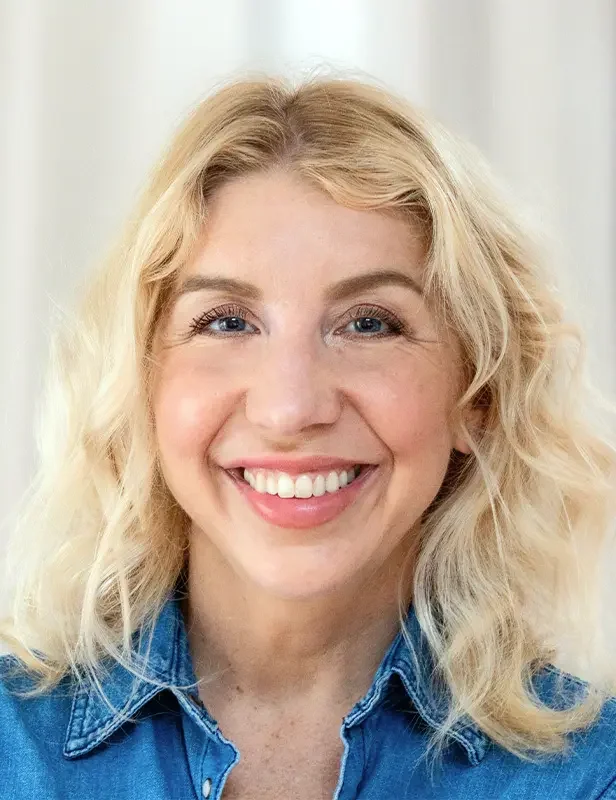
Rodney Evans
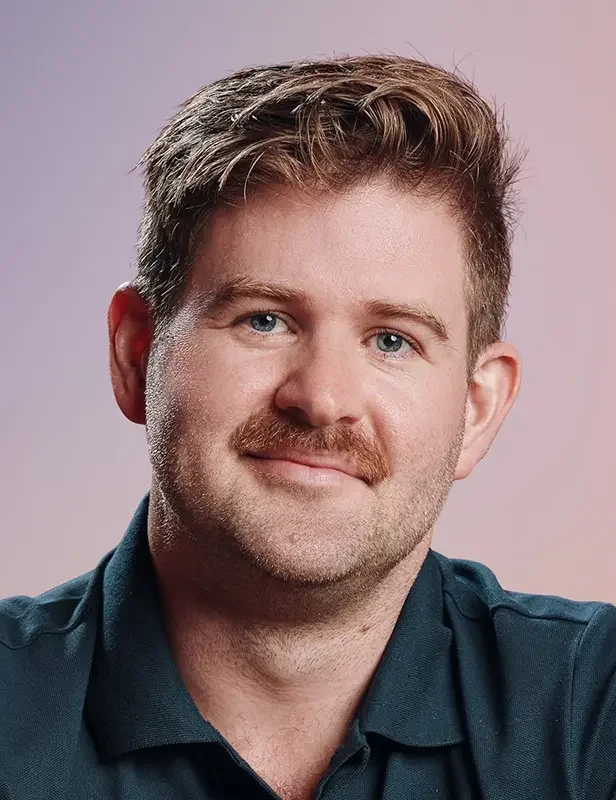
Sam Spurlin
Listen now:
Episode transcript:
Rodney Evans:
It's a party. Let me make a podcast. Go Sam. He's a co-host.
Sam Spurlin:
What?
Rodney Evans:
I don't know.
[Intro music]
Hey everybody. Welcome back to At Work with The Ready, a podcast about work design and how organizations can make change work in their favor. I am Rodney Evans and I am here sadly and celebratorily and happily and nostalgically for the last time with my co-host Sam Spurlin.
Sam Spurlin:
Hello everyone and hello especially to you, Rodney Evans.
Rodney Evans:
Hey Sam. So today is a sendoff for Sam and a celebration for Sam. And like any good ritual, we will start with a check-in question, which Sam generously brought to his final show.
Sam Spurlin:
Of course. I know my job.
Rodney Evans:
What you got?
Sam Spurlin:
Bring the check-in question.
Rodney Evans:
Doing his job all the way to the bitter end.
Sam Spurlin:
That's right. Rodney, it's early September, so my brain turns to the turning of the seasons. So my question for you, what's your favorite way to mark the transition from summer to fall for us Northern Hemisphere folks right now?
Rodney Evans:
Oh, I mean, it's such an easy answer. Jeans. I am a jeans person. I have so many pairs of jeans. Pair of jeans? Pairs of jeans.
Sam Spurlin:
Pairs of jeans.
Rodney Evans:
Pairs of jean.
Sam Spurlin:
Probably more than one.
Rodney Evans:
I don't know. I have a lot of them. And as the kids now only wear sweat garments, I'm just like, "No, I will never conform. From my cold den hands, you will pry my fancy denim." And I feel like yesterday was the first day that I wore jeans all day and into my evening plans and at no point had regrets. And I'm like, "It's fall. It's decorative gourd season. Let's go!"
Sam Spurlin:
That's a good answer. For the video folks, I'm going to do something real quick.
Rodney Evans:
Oh, look at him. He's in his jeans, folks. Wow. And he's doing some kicks, so you might want to hop on over to YouTube.
Sam Spurlin:
I think I just pulled my groin. But yeah, I'm wearing jeans, so I can go with that answer. I'm going to go with something a little bit more...less concrete. There's a morning generally around this time where you go outside and it just feels a little fall-y. The day still may get into the 80s, but the morning is like 62 and you walk outside and you're like, "Ooh, ooh, that's a little different."
Rodney Evans:
"Ooh, little snap!"
Sam Spurlin:
So the first time I get one of those, "Ooh, that's a little different," that's how I think we're in the fall now. And it usually means there's a couple of weeks, it's still too hot in the afternoon, but we're on the path to hockey starting again and other fall things, jeans and sweaters and hoodies. So yeah, I think we've hit that for sure already.
Rodney Evans:
Well, yeah, up where you are. TGFH is what I'm going to call..."Thank God For Hockey."
Sam Spurlin:
That's right.
Rodney Evans:
Or else what would Sam do all winter?
Sam Spurlin:
What would I talk about? What would I do? And I actually don't want to get into it because my team has been bad forever and they're only getting worse, I feel like. We're just going to leave it at that.
Rodney Evans:
Oh no. Maybe they should recruit you and maybe you could help. It'll be like one of those Netflix movies where they bring the guy back from retirement.
Sam Spurlin:
The 40-year-old guy-
Rodney Evans:
The 40-year-old hockey player!
Sam Spurlin:
—who just pulled his groin, lifting his leg up to show off his jeans. Yeah, you're right. I think I might make them better.
Rodney Evans:
Maybe not for this season.
Sam Spurlin:
I need to get back in shape.
Rodney Evans:
You need a little notice. You need a little heads up.
Sam Spurlin:
Yeah. Exactly.
Rodney Evans:
I don't know. Wait, what's your team again? The Red Leaf Maple something or something?
Sam Spurlin:
You nailed it. The Red Leaf Maple somethings.
Rodney Evans:
Is that them?
Sam Spurlin:
The Detroit Red Wings.
Rodney Evans:
I was so close.
Sam Spurlin:
You were close. And the Maple Leafs are a team. I guess not my team.
Rodney Evans:
Not your team. Okay. So Detroit, Sam Sperlin is coming for you. Give him a call.
Sam Spurlin:
Yeah, exactly.
Why now's the moment for Sam to leave
Rodney Evans:
So a bittersweet sendoff, as these things always are. Today is just going to be about a couple of reflections. Also, we don't want to just disappear, Sam. We've had an amazing run.
Sam Spurlin:
Yeah.
Rodney Evans:
We've really enjoyed making this show together. Everyone felt like we had come to a very natural point where it was time to do some other things. Everyone is still friends and will remain so. But Sam, from your side, why now? And maybe also a little what's next?
Sam Spurlin:
Yeah, for sure. So I hate when a podcast that I've listened to for a long time changes rosters or format or something and nobody just explains what happened. Where did that person go? Why are things different? So we didn't want to -
Rodney Evans:
Like Becky on Roseanne when they just swapped out one of the daughters for a different actress with no explanation. And you're like, "That's a different person."
Sam Spurlin:
Exactly.That's what I was thinking top of mind right there.
Rodney Evans:
I figured. Common references, you know.
Sam Spurlin:
So one obvious point where I could have stepped away from the podcast would've been when I stepped away from The Ready. The podcast obviously has The Ready in the title. I no longer work at The Ready and I haven't for a while, so why didn't I leave then? And we talked about it at the time, but it felt like my leaving The Ready was not acrimonious and it felt like leaving The Ready and the podcast maybe, it didn't feel necessary really. And in fact, I suddenly had more time to do podcasting stuff and I enjoy recording podcasts and it's not the most arduous thing in the world. So why stop?
And that was enough reason for me to keep going, but that's probably not a good enough reason to do something forever. I'm generally very allergic to what I call infinity projects, projects where you just start doing a thing on a rhythm and then just do it forever. And things like podcasts are really easy to let slip into this infinity project mode.
Rodney Evans:
Totally.
Sam Spurlin:
And we had always talked even years ago about, "Okay, when do we stop the podcast?"
Rodney Evans:
"When's the natural point?"
Sam Spurlin:
Yep, totally. And basically every strategy meeting every quarter or so, we'd check in like, "Yeah, we want to keep going. Yeah, let's keep going." But I think having no longer worked at The Ready now for a while-
Rodney Evans:
Almost a year, right?
Sam Spurlin:
Almost a year. Yeah.
Rodney Evans:
I mean, that's a long time. That's wild.
Sam Spurlin:
It doesn't feel like that.
Rodney Evans:
No, it really doesn't.
Sam Spurlin:
It just is a good time for me, like I've got other things that I want to go do. I'm trying to do my own stuff as well and just need to free up some brain space and some attention to go do other things. So why not bring it to a happy close now?
Rodney Evans:
Yeah, I love that. And I think, and we'll talk in a minute about what's next, but I think from my end or from our end, other Sam...."Girl Sam." Girl Sam and I-
Sam Spurlin:
Girl Sam.
Rodney Evans:
—just finished the brand arc. The next sort of thing that we're incubating is actually about the Company B exploration. And so as the universe does, I feel like this all sort of very naturally came to a point where you are ready to move on. I'm ready to start talking about things that you and I haven't worked on together, and actually that I haven't worked on with anyone really.
And so I think the thing I want to say about that is I think part of being "built to benefit from change" as a company, as a podcast, as a whatever system you're in, is actually recognizing these moments of serendipity and not fighting against them. Because I think in these moments, it could be easy for anyone on any side of the equation to be like, "I want to make the decision or why are you doing X?" And I feel like you were super supportive when we were like, "We want to do this other brand thing." I am super supportive of you doing your own thing and having space for that. And it's like nobody needs to let their ego get in the way of something that has been really amazing and also naturally run its course and also can end quite elegantly and quite happily.
Sam Spurlin:
It's funny too, because me and you, our relationship, me and Jack, our relationship, doesn't really change by the fact that we're not doing this podcast anymore.
Rodney Evans:
Definitely not.
Sam Spurlin:
I understand that it's different for a listener who maybe there might be some real "Sam Heads" out there who are like, "Oh man, this guy's disappearing from my life." I'm not really, but I am aware of the fact that it feels less like a big deal to me because we're still friends. I still text with Jack every day and that will continue beyond the end of the podcast.
Rodney and Sam’s highlights from their years together
Rodney Evans:
Totally. So as we wrap, couple things that we obviously have to hit. One is the big look back. Tell me a highlight for you of doing this show and I will do the same. And then I'm also going to ask you for your favorite episode. So first, general highlight, general...from the MVP reel, that's a thing, right? No, it's a highlight reel.
Sam Spurlin:
Highlight reel?
Rodney Evans:
Whatever, Sam. I'm not going to learn before the end of this episode. Yeah. What's your general reflection on your, I don't know, three years doing this show?
Sam Spurlin:
Yeah. My memory is just real bad-
Rodney Evans:
Same!
Sam Spurlin:
—but luckily we've got a backlog of content and I did not go back and listen to every episode. I guess if I was really dedicated, I would've done that. I scrolled through and we'll talk about what my favorites were in a few minutes, but just some general themes that jumped out to me.
So we always been talking about the future of work. From day one of The Ready, we're talking about the future of work, but that has never felt more like right now than at any point in history of us doing this podcast or me being at The Ready or even The Ready existing as a company, I think. Things are so unsettled org design wise, work design wise in the last two years than they have ever been in any time in the past. I was just really sitting with that as I was thinking about us coming together and talking about AI a lot, not even necessarily because I think we wanted to all the time, but you kind of just had to and have to be with what's going on.
And when I try to project into the future what are organizations and work going to look like, I feel like six years ago I could do that projection and have a decent view of what it was going to look like because it was going to look a lot like what it currently did. And now when I try to do that, I'm like, man, I don't actually know. Who can say? I don't know.
Rodney Evans:
Yeah. It's wild. It's so true. And it's interesting that you say that...I feel like I've stopped really talking about the future of work almost at all, and kind of so has everyone else. It's just like, "Oh, this sort of nebulous thing has arrived." And I feel like we had a bunch of dress rehearsals for it. It was like, is it going to be the metaverse? Is it going to be Web3? Is it going to be decentralized organization? Is it going to be crypto? And it's like, "Nope, it's here. It arrived. It was AI, which was on the bingo card, but I wasn't totally expecting it to elbow all the other possibilities to the side. And yeah, now it feels like the phase shift is upon us and it's a whole new world. That's really cool.
I think that my reflection on our time together, which is what made us great co-hosts is very different than yours, is I think that our dynamic was always that of shit giving in the best possible way. And I think that one of the reasons that I never got tired of doing this podcast with you is because I could always rely on you to make fun of me in a way that would make me shoot coffee out of my nose? And I think that's actually a rare thing to have that feel so symmetrical. So both people are both in that posture.
Sam Spurlin:
Taking and giving?
Rodney Evans:
Taking and giving shots. And my reflection is it was that way when we recorded a test pilot and it is that way today. And I just appreciate that through the arc, the shit giving and taking with love never ended. It's still very present.
Sam Spurlin:
Totally. Well, one of the reasons why I think we continued doing this for literally almost a year after I no longer work at The Ready is because it's actually pretty easy to record the podcast.
Rodney Evans:
It's pretty fun.
Sam Spurlin:
And I'll have some words for Jack here in a little bit, but literally we kind of just show up and we know what the topic is and we've maybe each spent 45 minutes, half an hour getting some thoughts together and then we just sit down and talk. And I think that is really easy and a lot of fun to do. So why wouldn't I just kind of keep doing that? It's something to look forward to every couple of weeks because it was just an intellectual and fun conversation.
Rodney and Sam’s all-time favorite episodes
Rodney Evans:
Yeah, totally. Same for me. So as we begin to roll out here, favorite episodes, rapid fire, what was your favorite episode we recorded?
Sam Spurlin:
I landed on two. So I think RACI is the wrong answer to the right question. It's my last episode. I'm allowed to defend the rules.
Rodney Evans:
Just do it.
Sam Spurlin:
I liked that one because it was... So one of the things that I tried to bring to the podcast when I originally took over for Aaron was my idea was let's talk about really specific things, really specific patterns and really try to dig into things that are just really kind of minor. And I liked the RACI one because we're digging into just one specific artifact for, I'm assuming that podcast is probably about an hour long. And I think it was fun to take something so specific that is almost ubiquitous in every organization and dig into it in a pretty meaningful way.
And I think we were generous in that episode in the sense that we agree that the impetus to want a RACI, to want to create a RACI is such a valuable thing. And let's channel that energy into things that are more likely to be helpful. I just think it was a good example. I find myself sharing that one with people quite a bit.
Rodney Evans:
Nice. I love that one. And what's your other favorite?
Sam Spurlin:
Then my other one was the ethical case for good org design, which is one of our later ones. And I just liked that one because I think this is where a lot of my thinking and writing has been going recently. And we kind of set aside the normal frame for talking about work design and org design. We're not talking about effectiveness, we're not talking about how it makes you more money or anything like that. It's just like what's the ethical case for doing this stuff differently? I think we need more people thinking that way. And I'm not even saying we need more people defining ethical the same way we do, but I just think bringing that kind of humanist, kind of liberal arts sort of thinking to organizations is really important and I'm glad we did an episode about it.
Rodney Evans:
Same. That was actually going to be my favorite. I can't help but notice that both of your favorites are topics that you proposed.
Sam Spurlin:
I wonder...funny how that works.
Rodney Evans:
Huh, it's so strange.
Sam Spurlin:
I don't actually remember. Did I propose the RACI one? I honestly don't remember.
Rodney Evans:
100%. It was a great episode though. Yeah, mine was also the ethical case for org design. And interestingly, maybe for a slightly different reason, which was I feel like when I started working at the Ready, all of the talk track was very idealistic and it was very much about human flourishing and big ideas and philosophical shift, all of which I believe and still believe. And then I think low these many years later, I've just been in too many boardrooms with too many executives who are just diehard capitalists that are "dollar in, dollar-fifty out", you know? And it was actually really nice in that episode to return to my most idealistic underpinnings.
And also, interestingly that you feel like you are exploring that, in the sort of dual transformation exploration I'm doing. It's also much more back to belief systems as opposed to trying to incrementally improve systems that are essentially designed for extraction. And so I feel like making that episode sort of re-blue pilled me to be like, "Right, this is what I actually care the most about regardless of how I have to talk about work in order to have a company that produces revenue."
Sam Spurlin:
Yeah. Well, it's nice to check in and make sure that we both still have morality that is at play below the surface.
Rodney Evans:
I mean, look at us with our fancy moral compasses just flashing them around. I love it. I love it.
Sam’s parting thoughts and appreciation
Sam Spurlin:
Yeah. Well, before we just completely close, I just wanted to do two quick appreciations. So one, Jack, thank you for everything. We talk about Jack a lot. He's kind of like the god of this podcast. We refer to him, but we don't ever hear his voice except on very rare occasions. And everything I said about -
Rodney Evans:
Though we hear his voice internally in our heads judging us constantly.
Sam Spurlin:
Totally. Totally. And he better not cut this. I will be very upset if he does. But everything I said about how this podcast is so easy to make is because Jack has always taken the lion's share of all of the grunt work to actually make a podcast. I am under no illusions that making a good podcast is just showing up and yapping into a microphone for an hour. There's a lot of editing that happens to make this sound as good as it does. So Jack has just always done everything behind the scenes to make this podcast happen. And I think any podcast I do in the future, if it doesn't have a Jack, I'm not sure how I will actually be able to do it because I don't think I am temperamentally disposed to being able to create a podcast on my own. So thank you to Jack.
And then obviously, thank you to you, Rodney, your generosity as a co-host and just being able to show up and explore stuff in conversation. I never felt like I had to be "on" in a certain way in order to record a podcast. We just showed up and I trusted that the conversation would pull the interesting stuff out of each of us. And I feel like I learned something by recording podcasts. I don't show up and have figured out everything I want to say. By the end of the podcast, I'm like, "Oh, I understand this thing better because of this conversation." And that is something I'll miss, but I'm glad we got to do it for these couple of years.
Rodney Evans:
Yeah. Thanks, Sam. And back at you. I mean, it has been a joy and a ride, and I feel the same way about all of the learnings. And also, I just want to say as a model to the people out there, I thought it was really cool that you wanted to keep going. I know it was a mutual decision, but a lot of people would've been like, "That chapter of my life is over and I'm done." And I appreciated that in keeping with the convention of what we both believe in, the typical rules did not have to apply to us and to this show, and we could both keep choicefully just doing what we wanted to do.
And I just appreciate that you did that and truly nothing changed, which is kind of a radical thing to have been true, that it never became fraught, never became anything except what it had always been. And I think that's a real testament to you because I'm still here doing the same shit I was always doing. And it's a real testament to you that you still showed up and brought the thunder every other week. I don't know, as often as we did.
Sam Spurlin:
Roughly every other week.
Rodney Evans:
Roughly other week. So thank you for all of that.
How to stay in touch with Sam
Rodney Evans:
And as we roll out of here, Sam, tell the people where to find you so daddy doesn't just disappear, goes out for a pack of smokes, never comes back.
Sam Spurlin:
Never comes back. Yeah, I'm not dying. I don't have any sort of health issue or anything. I'm just not going to be on this podcast anymore.
Rodney Evans:
No one thought you were. Maybe they're worried about the groin pulling.
Sam Spurlin:
I mean, just the overall sense of how we're talking. Yeah, I'm alive and well.
Rodney Evans:
He's alive, you guys. He's on LinkedIn all the time.
Sam Spurlin:
I'm on LinkedIn. Yeah. Follow me on LinkedIn and we can connect. Let's do that. But I have my own thing called Deliberate Works that I've been building now for a while, deliberateworks.com, which has writing that I've been doing semi-consistently. And there's a newsletter that you can subscribe to there, which would be really kind of the best way of staying in the Sam universe if you are so inclined
This is probably not the end of my podcasting career. I enjoy doing podcasts. I will probably do something again in the future. Nothing imminent, but I wouldn't rule that out. And yeah, I'm going to be around. You can email me anytime, sam@deliberateworks.com. I read and respond to it all.
Rodney Evans:
Nice. All right. Everybody go smash those buttons so you can stay in the Sam-iverse. And as for this show, we're going to take a few weeks off to research and start recording the Company B arc. So you're going to hear some real banger rerun episodes because we wouldn't leave you hanging like that. And when we're back, it is going to be with the unveiling of what I have been up to and a fresh season of content related to that that I am nervously excited about. Nervously...yeah, I want to show you and I want to barf. So stay tuned for that and we'll see you back here.
Sam Spurlin:
Thanks everyone.
Rodney Evans:
This show is edited and mixed by Taylor Marvin at Coupe Studios and produced by our friend, the godlike Jack Van Amburg. At Work with The Ready is created by The Ready where we help organizations around the world change the way they work.
[Did you listen to the very end…?]