
AUA: How To Rip The Bandaid Off At Work
About this episode:
Original Air Date: September 14 2026Every organization is postponing something painful they don’t want to face. The CEO’s strategy that’s stopped working, the layoffs that have become unavoidable, the promising prototype that’s not delivering results. But even when what has to be done is clear, nobody wants to be the one to be the one to do it.
In this episode, Rodney and Sam respond to a listener asking about how companies can get better at ripping off the Bandaid. They explore ways to put a clock on hard decisions, shrinking the impact of the rip, and share an example of how The Ready has approached their own hard choices.
Mentioned in this episode:
“self-management”: BNW Ep. 78 with Michael Y. Lee
“disciplined experimentation”: AWWTR Ep. 38
“sociocracy”:
In this episode:

Rodney Evans
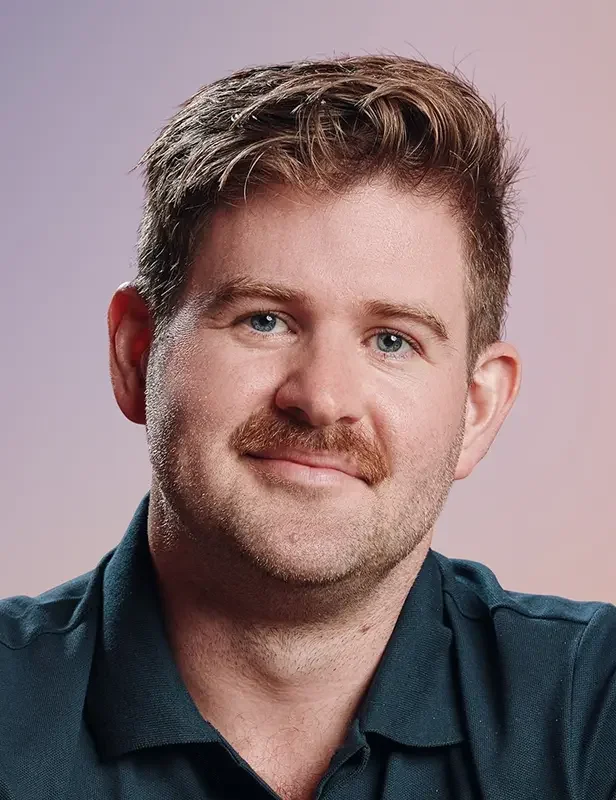
Sam Spurlin
Listen now:
Episode transcript:
Rodney Evans:
Hey y'all. Welcome back to At Work with The Ready. I'm Rodney Evans and that guy is my friend Sam Spurlin.
Sam Spurlin:
Hello everyone and hello especially to you, Rodney.
Rodney Evans:
Thanks Sam. Every other week we tackle one tough thought-provoking listener question and give you a few ideas that we hope are helpful. So let's dive in. Sam, what do you have for us this week?
Sam Spurlin:
This week's question is how can orgs get better at ripping proverbial bandaids off? What necessary pain is being delayed to the detriment of the org? What short-term fixes are you hanging onto pretending they're still doing something when in fact it's more a false sense of comfort?
Rodney Evans:
Yeah. I mean, there's just enough pain in this life. Don't we all want to delay it a little bit? I have a weird answer to this and I'm actually really curious of your take on my answer, Sam.
Why pre-committing to a decision beats endless deliberation
Rodney Evans:
Something that has happened at The Ready, there were some big and fairly hard decisions to make for a variety of reasons that are not important to this conversation. And obviously we're small, but I think you can do this at scale too. We really put a clock on when we were going to make the decision and then we really didn't talk about it a lot in between. And I actually found that very helpful because when you have to make a difficult change of some kind or when something isn't working or when you're asking someone to step out of a role or something like that, for me at least, it can be very easy for that to take up a lot of psychological space and just burn a lot of fucking calories in my brain of like, "Should I or shouldn't I? And how will I know and what will I do? And when should I do it? And what should I look for and what data do I need? And who should I talk to?"
And just sort of saying, "We know that we're going to have to make a change. We want to see how this month goes or this quarter goes or this person does in this project" or whatever the thing is, specifically not as a delaying tactic, but truly we are not ready to make this call right now. And then being like, "But on June 1st, we're going to." And then I am a person because I can be prone to my anxiety who will bring it up and be like, "What do we think about this?" And having people around me being like, "Tut tut babe, no, it's not June 1st. We're not doing this right now," is actually a very helpful way I think to neither just procrastinate nor continually ruminate nor avoid the bandaid altogether because it's like we all know when it's happening. What we're not going to do is spend a lot of cycles worrying about it before it's rip off time.
Sam Spurlin:
Right. Yeah. You're talking about a pre-commitment basically and deciding ahead of time.
Rodney Evans:
Yeah, I like that.
Sam Spurlin:
"Okay, these are kind of the metrics that we're going to look at. These are the things that we are going to consider and we're going to let it run until this time and we know we'll come back to it." I mean, I think that makes a lot of sense. But what I was jotting down here is that I think even bandaid moments benefit from experimentation, but the anti-pattern to get away from is basically convincing yourself to do experiments forever to try to get away from avoid. Yeah. We'll eventually find our way out of this. I think that's just another version of what you were talking about with pre-commitment.
One other thought is that I think there's something about being good at minimizing the surface area of what we have to rip. I think sometimes when things feel really bad and it feels like, "Okay, we need to make a major decision," I wonder if sometimes we over-correct and that bandaid that we're ripping off is a huge one when really a more direct, maybe a little bit more painful bandaid in a smaller area will have a better effect.
Separating quality of the work from failure of the experiment
Rodney Evans:
I really like that. You reminded me the other part of this question that I thought was interesting was they said, "what short-term fixes are you hanging onto pretending they're still doing something when in fact it's false comfort?" I also think this is a really hard thing, but your experimentation comment reminded me of this. This is where disciplined experimentation looks like really not ignoring fucking ROI. And that I have personally green lit experiments at The Ready, particularly early last year, that I am so proud of the work that was done. I think it was extraordinary and they did not do what they were meant to do and they had to be shut down.
Now, would I do it again? I would because I think that the hypothesis was very sound and I think the work was of exceptional quality. And I don't think that I could confidently say that it was a failed experiment if those things hadn't been in place. I would be like, "Well, what if we did it but good?" But because it was done well and in a considered way and it still didn't work, I'm like, "Okay, we have to shut that down." But too often I think with experimentation where we get the false sense of comfort is where we conflate high quality work or ideas we believe in with the impact we're trying to have. And you have to separate those things. You have to separate in your organization whether something, as this listener said, is "still doing something." Is it doing something or are we just doing work that we're proud of through inertia? Those are just very different things.
Sam Spurlin:
Yeah. Yeah, totally. My last thought on this was it's a bit of a curve ball, but because I was thinking about this in the realm of particularly flat organizations, maybe self-managing, maybe just an organization that is really trying not to lean on hierarchical power. I've been reading a lot about ancient Rome recently because-
Rodney Evans:
Weird.
Roman “dictator” role and value to flat organizations
Sam Spurlin:
—I'm a cliche. And in the Roman Republic, they had this idea. So the Roman Republic was not, we're not talking about an emperor. We're not talking about an all powerful leader. We're talking about elected consoles and other magistrates. They did have this idea of what they called the dictator and not in the sense of how we use the word today, but from Wikipedia here, "a Roman dictator was an extraordinary magistrate of the Roman Republic endowed with full authority to resolve some specific problem to which he had been assigned, received the full powers of the state, subordinating the other magistrates, consuls included, for the specific purpose of resolving that issue and only that issue and then dispensing with those powers immediately."
And there's something there about in times of chaos of emergency...and I feel a little bit dirty saying it, sometimes you just need clear leadership on a thing and somebody needs to make the call and we can go back to how we want to be maybe this kind of more elevated state of what we believe an organization should be. But there's something in that idea that I think is at least worth kind of sitting with.
Rodney Evans:
Wait, can I ask a follow-up question or do we have to be done with this?
Sam Spurlin:
No, we can do whatever we want. Hey, Rodney. This is our show.
Rodney Evans:
It's our show. Wait, why does that feel like a little bit uncomfortable to you? Everything you said, I'm just like, "Yeah, that's how work gets done." What about that feels like counter?
Sam Spurlin:
Because I think at least in the really self-managing view, sociocracy, consent-based decision making, and maybe it's just the discomfort with the word dictator and what it has come to be known as today. Part of me is like we should be able, if we were really good at self-managing and handling the stuff, we should be able to do it. But then I think back to the experimentation at The Ready of all of us setting our own compensation and how we weren't doing that at the end when I left. I guess is it impossible for a self-managing organization to move quickly and decisively in a time of emergency? I'm a little bit skeptical that at least I have not necessarily seen great examples of that.
Why speed sometimes requires temporary concentrated authority
Rodney Evans:
I think this is actually a really good conversation. And it's a lot of why we have moved away from talking about self-management and I would consider the ready at this point to be self-governing because we have representative governance, because we are an employee on trust, because we have a trust stewardship committee made of elected members that is a checks and balances on our leadership team, et cetera. I think it's a much more high performing system than it has ever been in the ready's history. And that is because to your point, whether you're in crisis or require urgency or you just want high quality experimentation, the worst way to do that is to have a whole bunch of people who don't know shit about shit involved. Part of the reason that The Ready's comp experiment from back in the day was so fucking borked is that 80% of the people at The Ready had no idea what their market value was, had no idea how compensation worked and had never managed anyone or had a real manager.
And so it's like that's a bunch of very idealistic and very philosophically curious people being like, "Hold my beer." And spoiler, it was a race to inflation and mediocrity and bias. That's probably going to creep in in most places where you have a lot of people who don't have expertise or experience in a domain helping to shape the experiment.
One of the experiments that I was thinking of when I was talking about the effort-impact vector from last year that ultimately did not have the impact we wanted, but that I thought was incredibly high quality work with the right kind of effort, I completely recused myself from from the beginning because I was like, "I am going to want to tinker with this. I actually have no expertise in this domain. The person who is running this experiment does have expertise in this domain. She has proposed something that to me looks very smart.
She has also done this before. And so what we're going to agree to is to give her this dictatorship. That is the part where I think there is a need for a check and balance. But once the power is vested in that dictator, I think we all could do well to leave them alone and make a ruckus.
Because I think that's where you get speed and edginess and high quality and a bunch of other positive things. I think where it could maybe tip sideways is that person didn't become the dictator forever of everything. It was really concentrated authority to a time and place and domain where there was a need and money and specific expertise. So I actually really like sort of pulling on this thread because I think there's a lot of power in being like, "you are going to do this for this time with basically full autonomy-"
Sam Spurlin:
Yeah, totally.
Rodney Evans:
"—And if you get the impact that we want, you're probably going to get more of all of that."
Sam Spurlin:
Yeah. And I think I agree with that 100%. And I think the tricky thing about the Roman dictator was that basically control over everything, which is not quite I think what we're talking about here. But your homework, I'm going to give you some homework, is to bring the role title of dictator back to The Ready.
Rodney Evans:
Almost just did a spit take. That was an awkward time to have had a sip of water. Okay. I'm going to replace Steward with Dictator and we're just going to see how it goes.
Sam Spurlin:
Jull with it. Yeah. We'll see. Won't cause any feelings
Rodney Evans:
Let's rebrand dictatorship. I feel like we would get a bunch of inbounds-
Sam Spurlin:
Probably.
Rodney Evans:
—of people in AI search being like, "Yeah, we like that. " Yeah. Dictatorship for America.
Sam Spurlin:
And you know what? I'm available for marketing consulting work, so just let me know.
Rodney Evans:
I love it.
Sam Spurlin:
All right, that is it for this mini. If you've got a question of your own, hit us up at podcast[at]theready[dot]com.
Rodney Evans:
And we will see you back next week for a full episode of At Work with The Ready. Thank you so much for being a listener.