
Ep. 36: What AI Is Teaching Us About Ourselves
About this episode:
Original Air Date: November 3, 2025AI isn’t “on the way”…it’s already here. Every organization is feeling its impact, whether through new tools, shifting expectations, or the quiet panic of not knowing where to start. But most companies are doing what they always do: treating transformation like a plan instead of an experiment. And as AI reshapes how work gets done, the biggest risk isn’t falling behind—it’s automating the dysfunctions you already have.
In this episode of At Work with The Ready, Rodney Evans and Sam Spurlin take their first deep dive into AI since 2023. They unpack why AI acts as a mirror for your organization’s operating system, how hesitation and hype are both clouding judgment, and what it looks like to design meaningful ways to learn and experiment instead of performative roadmaps.
Downloadable Tools from The Ready:
Toolkit: The Ready’s AI Coffee Club
Mentioned in this episode:
“traditional consulting episode”: AWWTR Ep. 8
conference Rodney refers to: Charter Workplace Summit
In this episode:

Rodney Evans
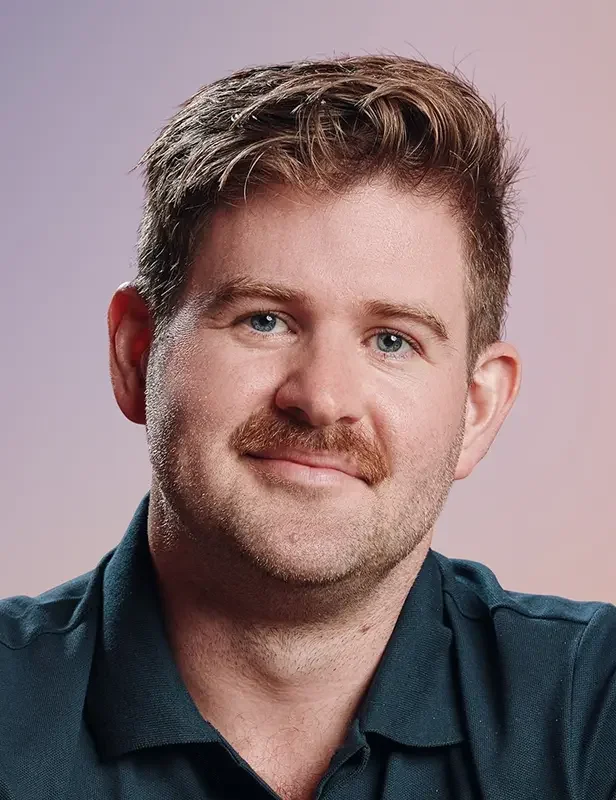
Sam Spurlin
Listen now:
Episode transcript:
Sam Spurlin:
You know that idea of first idea, best idea, which is in improv, just do the first thing that comes to mind. I think in a lot of organizations, they're doing that with AI in the sense of cost takeout. First idea, best idea for most organizations with AI is like, oh, cool, we don't have to pay people anymore?
[Intro music]
Rodney Evans:
Hey everybody, welcome back to At Work With The Ready. I'm Rodney Evans and the Man in Black is Sam Spurlin.
Sam Spurlin:
That's what they call me every day.
Rodney Evans:
I think they usually call Johnny Cash that, but for today it's you. Yeah.
Sam Spurlin:
That's right.
Rodney Evans:
Y'all AI is rewriting work right now. Right in this moment. We feel like the future of work is arrived and so we're not talking about it like it's not here yet. And now the question we're asking on this show is not if you're going to evolve or adapt, but how you are going to design work for what's next and what's frankly imminent.
Sam Spurlin:
Yeah, that's right. Work design is no longer optional and the teams that treat it like a side project are going to and are being left behind. And the ones that treat it as essential will keep up with the pace of change.
Rodney Evans:
So that's what we're going to talk about today. All our clients want to talk about is AI. Every sales call is about AI. Every article I read is about AI, it's all we talk about. And we haven't actually done an app on AI in a little minute here, but before we do, let us check in.
Sam Spurlin:
Rodney, I'm going to keep it real simple today. Check-in question, what's good?
Rodney Evans:
Oh, what's good? Well, tomorrow I am taking a long weekend. I'm going to LA with my husband and some good friends. We are going to eat a lot of delicious food and we are going to hang out with our producer Jack on Saturday for some of our food tour, which I think that's all pretty good.
Sam Spurlin:
Sounds amazing. And Jack, I feel like is the right person to meet up with for a food tour.
Rodney Evans:
He's going to fit right in.
Sam Spurlin:
He has his finger on the pulse. According to his Instagram-
Rodney Evans:
He's going to fit right in. It's going to be great.
Sam Spurlin:
... he definitely does.
Rodney Evans:
He definitely does. Absolutely. What about you, Sam? What's good?
Sam Spurlin:
Well, Rodney, on this day of Thursday, October 9th of our recording, the Detroit Red Wings play their first game of the 2025-2026 season. So that is good. I'm going to buy myself a Little Caesars Pizza, the worst pizza.
Rodney Evans:
Gross.
Sam Spurlin:
And I'm going to bring it home. I got to drive about 25 minutes to go get it.
Rodney Evans:
Why?
Sam Spurlin:
I'm going to bring it home-
Rodney Evans:
Oh my God.
Sam Spurlin:
... and I'm going to eat it, because the Little Caesars are owned by the Ilitch family. The Ilitch family owns the Red Wings. The ritual is that I eat Little Caesars Pizza on the first game of the season, regardless of how far away it was. And yes, it was easier when I lived right next door to a little Caesars and not 25 minutes away, but the routine must continue and that's what's good.
Rodney Evans:
This is what I love about sports fans. It's obviously not sports, but what I love is how much mythology, and pageantry, and background story there is. It is just a pizza, man, but no, it's not just a pizza. It's a tradition rooted in, yeah, it's very Game of Thrones. I love it.
Sam Spurlin:
Yep, that's right. Maybe I'll be wearing a robe. We'll see.
Rodney Evans:
Wow. It's a visual.
Sam Spurlin:
It is.
Rodney Evans:
All right.
Sam Spurlin:
Let's do this thing, Rodney. Let's do it. I feel like this has been a long time coming.
The Pattern: AI mirrors your org’s problems and makes them worse
Rodney Evans:
Yeah, it has. And we don't have exactly a repeating pattern yet because most of what we're seeing is just very chaotic. But here's what I will say to put a fine point on what we're going to talk about today. A lot of organizations that we work with come to us because they have a difficult time making meaningful progress. And in the case of startups and scale-ups, that's often because of the chaotic nature of scaling and how hard it is to prioritize when opportunity and pressure are abundant. And at the other end of the spectrum, with more legacy and bureaucratic firms, they tend to have a lot more sand in the gears and less ability to adapt on a dime. And in both cases, they call us because they're like, how do we get after it?
And in today's case, it is AI. The problem that we're seeing is regardless of where you are on that spectrum, AI is currently for most organizations a mirror for what is already true. So however your organization is AI is, A, showing you exactly. And B, probably making it more so that way. And so we're going to talk a little bit today about how that's happening and what's going on and then as always, what to do about it instead.
Sam Spurlin:
Cool. And I wonder if we can actually start with a question that I'm sitting with because I feel like every time I post or say something publicly about AI, there are always a handful of folks in the comments who are saying something like, AI is all hype. We shouldn't be thinking about it this much. It's destroying everything. So my question for us just to briefly hit upfront is what are the chances this all blows over as some sort of mass delusion phenomenon? And we look back in two years like, "Oh, remember when AI was a thing? Good thing we didn't go all in on that." Let's just take 30 seconds here. Do you have a take on that?
Rodney Evans:
I want to hear your take first. This came up in AI coffee club today, so I have a very recent take.
Sam Spurlin:
Okay, cool. So my take on this is that I think it is important to disambiguate the AI economy and all of the companies that are doing increasingly strange and circular investment in each other around GPUs, and data centers, and other deals like that from the tools that are actually being created themselves. And I'm not the first one to make this observation, but I think there is something potentially to be pulled from the dotcom bust in the early 2000s where it was absolutely a bubble and it popped. And a bunch of companies went out of business, and still the internet was a thing. And it was still really valuable. And if in 1999 you're like, "I don't think the Internet's really going to shake out because of the incredible froth that we are seeing," you would not have probably been happy with that decision.
Rodney Evans:
Yeah, you were wrong.
Sam Spurlin:
I think we'll see a similar thing here. I think we will see a pop. I think we will see a lot of companies go out of business. I think it'll hurt the economy for a while. And I still think there are useful tools that are happening now and will come out of this in the near future that we should be paying attention to.
Rodney Evans:
I think it is undeniably a phase shift. I don't see any universe in which it's just a dot, dot, dot.
Sam Spurlin:
Just a blip. Just a blip, yeah.
Rodney Evans:
It's not going to be like DAOs, it's just not. And here's why I believe that. One is because the capability that exists today, even in how nascent we are into this is already pretty astonishing. And so the use cases where AI, obviously, we all understand that AI does better with data and with strong inputs and analysis than it does in a lot of other places. But even the current use cases in terms of diagnostics, in terms of legal review, in terms of analysis are astonishing. So I'm just like, I'm not really willing to entertain the, this isn't going to be a thing, that's one. Two, I totally agree with you about the bubble and I basically would try to, in my mind, ignore any news that is not about the technology itself. Because all of that is just a sports book right now that it's just like people are betting on crazy shit that is based on nothing.
The investment ecosystem is largely irrational. And I think you're right. I think it is the mid-'90s right now and they're like, pets.com, am I right? And it's like, probably not, but we'll get there. So I try to ignore that and pay more attention to use cases where people are showing something and you're like, "Holy shit, it can do what now?" I'm much more interested in that. Three is, and this is my own very personal take, but I think that AI is a perfect fit for extractive capitalism and the most broken aspects of work. So it kind of feels like a perfect storm to me where 90 plus percent of companies and certainly 90 plus percent of customers are not super happy with how customer service is going in call centers, et cetera, in high-volume places. And most businesses have made that as cheap as humanly possible at the expense of the customer experience. And really great agents will take care of that.
Even the AI already inside of Amazon's native app to deal with most customer service inquiries is better than 75% of the experiences I have talking to a human being. So it's just this strata of work that's a perfect storm of shit we don't want to pay for shit that doesn't work now and a technology that is already proving that it will be able to do this that I'm kind of like, this doesn't really feel arguable to me. So I try to look at stuff like that where I'm like, where's the convergence of cost, problem, and solution? And those are the spots that I think make it an undeniable reality.
Sam Spurlin:
Yeah, I'm right there with you. And I think the other thing, even if you're sitting here and still being a grump about it. When there's a force like this that is radiating throughout all organizations, all of your competitors, it behooves you to do your own research and to do your own really investigatory work to figure out if that is actually the stance that you want. So even if you think it's all bullshit, I think there's still work to be done to determine that for yourself if that's where you want to land.
Rodney Evans:
Yes. Hard plus one, Sam, and I would say even if you think it's all bullshit and even if you are morally opposed, still go do your own research. I think that the people who are burying their heads in the sand right now for valid reasons like creative ownership, environmental burden, potential massive unemployment, these are all very valid concerns and the answer to none of them is try to ignore it. That's not going to work.
Why you should do your own research on AI, even as a skeptic
Rodney Evans:
And so what I'm seeing a lot is the two polarities. It's like, the "wait and see" crowd or the "hype and hope" crowd. I see a lot of CEOs in that camp where they're just like, "I'm reading stuff, I'm psyched about it. I don't know how we're going to do it, but man, I hope it works."
I don't think either of those is a great posture to take right now because neither of them provides any kind of clarity or momentum within the organization. And that, to me, all we're going for right now, nobody has this figured out, nobody's dialed, nobody's getting...even the people who are publishing case studies, I think half of them are full of shit. So don't let FOMO or feeling behind be the driver here for either "wait and see" or "hype and hope". Get yourself into a place of experimentation and what can we try now that we can be learning from meaningfully.
Sam Spurlin:
Yeah, I had my first moment of realizing how quickly things were moving because I was thinking back to a year ago, and a lot of the AI discourse was like, "Here's how to prompt engineer. Prompt engineer is going to be this high paid thing and here's a course you can take on it, and all the tips and tricks to prompt engineer!" And I just saw a pretty respected AI thinker give a presentation a couple of weeks ago and he was like, "Yeah, basically all of the tools, none of those specific, like prompt engineering things are relevant anymore. They have moved beyond that." And we're talking less than a year of development. We have completely shifted the conversation on this thing that a lot of people were pretty stoked, was the next how to be-
Rodney Evans:
The thing.
Sam Spurlin:
... a cowboy AI person.
Rodney Evans:
Yeah, 100%. What else are you seeing out there, Sam?
Sam Spurlin:
Maybe a good place to start is digging into how you initially teed this up around how AI is kind of a mirror and an amplifier. Because I think the thing that I'm seeing most common or most frequently in a lot of organizations is really just this copy and paste mentality about let's take our organization as it exists and give it a paint job of AI. And it'll be faster and things will work a little bit differently, and we'll probably strip out some costs and we're transforming our organization. And that is a solidifying and a magnifying of a broken OS, just with a broken OS but faster, which is not what I want to see happen in this phase change that we are talking about. But I think it is a perfectly valid in the sense that not that you should do it, but that you can do it. And I think a lot of organizations are doing it and it's leaving a lot to be desired.
Why AI can’t paint over a broken org
Rodney Evans:
And really tactically, what does that look like in an organization? Is that like everybody got a little training and everybody got a ChatGPT license or what is the broad brush play look like?
Sam Spurlin:
Yeah, the broad brush play that I'm thinking about here is basically how many humans can we replace with an agent of some sort and not really rethink the workflows or anything. But how many human behaviors are actually doable by AI and let's cut out the human and put out an AI in there instead and leave everything else around it as is.
Rodney Evans:
Yeah, and this is actually a really big question that I have about AI, because when I wrote The Ready's AI perspective to get feedback from you guys a few months ago, I was very much in the head of garbage in, garbage out. And everything that I was reading and hearing from people particularly about workflow was like, you've got to get your house in order data-wise in order to really be using AI well in terms of workflow automation, which made a lot of sense to me. Like, if you're feeding it nonsense, you're going to get nonsense back. There is a different camp that says that the AI will ultimately skip the step of data hygiene and just be able to work around that rather than just automating the garbage that you have.
I do have a existential question right now, or maybe it's just a design question of how long is that going to take and do you do the data play in order to use AI really effectively today or do you basically wait for it to be smart enough that you don't have to get your own house in order? I don't know the answer to that. The perspective I'm taking is the former, which is have it solve material problems for us today, even if that requires more manual intervention and more work on our part because that is part of learning, even if ultimately that's not a necessary step in a year. But I do think that there are people out there who are like, "Nah, we're just going to let our horrible data debt exist and hope that there is an automation solve for this that does not require us to get our shit together."
Sam Spurlin:
Yeah, no, that's a really good question. I think I fall similar to you in the camp of I am skeptical of any course of action that is purely weight at this point, because I don't think you learn a lot while waiting.
Rodney Evans:
I agree. That's right. I think that's right.
Sam Spurlin:
And you said that and I agree. I think maybe taking action while also holding lightly what we're doing right now is not what we're going to be in the future, but that's okay. And we're going to keep moving there. I think the other thing that makes me think about is why it will be important, I think for a while, to have humans in lots of these loops. What humans are going to still be able to do for a while in most organizations is bring the context to the output that is coming from the AI. And I'm sure over time that'll get better, and better, and better. And maybe we can make the argument that you don't actually need the human in the loop at that point.
But I do think there's a lot of context that someone who has been doing the work for a long time or in the organization for a while can sanity check. And even if the AI is generating things that are unexpected and don't make sense, at least you have someone now who can follow that thread basically. Is there something to understand about what is happening here? And even as I'm saying it, which is what blows my mind about this. I understand that the way AI works is nobody really truly can understand it. You can't really follow the path back because it's not deterministic that way the way computers have been our entire lives, which is a bit of a mindfuck, but you get what I'm saying.
What role humans play at work right now
Rodney Evans:
I do. And I think to that point, and maybe this is a mental model that we can share with the people listening to this, it's like you're talking about a little bit further into the work. So if you think about as a human in a system, really, whether you're a leader, or you're a manager, or you're an IC, I don't think it really matters. One of the human jobs right now is getting so so clear on what problem you are trying to solve. AI cannot tell you what problem in your organization you should point it to to solve. You can ask it and it'll give you answers. But I think that from a change management lens, the human job right now is to really prioritize what is solvable, what would show value, what could we learn from etc, etc. And getting crystal clear. And I'll give really tangible examples.
First of all, I am a big fan generally of fix things inside of your own company before you try to tell your customers or clients how to fix shit. That's just like, I don't run a technology company, but that's my general take. Two is even at The Ready right now, there are three use cases floating around that are being debated in terms of what order. And when I say debated, there will be three sprints and each of these will get made, but still it's prioritization question. One is research for later-stage sales calls. So all of us do research about the people that we're talking to, the organizations, the landscape, the strategic problems, blah, blah, blah, blah, blah, as well as looking internally at what conversations we've had before. All of that kind of stuff.
So it takes a bunch of human intervention to do that preparation. That's one problem that AI can solve. The second problem is essentially network management for us. So there is a universe in which AI could do more for us in terms of scraping our LinkedIns, our own HubSpot, our own Slack, blah, blah, blah, blah, blah, to do a better job of understanding and managing our network. And three is the state of the business dashboard that we run the company on requires manual work to basically braid three different systems together to give us a data picture.
Those are three workflows that absolutely are automatable by people inside of our company. Now, first of all, a lot of people that I talk to aren't even that clear on those are real things that are real problems that would have real value to us. But then from there, it's like, okay, in what order is that most important? And we are looking at our strategy for 2026 to make that determination so we don't get caught in a loop of just like, well, I want this thing, and Mia wants that thing, and Colin wants that thing, and so we're stuck.
Sam Spurlin:
Yeah. Well, and the important thing there in everything you just said is that throughout all of this, and well prior to what you just described here, we all have been playing with and trying and learning as much as possible. We didn't sit on our hands and just put our thinking caps on until decided which three things we're going to go be precious about.
Rodney Evans:
That's right.
Sam Spurlin:
It's like, no, we've all been trying very really small scale experiments on all sorts of stuff, so we even have a sense of what problems could it even be directed at.
Rodney Evans:
That's exactly right. And to that point, Sam, one of the things I keep saying to clients is, and it's not really different than any other kind of organizational change. I keep saying, you really have to have the scaffolding to do this, and they nod, but sometimes I wonder if they know really what I'm talking about. When I talk about the scaffold around something like AI usage, here's what I'm talking about. And this, I think, is a lot of the work that we did for the last year was the scaffolding work so that we're at this point, it is enough skill building, so not just saying to people, go figure it out. It is enough encouragement, skill building, et cetera. It is clear constraints around what technology is safe to use and in what ways so that we are legally and ethically compliant with our own standards.
It is what principles we are designing for. So where we think we should use AI and where we shouldn't, and what our constraints are around that. It is some clear ways of working. So it's like, we talk about AI in these Slack channels and in these meetings, and this particular team has this particular remit. So that feels clear. And it is clarified in our strategy. There is a specific mention of the intelligence age and its intersection with organizational design so that this isn't like a thing that just exists in the ether. So that stuff being clear and explicit and fully understood by the whole organization took real work. Somebody didn't just write that shit down one day and then it was true. It took six months of experimentation, and exploration, and learning to get us to the point where we have that scaffolding in place and we can start to say, okay, we have a car that is pretty roadworthy. Where do we want to drive it? And then we get to those problems that I just articulated.
Why real scaffolding matters for AI experimentation
Sam Spurlin:
Yeah, no, I love that. And I think what I would add to that is some even more general scaffolding, which existed in our organization before AI was a word on anybody's lips, which are things like really thoughtful rhythms for where we talk about certain things. So we now have a couple of places where various things related to AI are just showing up in rhythms we already had. We didn't have to create that from scratch. We already had a operating system where most of us have time, and space, and the expectation that we should make time and space to learn stuff. And we're not all 100% fully doing billable hours to clients.
And then the third thing that I just jotted down is we have and had before all of this, a culture of people wanting to share the cool shit that they're doing. So if you went and tried a thing with an AI tool and it worked, or even if it didn't, there's a lot of stuff popping off in our Slack all the time where someone's like, "Check this thing out that I tried or check this out, look what they're doing." And that all pre-existed, the AI moment that we are currently in.
Rodney Evans:
Yeah, I think that's right. And I heard someone say this at a conference and now I can't remember who it was, sorry. But I think there's this interesting tension between what IT is doing and sort of policy making and the desire for experimentation. And I feel like often it's sort of categorized as IT just wants to lock everything down, but the CEO wants everybody just trying stuff and finding efficiency gains. And I actually think neither of those things are totally true. I think IT and legal-
Sam Spurlin:
A third way you think, Rodney?
Rodney Evans:
I think there's a third way. I think those functions feel a real responsibility to mitigate risk of technology that is largely untested at an enterprise level. And to set enough constraints and create enough safety features that they don't have massive data breaches or they don't produce workslop as an end product and then get sued, ahem, big consulting firm and have to pay a bunch of money back. I think it's reasonable that those functions are trying to carve that off. And I don't think that most of them are trying to quell experimentation. And on the other side, I certainly know that this was true of me and other people at The Ready and other peers of mine that steward other companies. A lot of us needed those kinds of constraints to feel safe experimenting. I wanted to try stuff. I had been reading, I was ready. And I didn't want to do something fucked up. And I just didn't feel like I knew enough to know what those guardrails were. So I think in a perfect world, actually these things should be integrated and generative and instead they're seen as polarities in tension.
Sam Spurlin:
Yeah, I think there's something about polarities in tension, which somehow feels cleaner. You're in one camp or the other, and it is easy to know who's your ally and who's your enemy. And those are roles that we know how to play generally in our society. And this in-between generative third way, I don't know, I think it comes harder to a lot of folks. It's not as clean, it's messier, but more generative.
Why IT should be an enabler, not a traffic cop
Rodney Evans:
So what that looks like is your IT, whoever has the remit in IT, is writing dozens of pages of policy documentation that is essentially useless and illegible to the masses, that's not it. And if your organization writ large is experimenting completely unconstrained on their own tools with their own personal email addresses, feeding God knows what, that is also not it. You got to get to minimum viable constraint. And I know, look, it's different when you're working with an organization that has 300,000 people. I'm mostly not talking about that. I'm mostly talking to the midsize companies that really want to get after this. You got to do the work of what minimum viable constraint is within which people can go buck wild.
Sam Spurlin:
Right. Right. So the whole point of experimenting is not so that each individual experiment is conducted and dies on its own.
Rodney Evans:
Exactly.
Sam Spurlin:
It's so that each experiment in the result from it, builds on top of each other into a body of knowledge, a body of practice across the organization. And that's true whether we're talking about AI or any other way of working or work design sort of thing. And in order for that to happen, you do need those constraints. You need some scaffolding for experiment results to build on top of each other over time.
Rodney Evans:
Yeah, exactly. Exactly.
Sam Spurlin:
I think one of the things that I had to linger on for a second, again, and this is from a recent conference talk that I attended. And the speaker just straight up said, it's important to remember nobody is an expert in this yet. And specifically, the applying AI to organizations. So I've always found myself saying things like there's no playbooks for the type of organizational change that we do. And I've always kind of gotten the sense that even some of our best clients, we're not along, but they would be like, "But there's actually kind of a playbook." There's sort of a playbook, just give me the playbook.
But this time, for real, for real, there are no playbooks. And not to make this an episode about traditional consulting versus the stuff that we do, we have a whole episode on that. But I do think that is an interesting place for consultancies that have traditionally been paid to sell you answers, an interesting place for them to be. Because anybody trying to sell you a kind of end to end answer in the AI realm and how it's applied to your organization is selling you a story. And they are trying to separate you from your money via the force of FOMO. And that is, I don't know, I think about that a lot as we try to position ourselves like anybody else who helps organizations, it's like, how do you talk about this and bring ideas to an organization when there truly is not a playbook? I find it invigorating, but it's also really hard.
Rodney Evans:
Yeah. The number of places, whether it's really big consultancies, I think Accenture said they're going to hire 80,000 people in this space, which is, I'm like to do what? Whether it's big players like that or companies that I have a lot of respect for in the AI space, and I see what they're talking about in terms of their, quote, unquote, "transformation offering." And it is almost to a company, "make your plan". We'll consult with you to create your AI strategy. It feels very early to be overly focused on what the plan is going to be. And I feel like right now what I would like to see more companies doing is getting really clear on their intention, getting really clear on what they're designing for. And when I say what they're designing for, it's like, are we designing for more automation in our tool? Are we designing for more self-service operation for our employees? Are we designing for highly paid knowledge workers to not be spending time on admin? What are we designing for? I would like for there to be more time on that.
Why nobody is an AI expert yet
Rodney Evans:
And then I would like to see more time on what the guardrails are within which experiments can happen. And then more storytelling, more demo days, more working in public and less focus on what the fucking roadmap is. Who cares what the roadmap is? The roadmap from six months ago is garbage and the roadmap-
Sam Spurlin:
See prompt engineering.
Rodney Evans:
... six months from now will be garbage. Look, I keep saying this on this show, I get that that's a much better business to be in than ours. And it's like, nobody really gets held to account for selling plans that don't come true. But I feel like this is a time to really lean into the idea that you are not behind. You just need to have some disciplined experimentation so that you're really learning. And in many ways, unfortunately, learning and planning are in conflict and you can't do both as priority number one.
Sam Spurlin:
Yeah. And if you separate them out, then you really can't do them. I think learning and planning that is intermingled in a really complexity conscious way. That's cool. But that's not what you're talking about generally.
Rodney Evans:
No, it's not. And what I'd like to see is really minimum viable planning and as much learning as they can stand. And mostly, what I see is the opposite. It's like, let's spend a lot, a lot, a lot of time analyzing what we might do and then a little bit of chaotic energy on trying a bunch of shit to see what sticks. And I'm like, what if you did the opposite of that? I'll give you an example. I talked to an old client the other day that I think is getting this right. They're one of the only companies that I've talked to that I'm like, you guys are on one, is one of the ways that they're getting after this, they've recognized that they're not going to turn their entire workforce into workflow engineers. It's just not going to happen.
And that they actually do want inspo, and use cases, and problems to be solved from the edge of their organization. And so, they've created a fairly small technical team. And there is a way to submit ideas for automations that can and should be built. Those are public and upvoted. And then the technical team sprints fairly quickly on cranking out MVPs. And I'm like-
Sam Spurlin:
That's cool.
Rodney Evans:
... it's done in public, it's retrospective. There's a monthly cadence to talk about wins. Things are sunset that don't get traction. It's a very agile way of doing this, but I'm just like, that's so smart. That's such a better idea than a really fiddly complicated two-year roadmap that is just garbage.
Sam Spurlin:
Totally. And it makes me think about the other main thing that I've been just stewing on with all of this, which is I think a lot of organizations have kind of... You know that idea of brainstorming, I don't know if it's from brainstorming. No, it's from improv, first idea, best idea? Which is in improv, just do the first thing that comes to mind. And I think in a lot of organizations they're doing that with AI in the sense of cost takeout. First idea, best idea for most organizations with AI is like, oh, cool, we don't have to pay people anymore?
Rodney Evans:
The worst idea.
Sam Spurlin:
Great. Let's get them out of here and get some AI in here. And I think it is such a impoverished way to view what is possible here. If broadly you can break your whole organization down to the value you create and are able to get from your customers over the cost it takes to make that value. What if we focus so much more on the numerator and less about making that denominator as small as possible? And I hope to see more organizations move away from that really uncreative and I think ultimately kind of doomed way of applying AI into their organization.
Rodney Evans:
I agree with you. To me, this is no different than the CEO who says the strategy is a metric. I'm like, no, no, disagree. It feels like the same thing. It's like you are saying the outcome is the work? Cost takeout, or headcount reduction, or productivity matrix. Those are going to be lagging indicators of the complex body of work. Focus on the complex body of work and leave the lagging indicator to lag and indicate. Don't start with that thing and be like, how do we get it right now real quick? Because what you're going to do is likely not going to be sticky, going to create increased fragility. See also the number of press releases that are like, we fired all these people and then we had to hire them back.
And it's going to look really good in the short term, but it's actually not going to help really change the genetic material of your organization to include AI in it. And that's what you should be going for right now. Anybody can do a cost takeout and anybody can hire a consultancy to do a cost takeout. It's truly not rocket science. And if you're trying to shift to a new way of being, and of operating, and of deciding, and of executing, you don't start with that. You start with what you're trying to be or become. And that might be a byproduct. And I think for most companies it will be. Look, I do think we're going to see mass unemployment. I do think we're going to see a huge rationalization of the workforce. I do think we're going to see all of that. But I think the companies that will do the best will have that be a byproduct, not the main event.
The easiest AI idea usually isn’t the best one
Sam Spurlin:
Yeah, I think organizations have always, if you struggle with the difference between outcomes and output, you always have some weird stuff going on in your organization.
Rodney Evans:
Totally.
Sam Spurlin:
And I think if you are struggling with it and then you apply AI to it, you're really just ramping it up. Because I think when we're making this argument, which I think is fundamentally in some ways a pretty pro-human argument...
Rodney Evans:
Totally.
Sam Spurlin:
... that the role for humans in our organizations in the future, really putting a flag in the sand here. But there's something about if we are trying to use AI to keep work into human-sized packets, we're doing something wrong. And what I mean by that is all of the chatter around, or usually memes or jokes around how I asked AI to take this bullet list and make an email. And then the AI sends it to you. And then your AI took that long email and broke it down into three chunks. Or I'm making 10 times as many PowerPoints as I normally do, and then your AI is reading. That is the skeuomorphic idea of AI that I think we're in and we'll have to work our way through because using our human brains to basically just accelerate our human workflows feels like such a miss.
Rodney Evans:
Yeah. Yeah. It's such a great point.
Sam Spurlin:
But it's hard to articulate what the new thing is because I'm using my human brain to try to do that, which is inherently limited to what I have experienced in many ways and defaults to human-sized conceptions of what work looks like.
Rodney Evans:
But these are the creative exercises that we should be undertaking. And I feel like to your point, a lot of the memes are in the vein of the two things that you just said, email and PowerPoint. Just take those to this example. To me, email and PowerPoint are the two worst trappings of the inefficiency of knowledge work. If you summarize everything that's garbage about working in large organizations, those two things could be the logo and the mascot. So it's like, we don't need to have agents making tons and tons more and faster of the worst aspects of work. Let's just start there. Let's start from that premise of this like-
Sam Spurlin:
Let's not make more of the worst stuff.
Rodney Evans:
Let's not make more of the worst stuff, that's a principal walking. I feel like that's a conversation that I would love to be having more with clients.
Sam Spurlin:
Yeah, yeah.
Where Rodney and Sam are hopeful about with AI
Rodney Evans:
Yeah, totally. So one of the things that I do want to ask you is just what about this are you hopeful about? I think we've talked a lot about what we're seeing out there and why we think it's not the way. What is the way? What are you bullish on?
Sam Spurlin:
I am not confident enough to sit here and say, here is the way.
Rodney Evans:
Nope, it's Hot Take Zone.
[Hot Take Zone music]
Sam Spurlin:
We kind of retired the Hot Take Zone. We should bring it back.
Rodney Evans:
I think it was brought back a few weeks ago and I was very surprised and delighted by it.
Sam Spurlin:
Okay, great. Well, we're back on the Hot Take Zone.
Rodney Evans:
Do you not listen to our podcast? You should. It's good.
Sam Spurlin:
Which is, and I feel like I've mentioned this somewhere, but maybe not. But I think there is something interesting about, so The Ready, we're self-managing right? And you don't have to be deep into the theory of holacracy and sociocracy to basically understand that we don't have a traditional hierarchy, traditional org chart, nested teams, and circles, and authorities that work together to do stuff. And there are some quite large organizations that have done interesting experiments around various flavors of self-management. And I think there is a future, a potential where AI could actually bring self-management or things that look and feel like self-management, at least some of the principles of self-management to more organizations. Partially this is just a feeling and partially it is a sense of what happens when you push creative power to the edges of the organization. Self-management is all about that.
And for many, many years, there are ways to do that in your operating system and your ways of working. But nothing like AI obviously has been on the scene to really accelerate that. There's often a challenge around, it's true in all organizations, but especially self-managing around information overload and what information is relevant to you in your roles. And I'm picturing an AI where it really deeply understands your role that you're playing in the organization and what information you need for and who you need to be connected to. And it's a complex network because it's a huge organization and it's not something you can just look up on an org chart and boom, your AI has built your personal individual dashboard for what you need to do your role. And suddenly I feel like we're unlocking new ways of showing up in an organization that actually makes me really excited. And I noticed at no point here did I talk about stripping out costs or replacing people with AI in any way. So there's something in that future that I hope we continue to push toward as a species.
Other ways to engage with AI
Rodney Evans:
I think that's really interesting. I was listening to a podcast the other day about how what AI is really good at is taking out the translation layer in organizations. And I think in most organizations, the translation layer is way too thick.
Sam Spurlin:
Yeah, it's middle management.
Rodney Evans:
There's way too much time spent massaging, and stakeholdering, and rewriting, and blah, blah, blah, blah. So on the one hand, yes, AI is great at that. Conversely, I think in self-management there is no translation layer and that is also very challenging. So whereas in a traditional organization, it's too thick, and it's wasteful, and ineffective. In self-management, even at a small scale, what you tend to have is people feeling either information overload or not clear on what's important or not sure how to... Basically, it's hard to echo locate in a self-managing system.
I think you're right that the kinds of problems that exist in a non-trad company that have not really been solvable before. Like, really visualizing how the network is working, what people are working on in an atomized way, how skills are married to needs, what people's reputation and capabilities are, like poll-based strategy in order to make resourcing or other decisions. These are things that were really hard to crack using Google Drive and notion. But I think you're right. I think a knowledge body that we can be in discussion with as individual users with individual needs in order to echo locate has been a missing piece that frankly is the fuel in self-management. And I too feel quite bullish on that. And I think unlike in trad organizations where it's going to strip something out that's ultimately kind of sludgy and not that helpful. In self-management, I think it potentially adds something that has been missing.
Sam Spurlin:
Yeah, that's hopeful. I enjoy thinking about that.
Rodney Evans:
Do you have any ideas you want to tell people about Sam that we didn't already tell people about?
Sam Spurlin:
I think just we've talked a lot about experimentation.
Rodney Evans:
We have.
Sam Spurlin:
So the only little bit that I want to add to that is yes, experiment to see what works. But I think particularly in AI's case right now, experiment to break it, you need to really understand what it's not good at so that you're not in the default position of just trusting everything it says. Because boy howdy, should you not do that. So you should really get a good texture, get a good feel for when the AI is full of shit. And the only way to do that is to try to break it and break it in domains where you know what the answer is and what it should be saying and noting when it's not and making sense of that.
Rodney Evans:
Yeah, I think that's really smart. I'm going to take the individual lens on this because we're starting to see studies come out about how much retention we have of our interactions, particularly with chat, and it's not good. It's really making us dumber. I feel like as an individual. So we've talked about experimentation, and constraints, and system design, and blah, blah, blah, blah. But as an individual, what I don't think most people have really honed a skill around yet is like, where is this making me better and where is it not? And what is the partnership that feels like augmentation for me? And that pushes my thinking and that makes me sharper or more creative and really not just more productive. Again, more productive is fine, but I wouldn't as an individual with any authority in any company to do anything. I wouldn't be orienting right now to just how can I be more productive?
I'd be like, how can I be more of whatever I'm trying to be? How can I be more original? How can I be more creative? How can I be more iconoclastic? How can I be better at sensing trends? I would tune into what I'm trying to do and I would be experimenting with how my partnership with this technology makes me better at that thing? Because in many ways, the worst use cases are outsourcing your thinking and just getting dumber. And the best use cases are like how to hone, and sharpen, and use it to challenge you.
Sam Spurlin:
Fuck, that's motivating. We got to end this episode so I can go think about that some more, figure it out.
Rodney Evans:
Go get it. Yeah. Cool.
Sam Spurlin:
All right. Should we wrap here?
Rodney Evans:
Yeah, I think so.
Sam Spurlin:
We did the first swing at this AI episode so we can come back to it in a year and be like, "Holy shit, wow we didn't know what we were talking about.
Rodney Evans:
"We were wrong about everything."
Sam Spurlin:
... things are totally different." All right. We're always looking for new topics for the show, so if you have an org pattern that you're having trouble changing, shoot us a note at podcast [at] theready [dot] com.
Rodney Evans:
This show is engineered by Taylor Marvin and produced by my friend Jack Van Amburg. He's our friend, but I'm going to see him-
Sam Spurlin:
He's my friend too.
Rodney Evans:
... in two days.
Sam Spurlin:
I felt this incredible urge to hop in and say, he's also my friend. So thanks for giving me the opportunity.
Rodney Evans:
He is our friend. I was thinking about Saturday, I didn't mean to leave you out, Sam.
Sam Spurlin:
Yeah, yeah, it's fine. It's all good.
Rodney Evans:
At Work With The Ready is produced by The Ready where we help organizations around the world get ready for this moment and change the way that they work with AI. Thanks so much for listening.