
Ep. 20: Psychological Safety Starts With Your Leadership Team
About this episode:
Original Air Date: September 30th 2024Psychological safety is a buzzy topic every company claims to want—but only a handful actually achieve. Sometimes, it’s misunderstood as being about “niceness” or “politeness”, but real psychological safety is deeper and more complex than that. It’s an ecosystem of behaviors that add up over time to impact how your team shows up day after day.
Unfortunately, this misconception has a stranglehold on most leadership teams as well, who spend more time talking the talk than walking the walk. We’ve seen and worked with many executive teams over the years where people didn’t feel comfortable speaking up, challenging ideas, admitting mistakes, or sharing concerns without fearing retribution or embarrassment. When that’s happening inside the team responsible for some of a business’s biggest decisions, there are big consequences.
In today’s episode, Rodney and Sam break down why leadership teams often feel the most psychologically unsafe, how to move the needle on developing trust, and why a ropes course can’t solve a team or organization’s culture problems.
(Producer’s note: Ok, so we're zero for two this week with Sam's mic going rogue after Rodney's last time. Taylor has been working some major magic lately. Hopefully third time's the charm with our next episode.)
Tools from The Ready:
The Ready’s Role Charter template
The Ready’s Agreement Design Template
Mentioned in this episode:
“What Google Learned From Its Quest to Build the Perfect Team” (NYT, 2016)
”leaders as org designers episode”: AWWTR Ep. 13
”mundane episode”: AWWTR Ep. 19
In this episode:

Rodney Evans
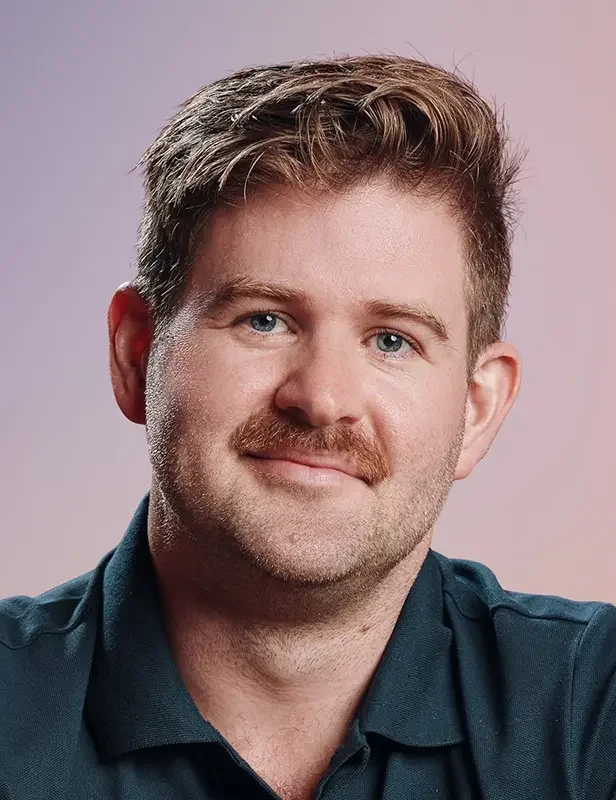
Sam Spurlin
Listen now:
Episode transcript:
Rodney Evans:
It is human nature to not want to be constrained and to be able to be reactive or be in your feelings or not adhere to agreements or claw back a decision because you see somebody doing something stupid. These are very human tendencies. But if you as the leader who is trying to create safety, if you can't play by the rules that are required for that safety, you don't have a shot.
[Intro music]
Rodney Evans:
Hey, everybody. Welcome to the show. I'm Rodney Evans, and that guy, who is hopefully audible now, is Sam Spurlin.
Sam Spurlin:
Sup.
Rodney Evans:
Welcome to At Work With The Ready, where you have two hosts who both have microphones and an ability to be heard through them, which is how we're going to make a podcast today about modernizing organizations as the future of work meets the present moment.
Sam Spurlin:
As you all know, each episode we turn our attention to one common organizational pattern that we think is worth digging into. We pull it apart like Velcro shoes and then propose solutions for what to do instead.
Rodney Evans:
You said Velcro last week.
Sam Spurlin:
No! No, no, no!
Rodney Evans:
Yes, you did.
Sam Spurlin:
Damnit!
Rodney Evans:
You didn't say shoes, but you said Velcro. I remember, because I remember asking you if you liked the sound of Velcro being pulled apart to which you said yeah.
Sam Spurlin:
We pull it apart like... We've done nachos. I'm running out of these, I guess. Apparently, I only have four things that get pulled apart.
Rodney Evans:
There's nothing else you can pull apart? Here you go. Pull it apart like socks coming out of the laundry that have static cling.
Sam Spurlin:
It's not poetic, but it is accurate, so we'll go with it.
Rodney Evans:
Hey, man, at least I came up with something. This is your job and you brought something you've already said.
Sam Spurlin:
I'm 0-for-3 on my responsibilities for the front of this podcast.
Rodney Evans:
You're doing a bad job today.
Sam Spurlin:
My mic wasn't working.
Rodney Evans:
Consider this a PIP, a verbal-
Sam Spurlin:
Damnit.
Rodney Evans:
... PIP. You're on one.
Sam Spurlin:
Luckily I feel very psychologically safe with you, Rodney.
Rodney Evans:
Perfect. Oh, right. That's what we're talking about today, isn't it?
Sam Spurlin:
Sure is. We're demonstrating, we're modeling.
Rodney Evans:
Irony. We don't get enough of that in this podcast, but we will today. Yeah, that's what we're going to talk about today is psychological safety. This was not planned, but maybe to get us back into that territory, let's do a check-in question.
Sam Spurlin:
Let's do one. Rodney, check-in question. What's something you really like about your lifestyle right now?
Rodney Evans:
I have a really charmed life to be honest with you, but something that has occurred to me recently is because Ed and I chose not to have children and we have a lot of freedom and we have disposable income, I am really able to be there when my friends have big moments. And the last two weekends I have attended events that I had to fly to, but that were like milestoney events in people's lives who I care about and I just feel like I enjoy it. I think it's meaningful to people when you can do that for them. I understand that a lot of people are not in a situation where they can do that or where they can do it at back to back weekends. And I just feel very lucky that when people are like, would you come to my thing? I can if I want to.
Sam Spurlin:
That's cool.
Rodney Evans:
Yeah. What about you?
Sam Spurlin:
I've been going for walks most mornings for the past week. Sometimes, I have a client project that it has a bunch of early meetings, which is not the case right now. So, I've just found myself in this moment where I can start work at a normal time and I can still get up early and I can just go for a walk. And I live somewhere where that walk can be in the forest and along a river. I've been doing that and I feel like it's really helping me. Do I seem more centered to you, Rodney? More calm? More together?
Rodney Evans:
Based on the first 15 minutes where you're trying to get your mic to work, I'm going to say no... but also, that was an extraordinary circumstance.
Sam Spurlin:
And I think I handled it admirably if I do say so myself.
Rodney Evans:
You didn't break anything. You didn't rage out, so that was good. Also, I was going to make a joke about why you're not busy right now. And then I was like, wait, again, psychological safety.
Sam Spurlin:
How tough for you.
Rodney Evans:
Behave yourself. Oh, this is so hard.
Sam Spurlin:
This episode is actually an intervention.
Rodney Evans:
This is psych a test.
Sam Spurlin:
It's an intervention. And Jack and I brought you here today to say you have to be nicer to me.
Rodney Evans:
Psychological safety has nothing to do with niceness as we'll learn.
Sam Spurlin:
That's good point.
Rodney Evans:
Sam, should we talk about the pattern?
Sam Spurlin:
Let's talk about the pattern.
Rodney Evans:
Okay. Here's the pattern we're going to discuss today y'all. Any teams, but particularly leadership and executive teams really require a high trust environment to function. Usually, when that is missing or they're trying to create that high trust environment, they're either doing it one-on-one, or they're doing it outside of the day-to-day of their work. And neither of those moves translates back to a group dynamic that feels like it is marked by high trust. The dissonance between the safety that they say they want and then their felt sense in the group or in the room actually exacerbates that lack of safety. It makes it worse than it makes them generally a little more paranoid, which often kicks off the cycle anew.
Sam Spurlin:
Yeah. All right. There's lots of different definitions of psychological safety that people like to throw around and you already alluded to one of them, which is it's not like we're just nice to each other. I've seen a lot of teams that just equate like, oh, psychological safety means that my team is nice to me. And what it really is that you feel comfortable in your team to take risks and you know that you will not be punished reputationally or in any other way if you take a risk and it does not pan out the way that you thought it would. If you have that condition within your team, there's a lot of research out there really popularized by Google and Project Aristotle that is the number one predictor of a team's effectiveness. And I think people hear that and have twisted and pursued that goal in ways that haven't really worked, but that's what we're talking about with psychological safety. Do you feel safe in your team? And perfect example, you're mean as hell to me right now, but I feel safe because we have good psychological safety here.
Rodney Evans:
Right now? I'm mean to you all the time.
Sam Spurlin:
It's not about being nice. It's about how we work together and yeah, I don't know. So that's the idea there.
Rodney Evans:
Yeah. I wonder if we should talk a little bit about what kinds of risks, because it's not like if you or I did something truly boneheaded, there wouldn't be repercussions. But when you talk about risk taking and how that relates to psychological safety, what do you practically mean or see?
Sam Spurlin:
I think it's the sort of risk to speak up against the flow of conversation, to push back against group think that you might be perceiving within the team and feeling like you can take that step out onto that limb where you are potentially alone and not that limb break and you fall to your death, metaphorically, in the team.
Rodney Evans:
Yeah, I think that's true. I think it's the ability to express divergent point of view. Often in groups that I see where psych safety feels quite low, people just don't tell the truth. You'll just see a group of people where eight out of 10 know exactly what the problem is and zero out of 10 will speak it into the room because it just does not feel worth it. It feels like the repercussions might be negative or they might be unpredictable. So, people just prefer the comfort of a retreat and silence to actually being like, yeah, that's not going to work.
Sam Spurlin:
Yeah. I think you're pointing to the fact that low psychological safety teams often superficially look like perfectly functioning teams because they're low conflict. Low conflict, we are easy to just kind of skate along and nobody's really getting heated about anything, and that is not a sign that we're all on the same page or that we have high psych safety. It's actually the opposite. Nobody feels like they can have principal disagreement on this team, so it's not worth it. We're all just going to keep our head down. And to an outside observer, oh, this team, they're able to meet functionally. Nobody's yelling at each other. There's very little tears.
Rodney Evans:
Yeah, it seems like smooth sailing.
Sam Spurlin:
They're doing great, right?
Rodney Evans:
Yeah, I think that's so true. Also, just to say out loud, I do struggle sometimes with the word safe because I think people throw it around a lot. Actually, Tanisi and I have had this conversation several times when people are like, "I didn't feel safe." And it's like, well, there's a difference between safety and comfort. I am not talking about feeling comfortable. I am talking about feeling like you can behave without there being financial or emotional or other types of material consequences. Discomfort is inherent in conflict for most people. If you're feeling uncomfortable, that does not necessarily mean that you are feeling unsafe or that you are unsafe. And I think it's important that people understand the difference because there is one and it's significant. If none of us ever behaved in a way that made us uncomfortable, we would not make a lot of progress in this life or this work.
Maybe to tie these points together in groups where I think I have had the highest degree of psychological safety, I have been most able to be uncomfortable. I have been most able to sit with my discomfort at disrupting the harmony or openly disagreeing or pointing out something that I knew was not going to be well-received or was not going to be easy. And I've experienced that with other people too who are like, hey, I got to tell you, this is an "emperor with no clothes" situation. Uh-oh. I think that's what psychological safety really means. It's the ability not to have that sort of surface harmony, but as a group do uncomfortable and hard things as individuals in a collective.
Sam Spurlin:
I think at the end of those experiences in a psychologically safe group, that discomfort feels worth it in that you've probably come out the other side if not strengthened, at least not harmed in our relationships. Whereas the same disagreement, the same topic of conversation in a very psychologically unsafe group, you lead through that feeling like, ah, I don't know why we even bothered, or now I'm worried now I'm looking over my shoulder. What's the thing that's going to be coming around the corner that I least expect? Because someone is going to try to get back at me. Every meeting has a little bit of feeling of that. You meet as a leadership team minimum once a week. Well, 52 opportunities for somebody to stab you in the back is not a great feeling.
Rodney Evans:
Not a great feeling, no. Why do you think this is so persistent or prevalent in leadership teams? Because I do see it more there, a lack of psych safety and a desire, both a lack and a desire at that altitude than a lot of just working teams.
Sam Spurlin:
That's a great question. One place where my head goes to is that I think in a typically hierarchical organization, there's obviously more and more power the further up you go. So, I think everything feels higher stakes and probably actually is higher stakes.
Rodney Evans:
And is often.
Sam Spurlin:
And I think when stakes feel high, everything can be heightened. Just the emotions that we bring to things, the expectations for getting things right rightfully, but it can be detrimental as well. I think that's an aspect of it for sure.
Rodney Evans:
Yeah. We talked about this on another episode that was about wanting leaders to really be org designers. I think often the lack of shared work on a leadership team really exacerbates the lack of safety. In fact, I was in a first call with someone the other day who's on an executive team of a company and they've had several new members join and I was talking about this very concept that there was a desire at their offsite to be doing work around psychological safety. And I sort of was like, you don't really do it at the offsite. The way that you're going to get to increase safety is by working together and developing trust and ability to disagree and an ability to maintain your connection even as hard things unfold, that happens in the work.
And this person, to her credit, instantly was like, "Yeah, actually I do feel like I trust this person, the most of the new people, but I've been working the closest with them one-on-one for the longest, and maybe that's where that comes from." And I'm like, "Yes." And that often doesn't happen among the leadership team as a group. There's usually not that much that team is doing truly as a multiplayer sport where you get the reps of trusting people and where it's like safety just builds over time and experience.
Sam Spurlin:
And when you don't have that, all you really have is the functional or departmental or whatever kind of organization you lead, the points where they intersect with everybody else's functioning teams. So, marketing and product often have disagreements around how things are supposed to go. If the head of marketing and the head of product don't actually have any shared work together, their really only interactions are these high emotion, conflict-ridden, zero-sum sorts of games. You can have those conversations in a way that builds psychological safety, but it's not the default in most of the time.
Rodney Evans:
Yeah, I think that's true. I also think to that point, I often think in leadership teams there's a sense of, well, there's the CEO and then there's her direct reports and those people are peers. But there are often a lot of other power dynamics at play in the C-suite. And certainly, I see in hear a lot about soft power versus hard power in these organizations and it's usually tied to money. And there's often a perception that the chief revenue officer and the chief financial officer are really the leaders among peers because they are the closest to the money, the money in and the money out. And that the chief people officer, the chief technology officer, et cetera, have soft power. For what it's worth, I think this is total bullshit and I think it's a very reductive way of thinking about how work gets done and basically, is setting you up for a bunch of really useless politics and distraction.
But I do think that those dynamics exist in leadership teams and create a kind of competition that makes the building of psych safety harder. If I'm the CPO, and I know even though it is said that the CFO and I are peers in comp, in our authority, in our airtime, I have the felt sense that we are not peers. Then my ability to take risk with that person is different. And it's worse when it's unclarified. It's worse when I just have the sense that they actually have more power than I do, but no one will say it out loud.
Sam Spurlin:
Do you think a major step in the right direction is just... How do you have that conversation to put that stuff on the table?
Rodney Evans:
I think you have to, and this is where it's not that easy to do. I had a conversation really recently with someone where I felt like I was being given advice that I did not ask for and I was not interested in. I clarified the role and how my role thinks about that body of work and basically, was like, "I will pull advice in this domain when I want it." I think that was not an easy conversation and it was not a pleasant conversation, but the alternative is that person feeling like she's trying to make her opinion heard and I am just not listening to it. To your point, she's putting herself out on a limb and she's crashing to the ground every time. This was not a member of Source. This is a different situation.
But rather than letting that happen, I was just like, "Here's going on here. You think your role is this. I think your role is this. That's why." She, my guess is, entered that conversation feeling like there was just a lack of safety. And I'm like, "No, there's a lack of clarity here about authority." And the truth is in this situation, and I think this is true of a lot of leadership teams in this situation, I'm like, "I am ultimately responsible for this domain and for whatever comes of it. So, you continuing to try to exert your opinion is not useful or helpful and you're not going to live with the results." So, I have to do it. I have to trust my own judgment here because it is a high-risk situation and I am on the hook for what happens as a result.
Sam Spurlin:
Yeah, no, that makes sense.
Rodney Evans:
Leadership teams just don't talk about that shit. They just do not talk about that shit. Then everybody in the room makes up their own stories about who they can trust and who has their back and who actually has power and who the CEO listens to and who the favored son is, et cetera. All of that makes the development of psych safety and the ability to have risk taking in a group really hard.
Sam Spurlin:
What it makes me better understand, hearing you describe it that way, is why so much of the work that we will often do with leadership teams has an end result of greater psychological safety. And we never actually say the words psychologically safe or psychological safety.
Rodney Evans:
We don't go after it.
Sam Spurlin:
That's one of the aspects of this pattern that I've found so fascinating is that psychological safety is on the tip of the tongue of every team, every leader that I've worked with. I've never worked in an organization where they're like, "Tell me about this word 'psychological safety.'" Everybody thinks they know what it is and everybody's very happy to talk about it. And there is a very big difference between talking about psychological safety or espousing that you believe it is important and actually doing things that create psychological safety.
Rodney Evans:
I really like that. And it is true. It's one of the reasons that even though I have very mixed feelings about the practice of team chartering in terms of facilitating it and also participating in it, I often find that I have to do it with C-suites. And it often has outsized impact for the exact reason that you're saying because what they need is higher trust, but the prereq to that is clarity, which they don't have because they've never had a clarifying or explicit conversation about roles, about authority, about accountability. And this is something that we're getting to at Source but haven't done before. Even in an executive team, are you really holding two roles? Are you holding a role that is your functional representation? I'm the chief revenue officer. And then is there a different role that is just about being on this team that has different responsibilities and different authority usually? We've sort of come-
Sam Spurlin:
Like a default member role.
Rodney Evans:
Yeah, exactly. We've come to the conclusion that being a member of Source requires a bunch of stuff that has nothing to do with your domain. I say this just because often in leadership teams, the day of the year that it takes to clear this shit up is not a day that they invest. And I've coached leadership teams I'll see in a Google doc that come back to their team charter that I made with them six years ago annually. I'll get a notification that's like "Blah, blah has updated their decision rights." And I'm like, good for them. I haven't heard from those people in 10 years, but good on them that they're still getting after it. To your point, it's these very non-psych safety related ways of working that over time actually produce psych safety.
Sam Spurlin:
The conversation around psychological safety that I have a hard time seeing in organizations is that you'll have an executive team talking about valuing psychological safety within the organization. I'm not talking about their team right now, but we want to be a psychologically safe environment. We want your teams to be psychologically safe, we want risk-takers. And then people look at that executive team and see zero psychological safety actually being modeled. So, in that default member executive team member role, I think there is something around you are modeling, setting the tone for how we do this thing here. So, you can't be talking out of one side of your mouth about psychological safety being important and then have legendarily bad meetings as an executive team where people are regularly screaming at each other and trying to square that circle because just people see through that so transparently,
Rodney Evans:
It's so obvious. Yeah, I think that's a really good point. I am curious, because you've worked around a lot of executive teams, what are some of the typical patterns around this that you see? Obviously, you brought up this topic because you hear a strong desire for it. What kinds of things really tangibly do you see go wrong?
Sam Spurlin:
With the team trying to develop psychological safety?
Rodney Evans:
Yeah.
Sam Spurlin:
I think the main one is trying to directly come at it, which I give people total credit. That's the obvious thing. Okay, we want to be more psychologically safe, so let's do that. Let's do something to directly get after that.
Rodney Evans:
What do they try to do?
Sam Spurlin:
It's like the team building stuff.
Rodney Evans:
Team building.
Sam Spurlin:
We'll go do a ropes course and then at the end, we'll be more psychologically safe.
Rodney Evans:
That's false.
Sam Spurlin:
I've never actually done a ropes course. They look like they're a lot of fun.
Rodney Evans:
I haven't either. It's such a good little meme for that kind of thing, or maybe I did when I was in fifth grade, but I have not done one professionally, which I should.
Sam Spurlin:
Of course, I'm using it as a punchline, but I do think doing things outside of work to together in a different non-work context can certainly help. It can hurt too if you do it poorly, but it's maybe better than nothing. But to your point earlier, let's do some real work together that actually matters. That's not side of desk for both of us and we're trying to just make time to do it. Something that really matters that we have to work together on and be mindful of how we are actually working together.
So, let's do a little bit of a mini charter. Let's get into a good rhythm. Let's maybe have a coach working with us, often the role that we play in these sorts of teams. And the end, the result is often greater psychological safety. But it is one of those things that if you go directly at it has a way of slipping through your fingers because almost trying too hard when really you should be trying to take care of the other things around it and it will grow on its own, which is a unsatisfying answer for a bunch of type A folks who just want to be like, well, just give me the checklist. We'll do the checklist.
Rodney Evans:
Just give me a plan to do to make safety come out the other side. Yeah, I think that's true. I also think where this goes sideways a lot is where the leader, the one with more juice among peers, where they can't be pinned down, this is really hard. I've worked with many executive teams and I did a lot of this work before I joined The Ready when I was on my own, where the leader, leader, the CEO leader was like, I really want trust and safety and risk taking. I want a meritocracy and I want productive conflict and I want all of these things in my leadership team and I'm just not getting them. And they themselves are unwilling to be contained or constrained in any way. When it's like, okay, cool, well let's start with you. What are the things that you need to weigh in on and give advice on? What are the decisions that you need to hold in your role? Everything that you don't clarify and grab for yourself is going to not be yours. And they're like, I don't think that's it."
Or where you're like, okay, well let's make some working agreements with the team that you are really going to hold the group to and be a model of. And they're like, well, that seems a little overly... They'll throw bureaucracy at me. They're like, that seems overly bureaucratic. And I'm like, no, it doesn't. You just don't want to publish the rules by which other people can play. But if you're unwilling... And look, as a person who sits in a role like that, it's fucking hard. Of course, there are days that really annoying stuff happens, and what I want to do is turn to one of my friends at The Ready and talk about it, but I don't because it would be really shitty to my team if I spoke about them out of school to other people at The Ready.
I have a professional coach and I pay him and I talk to him when I am frustrated about things that are happening. AI say that as an example because it is human nature to not want to be constrained and to be able to be reactive or be in your feelings or not adhere to agreements or claw back a decision because you see somebody doing something stupid. These are very human tendencies. But if you as the leader who is trying to create safety, if you can't play by the rules that are required for that safety, you don't have a shot.
Sam Spurlin:
And the flip side of that, I think, is that this is one of those things where one person taking this very seriously and willing to take that first step and to show up differently, to respond to the way things are going differently, to be publicly vulnerable about things, can be that first tip into the team starting to organize itself a little bit differently and showing up a little bit differently. I think people are always talking about the role of leaders and leadership. If you are a leader and you want a place to practice some leadership, commit to being the catalyst of creating psychological safety in the teams that you are on. I think we'll shift into talking about ways to do that in a moment. But to me, that's actually exciting. There are things in organizations where the idea of being an individual and doing something differently is a drop in the bucket.
Yes, we did the whole episode on the mundane. I love individual effort for changing systems. I think if we completely throw away individual effort, then what are we doing as humans and why even try? And also, can acknowledge the fact that when you're dealing with massive systems, uncoordinated individual effort is often not enough to actually change those systems. But this is one of those things when we're talking at the team level of changing how we show up and how it feels to be a member of that team. If you have positional power in that team, you can take a major step in that direction and things can start to shift, I think, quite quickly for a team when someone is willing to take those first steps.
Rodney Evans:
I think that's absolutely true, and I think that a lot of the moves that a leader has to make, and I especially would say for a leader at the top of the house or the top of a function who's taking over a team that inevitably has scar tissue from things that have happened in the... When you're inheriting a team that is dysfunctional and not trusting and unsafe and where there's a lot of performative congeniality, you have got to overdo it with the moves at the beginning. I have worked with leaders where I'm like, allow anonymity in dissent.
You have to publicly really show that you are encouraging divergent thinking and expressing opinions that may be unpopular and questioning beliefs that the group maybe has held true. And you have to overdo it, I think a little bit, especially at the beginning when you're trying to establish the vibe so that people don't feel like they're going to accidentally hit a tripwire because a lot of us have in our careers. A lot of us we're cruising along and then the first time we opened our mouths to say something controversial, we had the lived experience of like, oh, I thought that I had psychological safety here and it turns out I did not. I just wasn't testing the boundaries.
Sam Spurlin:
Yeah, no, totally. And the person who gets stuck down in that situation carries that scar with them potentially forever. And the person who did the shutting down probably forgot they did it well by the time they left the meeting. So, there's a huge difference in the felt impact of how something like that goes down.
Rodney Evans:
To Sam's point, for the people who have done the shutting down, and look, I'm sure I've been one of these people at times, I do not recuse myself, but-
Sam Spurlin:
Did it at the beginning of this episode.
Rodney Evans:
Oh, stop it. I can think of an example of this when I was on a team and a person with more power and authority and position than me absolutely shut me down in the most brutal way. I'm sure he never thought about it again. I will hate that guy to my grave, and when people mention him to me to this day, I'm like, "That guy is an asshole." Lest you think that these are throwaway moments, there are a lot of people out there who do not feel that way just because you were having an off day and you didn't control your reaction and you were hangry and you were a bit of a dick. Know that if you don't clean up after yourself in those moments, there are people who remember.
Sam Spurlin:
That sounded like a tagline to a horror movie.
Rodney Evans:
Yeah, I am a haunted house of a coworker. I'll pop out at you. But it's like, to your point, I'm sure that person was just like, "Whatever. She's tough. She can take it." And I'm just like, "You're dead to me."
Sam Spurlin:
Yeah.
Rodney Evans:
So, don't do that shit, especially if you have power. And look, if you fuck this up and we all do fuck it up and you speak out of turn or you shut somebody down or you don't have the regulation to really listen and be in your discomfort, which is what this is about, clean your shit up afterwards. Go back to that person and be like, ideally in front of the group, and be like, "I should not have interrupted you. I should not have shut you down like that. I asked for your opinion, then I didn't listen to it. That was on me. I'll do better next time." You got to do that work. Otherwise, you are signaling to the whole group that they are better served by keeping their mouth shut and their heads down.
Sam Spurlin:
Totally. Should we shift fully into just our grab bag of other ideas around this?
Rodney Evans:
Grab bag. Yeah, before we do-
Sam Spurlin:
Should we do the review request?
Rodney Evans:
... leave us a review.
Sam Spurlin:
Okay. That was not it. That was me talking over you. Do it again. I'll be quiet this time.
Rodney Evans:
Please leave us a review on Apple Podcasts and follow us on Instagram. Thank you so much.
Sam Spurlin:
So swift, so to the point. Love it.
Rodney Evans:
I'm swift. What can I say?
Sam Spurlin:
Can I go first?
Rodney Evans:
Yeah, man.
Sam Spurlin:
All right. This is in the same ballpark of what we've already been talking about. We're talking about ways that a team can start to build greater psychological safety, you as a leader on that team. I think something that can help quite a bit is if the team has shared expectations around what their growth edges are and what they're basically publicly working on. Normalizing the idea upfront that everybody on this team is not a perfect human being and we all have things that we are trying to get better at and let's all be aware of each other's thing and actually try to help each other on that. We can immediately just break this facade of perfection that often lingers around an executive team and just glean into the fact that we're all trying to get better at things. We're all imperfect, and let's just be open about that.
Rodney Evans:
I think that's really smart. A couple of people on Source have done that lately. Just been like, this is really something that I'm working on. And it's been very powerful, I think for the rest of us to be like, how can we help you?
Sam Spurlin:
I think that's an aspect of our new summative feedback process that works really well.
Rodney Evans:
That's where it came up.
Sam Spurlin:
Yeah, exactly. Our summative feedback process, not to go down a rabbit hole here, but it's not just show up and have people throw things at you. It's like the person seeking feedback first articulates, "Here's what I'm working on, here's what I think I need feedback on." And of course, as the feedback giver, we are not restricted to only those things, but it is helpful for me to know what a person is working on and get a sense of where their own self-awareness is around stuff.
Rodney Evans:
To tie this to psychological safety, knowing that somebody's edge is probably a place where they're taking less risk, but probably need to be taking some risk in order to learn is really valuable in a team. When somebody is like, I don't think to ask for help regularly because of my own shit and I'm working on it. It's like, well then you probably need to do that in order... You get it.
Okay. I'm going to talk about aims. This has been probably the biggest shift in my own leadership thinking in the last six months. I think for the last couple of years or longer, The Ready has been in a state of pendulum swinging between what I call chaotic individualism and collective orientation. And I was really never particularly comfortable with either, actually. Wherever the pendulum was swinging, I was like, this side feels mercenary and this side feels paternalistic and I don't like either one of them. Neither of them culturally felt right to me.
And my third way out of this that when it clicked, I was like, "This is the way" is It's not about the person, it's not about the membership, it's about what we are trying to do as a company, what our aim is as a company. I say this because when we start to really understand our aims, and we still have work to do around this, when we start to understand our aims and we start to prioritize things, first of all, it's a lot easier for us to do work together because everyone isn't protecting their fiefdom or their existing pile of work or their reason for existing. They now understand that the aim that we have designed does supersede the other shit that we have created for ourselves. And it gives us ways to do shared work.
It gives us something important to do together that really helps us create psychological safety. And it gets us out of the interpersonal, frankly. I think this is a great place to, especially for a leadership team that's doing the thing of like, "We need to build trust over here and we need to execute over here." I'm like, "Stop and figure out what you are trying to do as a group and use that as the lever for developing psychological safety." If our aim is to grow through acquisition next year by 50%, okay, great. What are the risks and divergent perspectives and different, more candid, more difficult conversations we're going to need to have as a group to really get after that? I just think that's a useful lever point that gets us out of the ropes course or the performative harmony thing.
Sam Spurlin:
Yeah, I like that a lot. Is it a matter of the aim gives us something to put our individual effort aside in the service of something larger? Is that how you're kind of thinking of it?
Rodney Evans:
I think it gives us a place to direct our individual effort and to cultivate psychological safety through the experience of pursuing this aim together. So, it's not just like Sam being like Rodney is always mean to me and she doesn't want to hear my ideas and me being like, Sam, that's true. Shut up. Instead, it's like, what are we trying to do with this podcast? Do your ideas serve that? Does my criticism serve that? It gets us out of just the dynamic and into what we are trying to do together, which is both our playground for cultivating psychological safety and importantly, the place where we probably need to take risks and be uncomfortable if we're going to do a hard thing together.
Sam Spurlin:
What I like about what you're describing there is you're talking about once we have aims, how we use them to build psychological safety and actually do them. But I think also, the way in which we develop the aims that we consent to, or even if it's not a consent decision, maybe it is like your call or some other decision-making method, there's probably ways to create those aims in a way that builds psychological safety as well.
Rodney Evans:
I agree. Even if we use, since I started with making fun of you, even if we use the podcast as an example, I feel like you and I and Jack in trying to figure out what our aims are, have developed a level of safety that we wouldn't have had just by making this show. The three of us digging into "What are we doing here? What are we trying to do with this thing?" That requires a different level of vulnerability, a different level of candor, a different level of depth in conversation than just what topic should we hit next week?
Sam Spurlin:
And it makes me think about our weekly meeting where we talk about the podcast, the way that meeting is not run is we stare at our numbers and we rack our brains about how we make these go up. How we make these go up? And we just argue, really hyper-focus on that. We are having conversations about what is it about our podcast that people aren't telling us that they actually enjoy. Our dynamic, the fact that we are a "professional podcast", and yet the F-bomb apparently shows up sometimes. Not saying everybody loves every aspect of it, but we're having conversations about what we're actually trying to do and not just looking at the quantitative output that you might expect is the indicator of whether or not a podcast is successful.
Rodney Evans:
Exactly. I think just one click further and then I'll leave the podcast thing alone, through those conversations, some of which are uncomfortable because we invest our time, you and I prioritize this over a lot of other competing commitments, et cetera, et cetera. I think we've done really good investigation of do we care about actually growing as a show? Or because we have the kind of listeners that we do who listen for a long time and stay with us and interact with us in other places, do we just be psyched about that and do what they want us to do?
These are the kinds conversations... And that requires safety. That requires psychological safety to go, "What do you want out of this? What do I want out of this? What is this doing for The Ready? What is this doing for the listeners? Which of those things is most important and which are we going to sacrifice?" These conversations require safety. But even in trying to choose the aim, we start to understand each other's perspectives and vulnerabilities in a different way.
Sam Spurlin:
Totally. I don't want to do another one, but I feel compelled to say one last thing and maybe if it's not useful, Jack will cut it out.
Rodney Evans:
Go.
Sam Spurlin:
Psychological safety is not a binary. It's not yes or no. "We either got it or we don't." Like with most complex things, it is a continuum. The most psychologically safe teams could probably even become more psychologically safe. Even really non-psychologically safe teams will be benefited by moving slightly in a more psychologically safe direction. So, I don't think it helps anybody to conceptualize it as we either got it or we don't. You can make progress. It's one of those things that making consistent progress over time, as check-in rounds, actually creates the situation that you want to be in.
Rodney Evans:
Nice.
Sam Spurlin:
Boom. All right. I think this is a good place to wrap it up. You know we're always looking for new topics for the show, and if you have an organizational pattern that you're having trouble changing, shoot us a note at podcast [at] theready [dot] com. This show is engineered by Taylor Marvin and produced by Jack Van Amburg. At Work With The Ready is created by The Ready where we help organizations around the world change the way they work. Thanks for listening.