
Ep. 55: The Org Can Be Built To Benefit From Change. Can You?
About this episode:
Original Air Date: August 24 2026Most of us were told to find the one thing we're great at and ride it. Build the team around your gaps, get good at your specialty and let someone else cover the rest. That advice built a lot of careers, and it also built a lot of leaders who only have one move, right at the moment when the ground under their organization keeps shifting.
In this episode, Rodney Evans and guest co-host Sam Rothkopf get into what leadership looks like inside an organization built to benefit from change. They cover why stewards have to keep firsthand contact with the market, the balance between connection and courage that every working relationship depends on, and one of the deepest truths in all of change work: you can’t change a system without changing yourself along with it.
Downloadable tools in this episode:
The Ready’s OS Canvas
Mentioned in this episode:
“Stewardship vs Leadership”: Depthfinding Ep. 7
“the sky”: The Ready’s Depthfinding framework
“anecdata”
The Ready’s Future of HR
“Company B” (Dual Transformation): AWWTR Ep. 43
“experimentation”: AWWTR Ep. 38
Seth Godin on “hiding from the work”
In this episode:
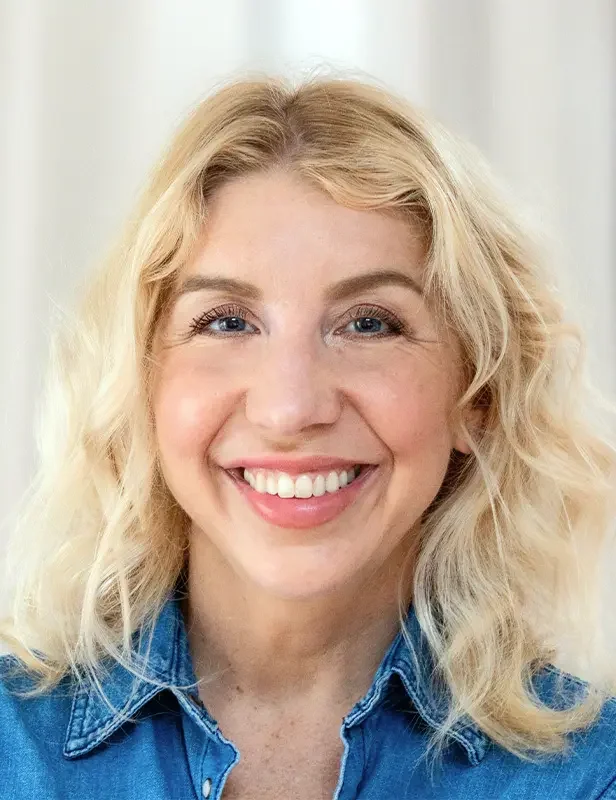
Rodney Evans
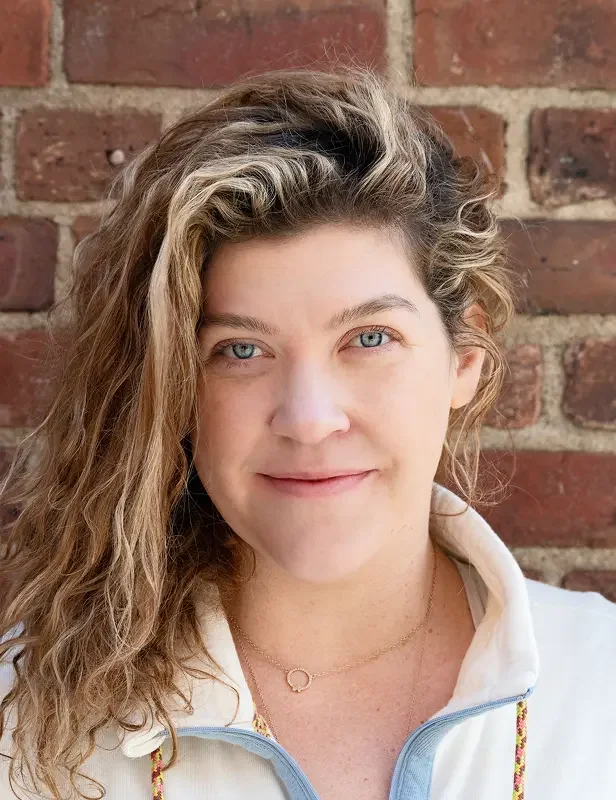
Samantha Rothkopf
Listen now:
Episode transcript:
Rodney Evans:
Is that the way you do it? Is that the way you're supposed to do it? How should you do this?
Sam Rothkopf:
What is innovation?
Rodney Evans:
Take me to a party in a basement.
[Intro music]
Hey everybody. Welcome back to At Work with the Ready. I'm Rodney Evans and I am here again with my guest co-host, Sam Rothkopf. Hey Sam.
Sam Rothkopf:
Hey Rodney. Glad to be here.
Rodney Evans:
Sam and I work with leaders and teams who are redesigning their companies so that they are built to benefit from change. And today we are going to talk about a topic that Sam's going to explain to us because I'm not totally clear on what it is. But before we do that, we're going to check in. Sam, what's our question for today?
Sam Rothkopf:
Okay. My question for today is who is the first leader that comes to mind when you think of your favorite leader?
Rodney Evans:
Oh, that's so hard. You go first. I'm debating between two.
Sam Rothkopf:
Okay. I'm going to say Tim Cook. And I know that that -
Rodney Evans:
What?!?
Sam Rothkopf:
—sounds a little crazy because you were probably maybe thinking "world leader." I don't know, someone in history that had a huge impact. But I feel like Tim Cook was my favorite world leader at the current moment.
Rodney Evans:
Okay.
Sam Rothkopf:
And the fact that he is stepping back as CEO of Apple makes me really sad because I just feel like he has a real moral compass, is an excellent manager of people, is a wonderful person. He was one of the only ones left in some ways that felt not taken over by what the rest of the tech leaders seem to be taken over by. And I just always really valued that he was still in charge of the biggest company and most impressive company from my perspective in the world. So I just love that guy. Makes me sad that he's stepping down. I hope he's going to do something else where we'll all benefit from him being around.
Rodney Evans:
This is so interesting. I would never have picked someone that I don't know personally. That's so interesting.
Sam Rothkopf:
I'm pretty good at checking questions.
Rodney Evans:
Nailing it! It's so funny though, because I can't even think of a person like that because I'm like, I don't know if I haven't experienced their leadership firsthand. I don't know? It's so interesting. Anyway, so because of that, I'm going to talk about one of my first bosses. Talk about the macro and the micro. So one of my first bosses was a woman named April. And I feel like a lot of how I have been in my entire career was shaped by working for her. And I was like 23 years old. And I think actually probably some of what we're going to talk about today is stuff that I really saw modeled in her and learned from her, which is like, first of all, we were very close. And it was the first boss I had that took an interest in me as a person and who shared real details about her life with me and invited me to her wedding.
And before that I had internships and my first couple of bosses who were just manager people who were sort of anonymous to me in many ways. And so I think April showed me that you can have a very deep personal connection with the people that you work with. And also she was also still pretty tough and had really high expectations of me and I worked my ass off when I worked for her. And so there was a lot about her that I think I tried to emulate for the rest of my career in terms of the blending of the personal and the professional and the emphasis on connection without the lowering of standards. And I think she really incepted me with a model, particularly of how a female with a lot of power can be. And it looked very different than what I had seen before.
So April, if you're listening to this, that's you.
Sam Rothkopf:
Love that. That's amazing.
Rodney Evans:
So Sam, what is this episode going to be about? We have a lot of things we want to talk about. And also I don't actually know what the topic is.
What kind of leadership does an organization built to benefit from change need?
Sam Rothkopf:
Wow. I hope you're all excited. No, I actually am really excited about this topic. So to bring you back to where we are and what we're talking about in the last few episodes while I'm here, we started with a little bit of our new positioning around how are we designing organizations that are built to benefit from change? And then what does that actually look like in practice. So we talked a bit about the chief of staff role specifically. And then we also talked about the ELT and how that team should be run and what they should do together.
And today we're going to talk more at the both macro and micro level around leadership overall. What are the traits of leaders that are leading organizations that are built to benefit from change? And how can we as everybody as a leader in one way or another learn from these new principles that Rodney and I have talked through for the last couple of weeks based on the people that we admire most, the things that we've learned ourselves, and what we're seeing is really effective in this new world.
Rodney Evans:
So the TL;DR is like, "what kind of leadership is required in an organization built to benefit from change?"
Sam Rothkopf:
Yes.
Rodney Evans:
Sick. Okay. Why don't you kick us off? What kind of leadership is required, Sam?
Sam Rothkopf:
Oh my goodness.
Rodney Evans:
Oh my goodness.
Why you can't outsource contact with your own market
Sam Rothkopf:
There's a different kind of leadership that you have talked about a lot that I think came through particularly as you were going through Depthfinding and what kind of leadership traits are necessary right now. And so I think going back to the idea of stewardship versus leadership is still evergreen as far as I'm concerned and has definitely not been doubled down on enough by folks. The idea that you aren't here to kind of be the decision maker and lay the hammer down, but you're here to steward an organization that's living and breathing and that you should be taking solace in seeing it grow and thinking of yourself more as someone who's tending to it versus someone who's leading it into battle. And it depends on where you are in your timeline as an organization, I think a bit. But I do feel like something I love about the way you talk about stewardship is the idea that you really need to be in the market. And it's one of the things that I think as we get higher up in leadership is easier and easier to stop doing-
Rodney Evans:
Yes.
Sam Rothkopf:
—is finding insights about your clients and your market and working on the sky. And for those who haven't looked at Depthfinding, Sky is really what's happening outside of your sphere and your business, what's happening in the world, in the market with your clients and bringing those insights back into influence your strategy, et cetera. But it is so easy to stop doing that work because it's work that can be uncomfortable. It's work that can feel like a nice to have and not a need to have. But a true steward is really bringing a ton of outside influence into the organization and helping others see in a much more broad way than just what's going on in the walls of their institutions.
Rodney Evans:
Yeah. And I think importantly, when we talk about this, what I am not thinking about is a steward of an organization who is content to just consume insights that is packaged for them by a consultant or by their head of strategy or by a third party. It's like you have to have firsthand experience with what's going on out there. And it is very easy to become insulated by the hierarchy. It becomes very easy to sort of be managed.
I used to work with a leader who said "The royal family thinks that everything smells like fresh paint because everywhere they go has been freshly painted for their arrival and they think that's how the world smells." And it's like, I think that that can become true, especially if you're in a large organization and you lose contact with frontline employees and customers and the products that you sell. You can't sort of lead by instrumentation if you want to be a steward of an organization. And it's not a waste of time to work at the ticket counter or work on the loading dock for a day or get out and talk to the. It's not a waste of time to be in contact with the market getting firsthand experience.
And I think one of the arguments against that, and I'm curious your take on this, I think sometimes when leaders do that stuff, they can then either over-anchor to anecdata and they're like, "I heard from this one person, this one thing." And you're like, "Okay, well that's not sufficient." Or under-anchor to it and be like, "Well, that is just an n of 5 and we have an NPS score to look at." So how do you think about that? Because I do feel like there's a third way in between there, but I don't know how to say exactly what it is.
The higher you rise, the less you resemble your customer
Sam Rothkopf:
Yeah. And I mean, this was 100% of my last career. So really what we would do, we were a customer strategy firm and we would help particularly the ELT get more in touch with their customers and their needs. And a lot of that was really qualitative where we would literally be like, okay, we need to design a mini speaker for, at the time, 10 years ago as millennials. Let's take the executive team to a party in a basement! Literally to that level, which I have lots of stories about-
Rodney Evans:
So fun.
Sam Rothkopf:
—and it was so important. And to your point, really illuminating for them because also the higher up you get, the further you are from being your customer. A lot of people, especially founders, they were the customer. That's why they came up with the idea.
Rodney Evans:
That's why the built it. Yep.
Sam Rothkopf:
So for years and years, they don't need to do nearly as much customer understanding because that's them. But then eventually they don't become the customer anymore for a million different reasons. And they have to figure out how to be in touch with someone who actually isn't them and how do we design systems and things for a group that isn't you? And same with their organization that they're building, right? You start and you're five people and they're all your best friends and they all think like you and probably have similar capabilities. When you're an organization of 150, that really changes and they need different things.
So I do think the qualitative honestly to me is almost more important to keep in mind than the quantitative, which might be an unpopular opinion. But you're getting a lot of numbers at the top no matter what. You are getting the numbers. People are, to your point, managing them in one way or another. There's lots of ways to tell beautiful stories with numbers. It's just as much an art as it is a science, but you are not getting the qualitative. So I think the qualitative is more important. And I think that gut feel as an executive is also exceedingly important and something that people don't think is important anymore and that they should be having. Really, everything needs to be so informed by data that they never actually make a decision because they need more data to do it. Having an organic feel for what is right and wrong because of an understanding of the people you're serving, whether that's your internal employees or your customers, I think still just has to be your north star as a leader.
But I don't know if you'd necessarily agree with that.
Rodney Evans:
I love that.
Sam Rothkopf:
We probably haven't talked about it before.
Rodney Evans:
No, we haven't, but that's why we have a podcast. I think that it's a really interesting point. And the way that I personally have done this, and I'm curious if this jives with your qualitative comment, is we haven't talked yet about company B on this show and we will, but I am in a lot of exploration of the market right now. And I did the same thing with the Future of HR and I did the same thing with Depthfinding. I have a tendency to have exploratory conversations. And then once I sort of hit on something that strikes me as being particularly interesting or provocative or unseen or exciting or something, then I tend to do a lot of questioning and validation of that insight that I have gained with more external people.
So I'm not trying to recreate quantitative data by having a thousand conversations. It's more like, with Future of HR is a great example, the insight that was the core thesis of Future of HR, which is "HR is designed to do two things: be strategic thought leaders and mitigate the risk of a company. And as a result, it does neither," came up over a dinner with a client who wasn't even a CPO or a CHRO. And then I was like, we were in this conversation, we were like, that is what the problem is. And then it was like five conversations to validate that with HR people. And then it was like 50 conversations to validate what we think could be done about that. My point being I never had a large data set, but it also wasn't like I had this one dinner with Jodi and I was like, "Well, that's it. We're done." And also, I fully made all of that shit up because I don't actually know how to do this.
So I'm curious, is that the way you do it? Is that the way you're supposed to do it? How should you do this?
Sam Rothkopf:
What is innovation? How do you come up with ideas?
Rodney Evans:
Take me to a party in a basement!
Sam Rothkopf:
I mean, you still haven't invited me to the lake house. Once you invite me to lake house, I'll take you on some spelunking customer activities.
Rodney Evans:
Okay, fair enough. Deal struck.
Find the spark, then test it: how to research without boiling the ocean
Sam Rothkopf:
Yeah. I mean, I don't think personally there's any one way to do this. And it's actually been so fun working with you on figuring out the future of this company because I think you do it in a very different way than I do. And I really like your way, which I think is, and we've talked about this before, not on the podcast, but you find the spark and you will go into every single conversation with a lot of curiosity, which I think is another tenant to what leaders need to be doing right now and probably have always needed to do. But you're always looking for something that feels like a spark. And I think that once you feel like you've found something novel and interesting, then you're more of a hypothesis tester than someone who's just out there trying to take all of the information and then doing your own synthesis of it and then kind of trying to validate. I feel like you develop a series of hypotheses that can actually be quite specific and go out and test them.
And I don't think there's a right or wrong way necessarily to do it. You're always boiling the ocean at some moment in time in these types of processes. And I think if you were to do a more traditional design thinking route of getting to a concept for the future of the business, it might not be totally that way. But I feel like you've got so much time in the saddle of leading this business and knowing our customers and clients and have seen so many different iterations of people trying to have the kind of impact that we try to have that you've done a lot of ocean boiling, so when you feel a spark, I really believe that we should probably do some testing of that spark versus, hold on, before we narrow it down, let's make sure we've opened the whole aperture.
A lot of it depends on your experience and understanding of the space within which you're trying to innovate. And you can do some shortchanging if you just have a huge wealth of knowledge and the people and the products.
Curiosity requires leaving your ego at home
Rodney Evans:
I appreciate that. That's interesting. I think though there's two things that are coming up that are under or around what you're saying. One is I do feel like stewardship requires a lot of curiosity. And the thing that's hard about curiosity that I don't know if people talk about as much is it really requires you to leave your ego at home when you're trying to be expansive. And it's like to find multiple sparks and then form multiple hypotheses and then run multiple experiments, you have to be willing to be surprised. And I think that means you have to be willing to be wrong about what you think going into any situation.
And I think there are a lot of people, particularly leaders really honestly in organizations of any size, we all are pretty delighted with ourselves and that's how we got here with fucking microphones in our faces. But in the pursuit of something new and exciting, I feel like the superpower is just being like, I am open-minded. I am asking these questions. I am not trying to lead the witness. I am genuinely hoping to be surprised. I am not here to validate my hypothesis. I am equally here to invalidate it or change it based on what I hear. And I don't always see that posture. And I think mostly it's because it feels a little scary. It feels a little scary to be like, "Well, I did a lot of thinking and I've come to this conclusion and now I'm going to go talk to people about it. And what if I'm dead ass wrong?"
I think people get a little jammed up. And to me, there's really not a reason to be jammed up because it's so much more fun to be in conversation with someone. Like I had a Company B conversation the other day that I haven't talked to you about yet. And there is a spark there and it is not something that we've ever talked about. And I was like, "Okay. Okay." And I've been thinking about it...it was last week. I've been thinking about it for a week. I've been like, "I don't know if that's it, but it's definitely one of the things that I'm going to test a lot." But I think the curiosity requires the putting aside of the ego.
Sam Rothkopf:
Yeah. And I think another thing that allows that to be possible is if you are always thinking in the frame of investigating, deciding, and moving, that is part of the process and that you're allowed to change your mind. And that actually being a leader who changes their mind, I would say, is one of the tenants of being a really great leader in an organization that's built to benefit from change.
Rodney Evans:
Yeah. I think that's right.
Sam Rothkopf:
Becauase the idea is that you don't stay the same. The design principle is that you know that things are going to change and you are going to change your mind and you've got the system and the framework to allow that to be the superpower instead of the problem. And so it should just be obvious that you've got five different hypotheses you're testing. Four of them are probably not going to work out. One of them might be the next big thing or a really incredible new part of the business. So you have to kind of set the expectations that that's what it's going to be like. The strategy, the three-year strategy doesn't exist. We're doing a lot of testing in new and different ways. This is how we do it the same way every time. This is how we survive ultimately.
Rodney Evans:
Yeah. And I think there's been so much written in the last five to 10 years about adaptive leadership and agile leadership and resilient leadership and all of these things. But I think what you and I are talking about is kind of the brass tacks of this. And one of the things that I often tell myself when I have moments of doubt around any of the hypotheses that I've ever tested, some of which have ended up in the market, is there are always more ideas. If this isn't the idea, there will be another idea. Ideas are like fucking oxygen. They're out there. There's a million of them that have not been discovered yet. And I'm not going to get so wrapped up in this one that I can't change my mind about it. And I think that's a tenant of stewardship.
Work is existential for employees in a way it isn’t for the C-suite
Rodney Evans:
The other thing you said that I want to go back to before you said this, I wrote down empathy for employees. I feel like the thing that you said, and you have a lot of expertise in this, and also I feel like because you didn't come from a work design background, you're better at this than a lot of us, is knowing as a leader the way in which your perspective is so biased. And that if you're a founder of a company that's making $200 million in revenue and you're long past the point where an auto-renewal on your credit card is going to have you overdrawn that month, or where a leader on your team is going to breathe down your neck about a spend on a piece of technology. When you're in that role and you're so far removed from the experience of the people that you're selling to, and I think it's the same with employees. It's like we get to a certain level of privilege and it's kind of like, I'm working half-time right now. It's awesome. It has no impact on my quality of life. That is not true for 98% of Americans are not in that situation. I have to remember that for our employees, work is existential in a way that it's not for me. And it's hard to retain that empathy when you no longer share that perspective. But I do think that's part of stewardship.
Sam Rothkopf:
Yeah. I mean, this is why comics get less funny the longer they're in their careers. I mean, some have managed not to have that happen, but when you are a person who is a part of the working class who's making jokes about their experience that's so much more personable than once you've become a billionaire and your jokes are less funny to less people, it's like your perspective changes no matter what you do. And I do think it's really important to figure out how to anchor to the experiences of the people around you, but not to over-index on that as well. I think there's a real danger. I've had leaders who are so empathetic that it makes it so that they actually cannot be effective.
Rodney Evans:
Say more about that.
Sam Rothkopf:
Well, I think as a leader, you also have to make really hard decisions that do affect people in negative ways. And you can do your best to explain the whys about it. And I think transparency is really key. But if your design principle as a leader of an organization is to make everyone happy, I think that you're probably not going to be successful.
Rodney Evans:
Yeah. It's bad news. It's really bad news. And also, this is not what stewardship is. What you're describing right now is my beef with servant leadership. I'm like, "You're not here to serve the people, you are here to serve the organization that these people consume full stop." And one of the things about stewardship and steward ownership that I appreciate and that I'm learning is the job isn't to make people happy. The job is to make people autonomous and to have a thriving business where the full force of the workforce's potential and capability is unleashed on the problems that the business has created to solve.
And I have known many leaders in my life who over-index on, frankly, being liked and sort of point-to-point problem solve with employees and are very generous in doing so. And I'm like, "The better move here is how about you have a workforce that fully understands the business, how the business makes money, the financials of the business, weighs in on important decisions?" Those people might not want to do the individual GoFundMe for the rando on the workforce because those people might see their collective profits better invested elsewhere.
And I'm like, that to me is stewardship, is participation that's based on shared understanding of the context of the business rather than what the overly empathetic leader that we're describing might do, which frankly to me is paternalistic. It's paternalistic to be like, "I'm the person who has all of the power and all of the money, but I'm really, really nice. And I really want people to like me. So if you come to me with your individual problem, I will create an individual solution. Also kiss the ring, aren't I great?" That's terrible. It's not scalable. It creates a lot of asymmetry in terms of people's experience. And I don't consider that to be stewardship.
Should you double down on your strengths or become a generalist?
Sam Rothkopf:
Yeah. There's definitely...I mean, over-indexing on anything probably isn't good as a steward. You need to be able to hold multitudes and a lot of different factors at play to guide the business overall. But I am curious, I guess this is a thing, maybe we've never talked about this, but I think as I was growing up in the corporate world, I was also really told to double down on my strengths and be like, "You are really good at these couple of things, Sam. Clients love you. You can really sell. You're imaginative. People love following you. And you're not great at some of these other things, but just let's bolster that around you versus making you sort of a jack of all trades." Do you have any thoughts on whether it's better to, I guess, have a major or be multidisciplinary?
Rodney Evans:
It's such a good question because I was told the same things. And I think that the data backs what you're saying, that investment in strengths pays off exponentially more than investment in weaknesses. And/but...so it's like, yes, I think that is how we grew up. It's what we were told. But now I don't know if it's totally possible to not sort of be more of a generalist.
I feel like in order to adapt to whatever's next, whether it's AI, whether it's dealing with whatever the thing is that's in your particular business, everybody's got one right now. Everybody's dealing with some dragon they're trying to slay. I don't necessarily see that just being like, "I am going to solve this through my brilliance in controlling the financials with blinders on" is the case because I'm discovering this as I'm saying it out loud, but it's like we talk about how all good strategy is inherently cross-functional. And I think all good execution is also inherently cross-functional. I think it's reductive to be like, "You're great at this, so only do this and we'll fill in the rest of the gaps around you." Now it's like, am I ever going to be the best salesperson? No, it's not my genetic makeup. But through working with you, I've become much better at it than I was. And I think that was important. I've put more emphasis into it. I've thought more about how it should work. It's actually not that hard. I was just avoiding it because I didn't like it. And I'm never going to be a chief revenue officer. And I don't think it was good that I was like, "Well, that's not my strength so someone else can do that for as long as I did."
Sam Rothkopf:
Yeah.
Rodney Evans:
I don't know. What do you think?
Sam Rothkopf:
Yeah. I mean, I think it depends a bit on your aspirations. If you want to be a CEO, you need to have more of a generalist capability. But if you want to be the head of engineering at a Fortune 500 company, to me it depends a little bit on where you're trying to go. And I can't help but feel that the more you know about how the system works as a whole, the stronger leader you're going to be no matter what kind of leader you are. And you need to have something that's your secret sauce that you specifically are best at. And you have to preserve time to make sure you're allowed to execute on that still.
Rodney Evans:
That's interesting.
Sam Rothkopf:
That is what's really hard the further up the ladder you get. It's similar to you don't talk to customers anymore. There's something that you are really great at. And I think showing the organization that thing about you and getting your hands dirty in a specific lane remains really important and it becomes harder and harder to preserve that as a part of your job.
Rodney Evans:
I mean, I think that's really smart because I think the best organizations are pretty spiky. You don't want everyone to be a pretty good generalist. You want to have some areas where there is an outsized ability, whether that's housed in a team or housed in an individual that is real competitive advantage against other companies or whatever. So I think that's really interesting. It also to me sort of has to do with the idea of having a craft and not just having stewardship be the craft where it's like, there is a thing that I actually am doing.
And it sort of takes me back when I was the CIO at another consulting company a long time ago. And even at the time with a team that was bigger than the entire Ready now that was reporting to me, I remember being like, as various people were taking sort of various concepts to go and really run down and find experts and do the thing, I never stopped having at least one of my own. I was like, "Okay well this person's working on this, this person... but my one is this one." And I occasionally got feedback that was like, that shouldn't really be your role anymore. But I was like, no, it's really important to me that I make something and that I'm not just like a traffic cop or a hall monitor. And also even then I was an org designer, I just didn't know it yet. And I did spend a lot of time thinking about how my team worked and what our rituals were and structured meeting types and all of these things that I then did professionally. But even at the time I was like, that's not sufficient. I can't just do system design and coordination and coaching. I still want to make something.
And frankly, I don't want to...I was worried back then at the ripe old age of 35, I was like, I don't want to lose my edge. But I saw in other people how they got so far removed from the business of the business that they weren't credible to me anymore. And I was like, I never want to be like that. I never want to be the person that they're like, well, we have to explain to her what we do here because it's been so long since she did it, she doesn't remember.
The shrinking half-life of your past experience
Sam Rothkopf:
Right. Right. And I think the half-life of how important your experience of the past was is getting so much shorter because things are changing so fast. As I was coming to this job and I was in much more of a marketing focused role before, I was thinking to myself in that job, I was like, nothing I knew about marketing matters anymore. Everything has changed in the last six months. Google search and SEO...there's a legacy of 20 years of history that has been built into how you think about portioning out your media dollars. And it got broken so fast. And the new playbook has not been designed yet, but I was just like, "Oh my God, I got to go back and reimagine my thinking around marketing spend and where you should even think about putting dollars with the amount of slop..."
I mean, it was so amazing how quickly I felt like even though I had been in the industry for 12 years, my experience didn't really matter anymore. And I think that's probably true across a lot of different parts of organizations. So it's your ability to keep your hands dirty and have a craft and continue to build muscle, I think maybe is more important now even than I would've said it was five years ago.
Rodney Evans:
It's so interesting. It's so interesting. I mean, I think that so much of this and so much of stewardship does come down to being a learner and being a good learner. And certainly curiosity and empathy are tenants of that. But I think a lot of people anchor toward being an expert. And then when their expertise isn't valued anymore for whatever reason, because the market changes, because the company changes, because whatever, they kind of implode. They kind of have a full identity crisis rather than being like, "Well, I learned how to do this and I can learn how to do something else. And I am still a whole in intact person even though this one part of my identity has changed."
You can't hide from the work
Sam Rothkopf:
Yeah. And I think that leads to, I think actually where this topic came from when we decided on this episode was around hiding from the work and not doing the hard work.
Rodney Evans:
Yes.
Sam Rothkopf:
And not, I think, having the strength to call it and say, "Actually, I have to do this hard work." That is another thing that's just critical in being able to benefit from change, doing the hard work. And I'd love for you to talk a little bit more about what that actually means, but doing the hard work, maybe that's the most important thing?
Rodney Evans:
I mean, yeah, you and I were having a conversation about, I don't even remember what, and I had just been talking to someone through the exploration of Company B who quoted a Seth Godin thing to me that I had never heard before, which was like, "You shouldn't hide from the work." And I was like, "What does that mean?" And it's like any of us can fill our day with activity that feels urgent or important or necessary or whatever, but is not actually valuable. And it's so easy to hide from the work that is uncomfortable.
And it's like in my exploration of Business B, it is not hard for me to read books and write content that may or may not be published someday and create agents and think big thoughts. It's like I'm very happily sequestered at my lake house consuming and thinking. What is harder for me is at the end of a call with a new person being like, "Who else should I talk to?" And then following up to actually get the intro. And then following up to make sure it hits my calendar. And then even following up after the calendar to be like, "That was so great. You mentioned this person. Would you still be open?" I don't love that part that much. And I know other people do, I just don't. I like to skip past the beginning of relationships and just be like, "Okay, well now you're my person and we'll be like this till we die." When whoever this was said this to me, I was like, "I have to remember every day and pay attention every day to whether I'm hiding from the work," which in this case, in this phase of forming hypothesis is talking to people who know more than I do. That is the job right now. And it's easy to not do that job and fill my days with other stuff. And then I said it to you and you were like, "I'm seeing this too, and now I can't remember what you said that about."
Sam Rothkopf:
I mean, I think that I was seeing it in terms of what we gravitate to as an organization is system design to solve things.
Rodney Evans:
Yes, yes!
Sam Rothkopf:
And that actually a lot of people and companies don't do that because the system design is really hard and oftentimes requires very difficult conversations and the unwinding of things that have been around for a long time. And it's very hard work, I think, for a lot of people in organizations. We're a group of people who do that work for a living. So it's the thing that we go to first is, "Okay, let's think about the operating model for that. Or maybe that's a rhythm thing." So for me, that feels a little bit foreign because I'm not a work designer by trade. And I've always skipped that stuff and just gone right to doing things, shortchanging everything in service of my end goal, which is also not good. But I do think system design can also be hiding, even if it's hard work.
Rodney Evans:
It's so interesting because my insight around this that I shared with you the other day is I absolutely think you're right. I think that system design, work design, "Well, it's not working because we need a different process. Well, it's not working because the roles aren't clear. Well, it's not working because of decision rights." That stuff is so important. And you guys have had 300 episodes of this podcast to know that that's so important. And you can absolutely do that stuff to avoid conflict. You can absolutely spend a lot of time on stuff like that to avoid saying to someone, "You are not meeting my expectations and I feel frustrated about that and this has to change."
And I think the insight that I had in talking to one of our colleagues that then I shared with you is once we have done enough, like minimum viable work design so that the team is clear enough to know what needs to be done, the systems are good enough that people can operate, the scaffolding is present enough that people have the resources that they need, then you have to get at the individual. And I think in our work and on this show, we have over rotated on you get the system right and the rest of it just happens. And people are still people and individuals will still avoid discomfort to the extent that they are allowed within the system that's been designed. And now my mental model is kind of like you do the minimum viable system work, you do the sort of requisite team level work, knowing what the roles are and the outcomes are and having a reasonable operating algorithm. And then if you're not seeing even glimmers of what you want, you do have to do more individual work than I like to admit.
Sam Rothkopf:
Yeah. I think you're spot on, especially if you're trying to design the system to benefit from change because it isn't the change..."You have to get through this hump of the change and people will have time to live into it. And this is the new way. This is the new way that we're going to do it forever." It's like, no, it's not. This is probably the way we're going to do it for the next three months. So you're going to have to be able to change how you are executing consistently as well. To your point, the system has to be at minimum viable. We have to give you the scaffolding to be able to be successful, but it can't be just building scaffolding constantly without actually putting the screws to people and saying, you have to do the work too. It can't just be that the system gets built beautifully around you. You still have to...I'm sure there's an amazing garden metaphor for this that I'm not getting at with the stewardship, but they still have to grow, perhaps, and we can't do that work for them.
Rodney Evans:
Well, and I think one of the realizations that you and I have had over the last year is that it can be both avoidance on the people doing the work designing and the systems building and avoidance from the people who don't want to do the hard thing where they're like, "Well, this one remaining thing is..." And you sort of get into this game of chicken where it's like you have a Mia who's like, "What else can I do?" And then you have the consumers of the system that are like, "Well do this." And it's like at some point when you are the steward as you are, we get to the point where we're like, "Okay, that's enough. We're not making any new toys. Everybody has to play with the toys they have. Let's go." But it's tricky.
When you're a hammer, everything looks like a nail
Sam Rothkopf:
Yeah. And I was even, we were kicking off a project yesterday with an amazing client and they're standing up an entirely new innovation team. And as it does, it's creating a lot of kerfuffle in the organization because everybody wants to be a part of innovation. And should it be a central team or should it be across the whole organization? All of the same things that we've heard forever. But what was so interesting is he said, "The thing that everybody keeps pointing to is decision rights only and that they don't have the authority to make any decisions." And he was like, "But then as soon as they do have the authority to make decisions, they won't make any decisions or they think that they don't have it, but they do."
And I think what that brought up for me too is any over rotation to anytime someone is talking about a single part of the OS is the problem, that's a symptom-
Rodney Evans:
Watch out.
Sam Rothkopf:
—of a problem in itself. It's not ever just about structure or just about decision rights or just about comp. It all works together in such an interesting way. And that was, if you don't have the OS Canvas, if you've listened to this for 300 episodes, I'm sure you do, but it's one of my favorite tools that we have at The Ready. And it really changed how I thought about the operating system of an organization and helped me be a lot more creative about how to solve for problems. Because I feel like when you're a hammer, you're always going to...this is really getting deep on how I'm so bad at metaphors, but you're always going to hit the nail.
Rodney Evans:
All the world's a nail?
Sam Rothkopf:
But there's so many other levers to potentially pull that you're not thinking about that can also change the behavior or change the system. And anytime that you're like, "This is it, this is the one thing." It's like that's just one part that could be one of the areas, but there's so much more that goes along with having people feel a certain way or behave a certain way.
Rodney Evans:
Yeah, I think that's right. And I think for a lot of leaders, the nail that they always see is what I would consider to be the membership field of the OS canvas, which is "We'll just get someone better." And if the rest of it is borked, your mileage will vary on just get someone better. That's not really the strategy. But conversely, to your point, if the rest of the OS is pretty well-tuned and the members still can't operate and execute well, then it is time to look at membership and be like, "What have we done or not done?" And mastery. "What have we taught or not taught?" But also, "What is going on with the composition of this workforce that is not creating the outcomes that we want when we feel like the rest of the OS is well scaffolded?"
Sam Rothkopf:
Yeah.
Connection or courage: which one do you drop?
Rodney Evans:
One of the other things that I wanted to talk about with you, because I feel like you and I have found our way to this, but not intentionally. It's just sort of been a default, is there's this subset of acceptance and commitment therapy, which is a third way of behavioral therapy that's very open source. It's used by a lot of social workers and counselors and all kinds of people, not just therapists, because it's very simple and it's very action-based. And it's also very context-based, blah, blah, blah. See other episodes.
But there's a school of thought or a discipline within that that's called FAP. And FAP stands for Functional Analytic Processing. And there's this model for creating relational strength in FAP that I really love. And I'm going to use different words than the FAP language because I think these words will hit harder in a work context. But basically the idea is that in every relationship, it is your job to balance connection and courage. And what I mean by that is on the connection side, when you are a steward and you are working with individuals around you, the connection side is authenticity, being compassionate, being responsive, being present, being empathetic, listening to needs, being in connection and showing up as a human being who is in relationship with another human being.
And/but the courage side...I always think of it as sort of like the scales of justice. The courage side of the scale is the willingness to speak difficult truths and to push people to be uncomfortable and to require people to stretch themselves and to not hide and to clarify expectations and tell people when they fall short. And the idea of FAP is basically that very healthy relationships balance these two things. And that if a relationship is out of balance, it's because you're doing either too much connection or too much courage. And that often looks like good cop, bad cop. And you and I have realized recently that sometimes we do good cop, bad cop separated by two people where one of us is good cop and one of us is bad cop, but also this lives within all of us. All of us can swing between these two pendulums.
And I think part of stewardship in terms of dealing with the individual and how they are working within the system is knowing whether you are doing a good job of balancing connection and courage and what's needed. And I'm curious how you see that, how that lands with you, all of the things.
Sam Rothkopf:
I think that's a much better description than what I had come to you with around good cop, bad cop, because I do think it's those buckets of connection and courage I think make a lot more sense for also how you and I have been showing up. This came from an insight where, I mean, I pretty much came to Rodney and said, "I feel like I've been over-indexing on connection ultimately." And not that I haven't been truthful, but that I hadn't necessarily been super straightforward about my expectations with certain people in the way that I wanted to. And that I felt like I was doing that because Rodney is so good at that. Rodney is very good at the courage part and really does that hard work when we think about we're co-stewarding this business together. I think that we've naturally fallen a little bit into me as I'm focused on the connection and Rodney's focused on the courage.
And I said, "But I also need you to know that if we were to tell people in my last two businesses, that's the role that I was playing, that they'd think that was wild because I've always been a little bit more of the bad cop or the one who's telling the hard truth and pushing to raise the bar." So where we were getting to was how it's important when you are co-stewarding something, figuring out who is playing those roles in different ways and that together as a unit, you're not over-indexing on one or the other. And if it makes sense for one person to be more of the connection or one person to be more of the courage, we think that's fine. But as Rodney is really focused now, taking herself out of the core business and focus more on what we are going to do in the future, that has also left the core business.
So I need to reconstitute the amount of onus that I'm putting on both sides of the coin. And which should be totally possible, which goes back to the, you've got to be a bit of a generalist as a leader. You can't just be, "Oh, I can only be the bad cop, or I can only be good cop." You have to have both within you and be able, whether one feels more like hiding than the other, be able to do the hard work that's needed in order to steward the organization into the future.
Rodney Evans:
Yeah. I appreciate you sharing that. And what's funny is I think all of us index more toward connection or courage. I think all of us have a default that is more on one side or the other side. And what's funny about what you said is I think people who are a bit more anchored to the connection side think the courage side is harder. If you're more of a courage person, which I am, the connection side is harder.
And it's not because I feel like it's hard for me to tell people that I care about them or appreciate them. I am very effusive with the people that I work with and collaborate with closely. But when I'm mad or I'm disappointed, it's very hard for me to stay in that. It's very hard for me to be like, "I still understand you and fully validate your feelings." And also it's much easier for me to be like, no, it's all courage. It's all just like, "Listen up! This has got to change!" So it's a funny thing because I think no matter where you sit on the spectrum, under stress, the other side feels hard.
Sam Rothkopf:
Yeah. So true.
Rodney Evans:
And the hard work for me is when I am in conflict with anyone at work or in my personal life, really I have to remind myself that I love this person. This is a good person. I care about this relationship. I care about this person. I have to do that work for myself so that I don't just turn into a fairly overly rational monster. Whereas other people over-index on like, I want to make everyone happy. I want to be in connection. I want to be liked. I don't want to feel the friction in this dynamic. And so I'm going to be too compassionate and I'm going to let people be too comfortable. And then I'm going to be too frustrated by what that situation creates.
Nobody gets to be one thing anymore
So I think it's a hard balance. I feel like part of why I wanted to bring this up is because the connection to the idea of stewardship or just the idea of what it takes to be in this moment is that you can't be one thing. Nobody gets to be one thing.
Sam Rothkopf:
Yeah. I feel like that's the thesis of the episode.
Rodney Evans:
The thesis of the episode is nobody gets to be one thing if you want to survive. But really, so much of your thesis of built to benefit from change is based on that idea. Having a limited set of moves is not how you benefit from change.
Sam Rothkopf:
Yeah. And I think it's such a flip from just everything that we've been taught. I feel like business, it's always been about focus, which I still think is important, but it's always been "Find the one thing that you are uniquely good at as an organization or as a human being and double down on that until the cows come home." And I think that is no longer the path towards competitive advantage. And it's kind of mind-boggling.
Rodney Evans:
I mean, it kind of is. It's kind of like an inversion of everything we think and believe to be true about the world. Yeah.
Sam, that feels like a pretty great place to wrap it up. This show was edited and mixed by Taylor Marvin at Coupe Studios and produced by our buddy, Jack Van Amburg. Ask Jack about the feedback he gives Sam. It's really funny and we enjoy it a lot. At Work with The Ready is produced by The Ready where we help organizations around the world change the way they work. Thank you so much for listening.