
Ep. 51. It's Time, Babe: How to Know When to Leave Your Job
About this episode:
Original Air Date: June 29, 2026Everyone tells you leaving a job is a math problem: runway, comp, the next offer, the spreadsheet that finally tips. But most people who ask "how do I know when it's time?" have already answered the question. They just haven't let themselves hear it yet.
In this episode, Rodney and Sam get personal, both are in the middle of their own transitions, and unpack what it actually takes to leave well. They dig into the difference between the best days, the worst days, and the average day that actually tells you the truth; why your body tends to figure it out long before your brain does; and why leaving of your own volition is often better for your mental health than running out the clock.
Mentioned in this episode:
“Sky and Midnight Zones”: The Ready’s Depthfinding framework
“layoffs”: BNW Ep. 152
EOT (“Employee Ownership Trust”)
“ways of working episode”: AWWTR Ep. 52
“Dual Transformation”: AWWTR Ep. 44
“Gareth”: BNW Ep. 6 with Dr. Gareth Holman
“antiwork”
In this episode:

Rodney Evans
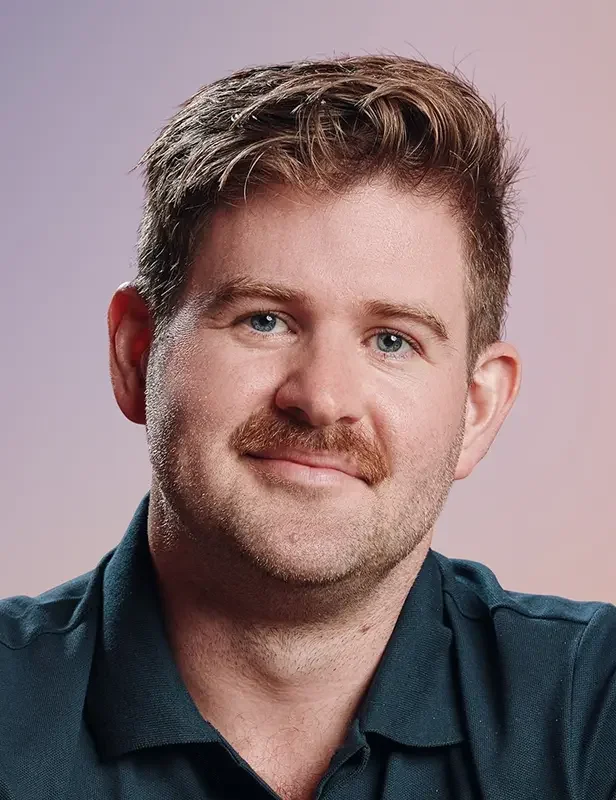
Sam Spurlin
Listen now:
Episode transcript:
Rodney Evans:
I have a lot of conversations with people who are like, "How do I know when it's time to leave?" I sort of am of the mindset that if you're asking that question, you already know you're leaving. If you're asking me how do I know it's time...it's time, babe.
Hey everyone. This is At Work with The Ready, a podcast about work design and how organizations can make change work in their favor. I'm Rodney Evans and I am here with my friend and co-host, Sam Spurlin.
Sam Spurlin:
Friend and co-host. I thought we got a promotion already.
Rodney Evans:
You did.
Sam Spurlin:
Oh, great. Thank you. Companies, they're facing more change than they were built for. And the problem is that organizations are still running on management ideas from a completely different era. Rodney and I work with leaders and teams who are redesigning how work actually gets done so change becomes fuel in the tank instead of sand in the gears.
Rodney Evans:
On this show, we share patterns that we're seeing inside of organizations and what we think is working and what we think is getting in the way. Today we are going to talk about leaving jobs because there is ever so much in the news about job displacement and it's frothy out there. But first, we got to check in because how you do something is very important and it matters and you should do check-in rounds. Sam, what is today's question?
Sam Spurlin:
Our very important and deep check-in question today is, Rodney, in what way or ways are you super basic?
Rodney Evans:
I mean, in what ways am I not super basic? The thing that comes to mind that has become such a brand of mine that I have so much merch because you know when people know that you love something and they just keep buying you things of that thing, is Miller Lite.
Sam Spurlin:
I do know that.
Rodney Evans:
Yeah, that's true. I've been drinking Miller Lite since I was 14.
Sam Spurlin:
What number are you about to throw out here?
Rodney Evans:
Since I was 14. It didn't become a beer of choice until I was older. I think it's the perfect beer and people buy me T-shirts and hats. Ali bought me a mini cooler of a Miller Lite can to fill with Miller Lite. I know it's basic, but I also just think sometimes things are basic because they're perfect.
Sam Spurlin:
Yeah, because they're good. And why deviate?
Rodney Evans:
Why mess with it? Yeah. I don't want to eat an IPA that's disgusting.
Sam Spurlin:
All right. Well, let's not have other delicious beers catch strays here.
Rodney Evans:
Sam, in what way or ways are you super basic?
Sam Spurlin:
I mean, also in many ways. What comes to mind for me right now is that I will not look down my nose at a chain restaurant. I'll go to an Applebee's. Go to Chili's, you kid me?
Rodney Evans:
Hell yeah.
Sam Spurlin:
I will unironically search out a Subway from time to time. I don't care. Come at me. I think they're great.
Rodney Evans:
Dude, footlong Subway club? No notes. Yeah.
Sam Spurlin:
Yeah. I'm a cold cut combo footlong, Italian herbs and cheese.
Rodney Evans:
It's my second favorite.
Sam Spurlin:
Yeah.
The antiwork sentiment and our hosts in transition
Rodney Evans:
They're related. So today we are talking about leaving jobs. The reason I propose that we do this episode, Sam, is twofold. A lot of anti-work rhetoric right now in response where it's backlash to job displacement and job elimination that is both real and just being justified by CEOs as being AI related. There's a lot of this doomsday stuff. There's a lot of this early retirement FIRE subcommunity action happening. And then also you and I are both experiencing role changes and both presumably put a lot of thought into them...fingers crossed. And so I thought it could just be fun to talk about both the sort of sky level shit but also the very midnight zony part of making job change because it's an incredibly big transition in people's lives.
Sam Spurlin:
Cool. Yeah. I love that. Let's dig into it. I feel like an initial tee up just to say out loud is like we're obviously not talking about getting laid off, which is a different type of losing your job.
Rodney Evans:
It is.
Sam Spurlin:
Which might be very top of mind for a lot of folks, especially if you're working in tech right now. So hearts go out to folks who have experienced that recently. There are probably, I think, episodes that we have done that might be useful or interesting for those. But in this situation, we're talking about the self-directed, "I want to make a change and I have kind of the wherewithal and the ability to do that." Is that fair to say?
Rodney Evans:
100% and very good note. And maybe to tie the two together, I think there is some interesting calculus happening for a lot of people right now about whether they wait to get laid off or whether they try to get ahead of a layoff or whether ...you know, career math is fucking hard.
Sam Spurlin:
It's not black and white. It's not this or that. There's third ways and fourth ways and fifth ways.
Rodney Evans:
At least. All the ways. Where should we start? Let's start....should we start from the individual?
Sam Spurlin:
Yeah, because you have information that you wouldn't tell me before the podcast because you wanted to talk about it on the podcast. So I'm legitimately curious what's going on for you right now.
Stepping back from the CEO role: Rodney’s transition
Rodney Evans:
Yeah. Well, you're an efficiency guy and I didn't want to repeat myself because I know how you hate that. So I am going to be transitioning my role at The Ready in about a month and my role has already changed so much this year. So we hired someone who you know named Sam Rothkopf. She started-
Sam Spurlin:
Other Sam. Better Sam, some might say.
Rodney Evans:
We call her New Sam.
Sam Spurlin:
Oh, okay.
Rodney Evans:
So you're Old Sam and she's New Sam. There's no better or worse Sam.
Sam Spurlin:
I am surprised to hear that and I'm thrilled.
Rodney Evans:
Sam 2.0. You were beta Sam. No. You're Old Sam. We hired Sam last year and the idea was always that I did not want to continue to be in the role of stewarding The Ready indefinitely. To be totally candid, I didn't necessarily ever want to be in the role of stewarding The Ready. That was not really my dream through a series of circumstances and other moves and things that happened. I chose it and I wanted to do a great job and also I wouldn't say that it was necessarily exactly in my zone of genius. So knowing that once we got to a certain place and got through some of the really big transitions that we've talked about on this show, like getting through conversion to an EOT, really changing the shape of our workforce, really kind of shifting in terms of the kind of work that we're doing, which we talked about on the last episode away from sort of just like generic ways of working stuff, it felt like we were kind of at a place where we had enough stability and enough clarity that I could start to materially step back.
So all of that is long preamble to say, Sam came in last fall at the beginning of this year, I started being like mostly on client work. My internal role is less than a quarter of my time, probably including this podcast. And like in July I'm going to be even more out of that role and even more out of client work and starting to incubate what we are calling "The Ambition," which is really like the business B in dual transformation. And that part I'm not going to talk about yet because there's going to be so much more on that on this show later. But it's something that I am really excited about and really inspired by and really feels like is right for ...America? God, that sounds bad. It sounds obnoxious like-
Sam Spurlin:
Are you running for office, Rodney?
Rodney Evans:
It's right for America. I might be the governor. No, can you imagine? No one would vote for me. Yeah, people would be like, "You have to stop saying fuck."
Sam Spurlin:
I don't know. I mean you're coming out as this like every person, my Miller Lite and this is best for America. "Vote for me, Rodney Evans."
Rodney Evans:
I'm soft selling being like a member of the proletariat. Yeah. So more to come on that, but I thought it would be interesting to talk about this on this show because most people leave their company or get laid off from their company or whatever. And the way that I am making this move is probably not the same that a lot of people make it, but it's been a very intentional design process for me. And it's really been a Depthfinding experience of like, "What does the world need? What do I want? How do I feel? What's the content of my day meant to be? What can we make money doing?" And so it's sort of been this combination of like an intuitive journey and also a very intellectual journey in terms of like hiring a successor and shit like that. And now we're like close to here. And so I just thought that paired with the fact that you also recently went through a transition could be like a fun thing for us to unpack together.
Sam Spurlin:
Yeah, that is very cool. Congratulations, by the way, making this a shift.
Rodney Evans:
Thank you. I'm so excited.
Sam Spurlin:
It sounds cool. You left a very juicy thing hanging there that we can't talk about, which again, I'm not even playing coy. I don't even know what it is. So it's probably for the best. I can't then accidentally spill the beans, but that's very cool. And I appreciate that the cool thing about The Ready in the way we think about roles or way you all think about roles is that-
Rodney Evans:
You can still say we. It's fine.
Sam Spurlin:
Okay, great. Thank you. When I'm on this podcast, it's family.
Rodney Evans:
Yeah, we're in the fam.
Sam Spurlin:
Thinking about roles as a portfolio of roles. And the steward role or CEO role that you held that took up a lot of your time for a while was though just a role in your portfolio and relinquishing one of those roles and putting time into a new role doesn't mean that you're gone from The Ready, it means that your role mix has changed, which I guess wish more places worked like that because I think we know that in a typical organization, the role and the soul are pretty intertwined.
Rodney Evans:
Yeah. And I think it's some uncommon for the CEO to stay in the building but do something new. Or like right now in this liminal space, I'm kind of just like in the growth and delivery circle mostly that Sam stewards just coming to rep my project. But I say this because I think that's how it should be. I don't think that careers are a ladder and I do think that a lot of the decision making that people do is really borked because they think about it as something that's linear and advancing rather than based on the content of their day and what they want their life to look like. And those of us who have that kind of privilege I think should exercise it.
Leaving a job after 10 years: How Sam decided
Sam Spurlin:
Yeah. No, I think that certainly tracks with my own decision making process a few months back as well.
Rodney Evans:
Yeah. Let's talk about that. Are you ready to?
Sam Spurlin:
Okay. Yeah, sure. I'm happy to take you to it.
Rodney Evans:
I think what would be fun is for each of us to talk a little bit about why. Like what were some of the milestones along the way in your decision making process?
Sam Spurlin:
Happy to do that. And it's funny, as you get further away from the decision, I think you start to actually see the process being much longer than you actually conceptualized it because as I look back on it now, I wrote an article at my seven year anniversary at The Ready, which was very much a like, "Is this a thing I still want to be doing? And yes, I absolutely do." But the fact that I even had the idea to write that article, there must have been something kind of spinning in the back of my head. The thing that I always said, which I still really believe is that I never wanted to stay at The Ready purely out of just inertia. There's a certain amount of inertia when you are at a place from literally day one and you can just ride that for a long time.
I am not blind to the fact that there was some potentially unearned or implicit power just from being a very long tenured member in an organization, which I don't think I ever consciously abused, but it's like a thing that is just true and I was always very conscious of trying to push against that. So I was always saying after like around that time, seven years in or so, that I should be able to say that I am consciously choosing to stay at this place and not just doing it because there's noting better in front of me. So I guess put that out as kind of like my own realization that even seven years in, which was three years before I left, there must have been something kind of like starting to percolate a little bit there for me.
And then the other thing that comes to mind is like this was not like a breaking point sort of like something big happened or I was like, "I'm out of here. I'm slamming the virtual door," which working in a distributed organization, you don't really have many opportunities for yelling and slamming doors, which is a real shame in our-
Rodney Evans:
That's a real missed opportunity.
Sam Spurlin:
—Total missed official.
Rodney Evans:
You can leave a Slack channel. That's like about as door slam-y as you can get.
Sam Spurlin:
Yeah, you could say something mean and then leave a Slack channel. Slack should give you an option to slam the door on the way out.
Rodney Evans:
Yeah, there should be a GIF.
Sam Spurlin:
But something you've actually said already in this episode, talking about your average day was a huge part of how I think about what I want to be doing and how I want to spend my time. I think it's really, really easy to over-index on the best days and the worst days. They're both so emotionally relevant in their own way and good days in my last couple of years or my last year at The Ready were amazing, great. Some of my best friends still remain in this organization and some of my worst days I wouldn't want to relive again, but the overall average day of just what the work was looking like and feeling like for me was just on an ever so slightly downward trend. I think I made a couple of efforts throughout to get myself on a different trajectory in terms of what's my role mix going to look like and the nature of the projects that I was working on. And sometimes you have control over those things because there's a lot of choices and sometimes you don't really have control over it because you do what the work kind of needs to be done. So I think eventually it was like, "Okay, I think it's time to just explore other things."
When repeat feedback tells you it’s time to move on
Two more things, then I'll shut up and let you talk. This is the first time obviously I've dropped a lot of these thoughts in a coherent way. One you're very relevant to, which is during one of summative feedbacks, you gave me some really good and relevant feedback. And I had this out of body experience because it was word for word almost feedback that I had received like a year before from you and others. And I was like, "Oh, that's interesting. Why hasn't that changed? Why hasn't that aspect of what I'm doing changed?"
Rodney Evans:
Yeah, I think I know what you're talking about.
Sam Spurlin:
And I was like, "That's a sign right there." For whatever reason, I'm hearing the same sorts of feedback that I've heard a couple of times, what makes me think it's going to change in the future. So that was a very interesting and useful moment in my ultimate decision making process.
And then the last thing, I finally started to think about my career in a much larger time horizon than just like right now or like the next year. And when I think about the fact that I'm late 30s, going to be working for at least another 20 years and what do I want the next 20 years to look like? It opened up a lot of interesting options to me that I was excited to explore that were different than what I was doing at The Ready. And I didn't know what exactly those things were going to be, but I got very curious about them and felt like I could kind of bet on myself to figure that out.
Rodney Evans:
Yeah, that's really cool. Your comment about the feedback just reminded me that I left a different job a long time ago and I had been really unhappy, acutely unhappy for a while. And it had been such a great job when I started it. It had kind of been like a dream job for the first probably year that I was around. But I had that experience too, where I would be really like, "Well, maybe with this new project or this new client or this new whatever, it'll feel more like the early days when I really loved it here." And the truth was that the organization had changed and it was never going to feel the way that it felt before and I probably wasn't going to feel that way either. And someone who worked on my team one day we were sitting outside the office just chatting and she said to me like, "Are you okay?" And I was like, "Yeah, why?" And she goes, "You just seem really unhappy." And I was like, "I have to quit this job."
Sam Spurlin:
"I thought I was hiding it better than this."
Rodney Evans:
I did not think ... And you know what's funny, Sam, is I didn't know. It wasn't even that I was necessarily trying to hide it except maybe from myself. I was trying to continually talk myself into all of the reasons to stay and remind myself of all of the great ways it had been and trying to recreate conditions that were just no longer present and all of that was making me sad and grumpy and I wasn't even really aware of that until someone asked a question and I think I left the next week. I was just like, "Oh shit, I am unhappy. I got to go. " And it's just interesting how sometimes a third party saying something to you that feels fairly probably innocuous to them, for me, it was kind of like the quarter dropped and I was like, "Oh fuck, I gotta get out of here."
Sam Spurlin:
Yeah. And in some ways it's not a big highly emotional or very flamboyant gesture or moment. It was like something like cracked or something like broke free in just like a small mental way.
When your company changes directions without you
Rodney Evans:
And it's interesting because I think a lot of what we're sort of talking around but is true is like the system around us changes and we change and those things don't always happen in a way that is particularly harmonious. And I've definitely had the experience of both not wanting the system to be the way that it's going and feeling a way about that and also in some ways not being willing to make the changes that I need to make about myself.
The stewarding role at The Ready is a really good example of this where it's like we've done a lot of big shit in the last three and a half years. It has been sort of like behemoth after behemoth of like very significant changes and the truth is that for me, I don't really want to do that anymore. I don't want to do the next one. And it's really easy to be like, the world is signaling to me and my energy is signaling to me that it's time to do something else that's not the next re-imagining of this thing. It's really easy for me at least to like talk myself out of that and be like, "No, no, no, your job is re-imagining this thing. You are the molder of this thing. This is what you do and this is what you've done for a long time and this is like a big part of your identity and whatever. And so obviously the next hill is yours because the last five fucking hills were yours." And it's like sometimes just trying to refuse that information is really easy. I found it quite easy to just be like, "I don't want to hear this information from myself," which is foundationally, "I don't want to do this."
Sam Spurlin:
Right. I wonder if there's something too about being in a self-managing organization where there were very few explicit constraints on what we did and how we did it and not like a typical organization in many ways. So I think at least if I'm just talking about myself here, I think I put a lot of pressure on myself to change reality because I quote unquote should be able to-
Rodney Evans:
Sure.
Sam Spurlin:
—as a member of a self-managing organization with a bunch of power to make things happen. And I think to your point earlier, sometimes the system is moving in a direction because it needs to move in that direction and it may not be the thing that you would prefer. And even in a self-managing organization where you do have a lot of authority and autonomy, you still sometimes can't push against the tide of where the organization itself is going and realizing that and really understanding that can free you up then to make some other choices and not just push against that force that is not going to be resisted.
The cost of waiting to get pushed out
Rodney Evans:
And one of the things that that really points to that I wanted to talk about is I do feel like a lot of people that I know and have seen sort of do that resistance game and basically wait for someone else to make the decision for them. They're like, "I'm going to be like a conscious resistor and just a pain in the ass until someone boots me out. " And obviously you did not do that.
Sam Spurlin:
It's messy, but like cleaner at that point in some ways as well, right? "Oh, we had a big fight and I got fired or like I had a moment where I could close, where I could slam the metaphorical or maybe literal door and now we're done."
Rodney Evans:
Exactly. And it's like, "I'm going to be such a pain in the ass that someone else makes this decision for me" is like not a good strategy, but I think that I see a lot of people do that, which means that you're perpetually in this situation of being dissatisfied yourself but also probably being an irritant in this system and it's like, I wish more people sort of could tune into what's really happening here and can I accept this and be with it or do I have to go and if I have to go, could I just go?
Sam Spurlin:
Totally, totally. Well, and I think in my case too, we've talked a lot about the importance of leaders having things that they care about outside of work about disentangling their ego from their role in their organization or from their work that they do. And I think early days of The Ready, because I was there from the very beginning, it was my first time doing this work, coming out of grad school, still trying to do my PhD program. I was like, " Okay, I'm going to just utterly throw myself into this new world that I didn't even realize existed 18 months before and I'm going to figure it out, which means that the ready was my entire identity, I would say for a good five years when people would ask me about what I do for work and I'd explain the ready and be like, "Yeah, it's my dream job and I'll obviously be doing this forever." And when I thought about what does 20 years in the future look like, it was some version of the ready that I was still extremely involved in and I couldn't even imagine what else it would be.
And then after that, that initial five years, I started to realize like actually I could do lots of different things and it could look lots of different ways and that might actually be more exciting to me.
How do you know when it’s time to quit?
Rodney Evans:
Yeah. I think that people get very stuck in the idea of like jobs and like it's this job or it's a different kind of job and they don't sort of do the kind of exploration that you're talking about of like life can be a portfolio. There are lots of different ways to stay employed and lots of different facets of identities for people to have.
One thing I also wanted to talk about while we're sort of like on the self-delulu page is like I have a lot of conversations with people who are like, "How do I know when it's time to leave?" And what they think that they're asking me is, "How do I make this decision? How do I know on paper when it's the right time or when the new offer is going to really be better or when the money is really going to be right or whenever the stars are really going to align?" They're asking me how to do the math to get to a certain answer and I sort of am of the mindset that like if you're asking that question, you already know you're leaving. You've already made that. If you're asking me how do I know it's time, it's time babe. It's like someone going "When do I call a divorce lawyer?" You're getting divorced. It's happening. If you've already said that word out loud somewhere inside of you, you have already made this call and you have not yet let yourself realize that you've made a decision. That's a really fucking hard decision to make for all the reasons we're talking about.
Sam Spurlin:
Yeah. Well, and the interesting thing about that too is you can have made that decision to leave and also continue being employed where you are. Like, the internal decision point and the external actually taking action on that decision point are often separate times. I would probably recommend that those times don't get too far apart, but that's where the brass tacks of money and your personal runway and what kind of risk you're willing to take where that stuff really gets hammered out because I'm not going to sit here and tell someone to quit a job where they've got major responsibilities at home and no runway and nothing really lined up and just kind of like trust the universe. I don't think that's great.
Rodney Evans:
Don't trust the universe in that way. Agreed.
Sam Spurlin:
But having the way you conduct yourself, the way you comport yourself in a role that you've decided to leave after you've already kind of made that internal decision can't be an interesting little experimentation point of where you show up very differently. I'm not saying that that turns your decision around, but it probably is a useful period of time for learning how to be in an uncomfortable situation or different aspects of yourself that you bring to bear because you kind of gotten past giving any shits about how things actually turn out. I didn't really do that. I mean, at The Ready, I feel like it took me forever to make the internal decision and once I did, I immediately needed to make it, because I needed to just start moving in a different direction, but I think it was a very drawn out internal and unclear process that I was largely subconscious for a long time. And then once it became conscious, it was actually a relatively short period of time to make the decision and it was even less time to make the decision and then talk to you and others about it.
Rodney Evans:
Yeah. I would say I've had a similar experience. So the week of my 10 year Ready-versary, a bunch of different things happened. I was doing a speaking thing and I was in the middle of it and I was like, "I don't want to do this. I don't want to do this. " And there were like five or six little mini moments in the same week as my 10-year Ready-versary and on Thursday I emailed my coach and I was like, who I hadn't talked to in probably like a year and I was like, "Do you have time?" And he was like, "I have time this afternoon." And at the end of the call, I was like, "Okay, so it's July 1st is like my last day in this role and that's it. " And I just sort of like everything sort of like backed up from that.
And for my clients listening, I'm not disappearing, like I'm still doing that work obviously.
Sam Spurlin:
It sounds like you might actually have more times. You're getting more Rodney than you maybe have had in the past.
Rodney Evans:
They already are. I'm definitely around more haunting them than they've seen in years because yeah, other people are like running the show at home, which is great and how it should be. But yeah, it was funny how this decision that was probably like 18 months in coming got made inside of three days and it was that week where I was just like, it was a very like, "This is your life" kind of week. And I just was like, "Okay, this needs a specific clock on it. " And I got Got off the phone with Gareth, I called Sam, I called New Sam and I was just like, "Hey, it's July 1st." And she was like, "Okay."
Sam Spurlin:
It's funny that the 10 year anniversary, because it played a similar-ish role for me, which was just 10 years is an interesting ... It's a big number for most people in an organization. Most people do not spend 10 or more years in an organization. So it's a natural point to get to be thinking. I'd be very curious to ... We looked at the data of everybody who ever left a job if there's clusters around all the major anniversaries.
Rodney Evans:
I'm sure that that's right. I'm sure that that's right.
Physical signs you need to leave your job
Rodney Evans
I think the other thing, and I'm curious to ask you if you had this experience too, is I really started to pay attention to ... It was not just the moment that I was giving this talk and I was like, "I don't care about this." But just sort of my physical experience in general. I just started to notice that things that I used to get really excited for and really have a lot of energy for, I started to just be like, "Ugh, I gotta go do this now." And just not really feeling rested no matter how much I slept and just feeling sort of on the brink of getting sick a lot, but not actually getting sick. And I just feel like there was a season earlier this year of a real "body keeps the score" situation where my subconscious and my physical body already knew this thing and my brain had just not caught up to it. And definitely my mouth and saying it out loud came last, but it kind of went like body-subconscious-brain-face. Yeah, there was a long period of time there where I was like, "Am I on qualudes? Why am I so fucking tired all the time?"
Sam Spurlin:
Yeah. No, totally. I have exact same experience for me as well. Long periods of ... I don't know. I mean, I've never been diagnosed as depressed, but where I'm looking like, "Are these depression symptoms? What's going on?" I'm not generally this way and I can't point to anything specifically that's making me this way that gets the brain going about, "All right, well, what's the state of my life and work is a large part of it...what's the state of that? " And oh, okay. I could see it now easier in retrospect than I could in the moment.
Rodney Evans:
Were there any things that you noticed that helped you get to your decision or tap in? I mean, obviously physical symptoms, questioning whether you have symptoms of depression, noticing energy and various things. Was there anything else that was particularly helpful to you as you sort of pondered?
Sam Spurlin:
I think the main thing was just I think when I started to think like, "Oh, I maybe won't be at The Ready for my entire career, which was a wild thing that I feel like I had to admit to myself, but is true because I started noticing, well, then what's the work that lives out in the world that is like The Ready but is not The Ready? And I think because, not to get into my whole biography, but I didn't come into the work of The Ready with a bunch of experience doing similar things in the past. It was very much like, "I want to do this weird ass thing that The Ready is doing. I'm going to help build this weird ass thing." It was initially difficult to think about, well, where else could I do a weird ass thing? There's only one The Ready and there's a couple of other kind of boutique firms like The Ready, but I definitely didn't want to go from The Ready to another company that is very similar to The Ready.
Rodney Evans:
To a less good version of The Ready?
Sam Spurlin:
There it is. Didn't want to do that, but I did start to get curious about, okay, going internal somewhere. Live I've seen the inside of organizations because obviously worked with a lot of organizations and I still have connections with former clients and people who I've worked with and just started to get curious about what does their work look like on the inside. So I started to realize like, oh, I could convince one of these companies to hire me to do something that would be interesting to me and valuable to them. Didn't have anything specific lined up, but also had kind of my usual amount of delusional confidence in my ability to figure shit out that I could go and make that happen. And then the other thing was just really realizing my own zone of genius is generally going from like zero to one on a thing, which is like my prime years at the ready were very much zero to oneing the ready as an idea and this was like a new zero to one sort of situation.
So I knew I would be kind of marshaling my best energy and thinking and version of myself to figure out what is the next thing that I'm going to zero to one on if that's getting a job somewhere, if that's building something new on my own, some combination of the two. I just knew that that is generally what I am good at and I was stoked to figure that out.
Rodney Evans:
This is why we make good podcast hosts because obviously we have like completely opposite approaches to everything at all times. You're basically like, "I did market analysis and then I figured out how this worked." I did....um....dream analysis? A lot. I got really into Jungian dream analysis. I'm not generally someone who has a lot of vivid dreams and I went through this period right before my 10th anniversary where for like three weeks I was having unbelievably vivid dreams and I was remembering them in a lot of detail. Sharan, member of The Ready...Sharan's mom introduced me to Jungian dream analysis. She's a therapist a long time ago and I started using AI to analyze my dreams and they were so fucking on the nose. It was so just like, yeah, your subconscious is telling you that you are going through a significant transformation to do something that is more intuitively oriented and my brain was just like, "Shut up. No." Anyway, so I did a lot of journaling and a lot of dream analysis and then it all sort of like came together.
I say this because, and I asked you about it because regardless of whether your process is more rational or your process is more intuitive, I think making these decisions is a practice like anything else. I think both you and I, probably because we are designers by nature, went through a long process, a long and at times very intentionally designed and at times more emergent process and paid attention to these various signals until we came to a conclusion. I only say this because a lot of people who I know are trying to make these decisions right now, I see them really get into just like a very surface level ego loop that's like, job, money, scary, job, money, scary. And I'm like, "Okay, yes. And...let's try to stop being in the narrative where you go home and bore your fucking spouse with the same story for the 30th time about what you don't like about your job, but how you can actually quit it because you can't make this money somewhere else", stop doing that stuff because there are practices like the ones we're talking about to get at what's really going on.
Sam Spurlin:
Yeah. No, I love that. This has been therapeutic for me. I don't know if we're helping other people.
Rodney Evans:
I don't care.
I think we are.
Sam Spurlin:
Was there anything else you wanted to dig into on this?
Antiwork culture, FIRE, and creator burnout
Rodney Evans:
There's one other thing. The stuff I mentioned at the beginning around the anti-work sentiment, there are these influencers, et cetera now that never existed five years ago that are basically just like talking about how to get out of the corporate grind and I think that's great. I'm just like, I'm all for it. But I do feel like younger generations than us and sort of in the zeitgeist right now is a real like "Life is beautiful. Why are we making spreadsheets?" feeling that I think contributes to people questioning whether what they're doing is enough. I think there's that part of it. I think there's the like, I have a bunch of friends who are in the FIRE movement, like "Financial Independent, Retire Early" movement. I think there's also a lot culturally happening right now that has people questioning whether to stay in their job in a way that 10 years ago people are just kind of like, "I have a job so I'm going to do it or I'm just going to do the same job for 20% more money somewhere else."
Sam Spurlin:
Yeah, no, that's definitely happening. And I think there's kind of connected to this is that there's also ... So I think the story a lot of time, maybe a couple of years ago was like, "I'm going to quit my job becomes a content creator. I want to become a YouTuber or a TikToker or something." But then you had this like swath of professional content creators retiring or basically realizing that the grind of being a content creator is worse than most full-time jobs.
Rodney Evans:
Totally.
Sam Spurlin:
And putting aside the fact of like the percentage of people who actually make a living from doing that sort of stuff. But I mean, I can understand the impulse to anti-work when I look around at the typical organizations that people have to participate in and be like, "Yeah, if that was my last 10 years, I'd probably be pretty anti-work too." Or if I had been making more money, I'd probably be thinking pretty hard about FIRE and how I could figure out how to do that for myself right now. I try not to let my fortunate experience of working at a badass place like The Ready not completely color my view of how everybody else's work experience actually is.
Rodney Evans:
Yeah, I agree. My parents didn't talk much about how they were treated at work and whether their work was meaningful to them or whether ... Literally not once in my life did either of my parents talk about whether their jobs gave them energy the way that I'm talking about fucking Jungian dream analysis and how that relates to being a CEO. It's a different time.
Sam Spurlin:
They may have also gotten like a pension too, so that's pretty cool.
Rodney Evans:
Well, I was just going to say, and I think part of that is because of like the social contract being so different than it was. My parents also did have pensions and there weren't massive layoffs once a year at their jobs and there wasn't an expectation that you would just do anything to make the quarter and hit the stock price. You know what I mean? So it's like I think that like the anti-work rhetoric and the questioning rhetoric comes at a time where power has shifted back to the employers in so many ways. Jack just posted something about the fact that like 10% of Americans don't have enough food. It's like if our country is going to be run by companies and companies are not going to take care of their people, then there's really no reason for people not to question why they should transact with these companies.
Sam Spurlin:
Yeah. I would be worried for us as a country if people weren't pushing back on that.
Rodney Evans:
Totally, totally. So I just think it's an interesting moment where like I'm still long on humanity and I'm still like betting on us hanging in there and not just letting the robot overlords completely lead the way from here, but it does feel like a bit of a perfect storm in terms of the technology phase shift, total loss of confidence in institutions, both governmental and corporate and humans just being like, "What am I doing this for? It isn't even taking care of me or ensuring my retirement or ensuring my own stability." So it's an interesting time to be pondering these questions.
Sam Spurlin:
Yeah, absolutely.
Rodney Evans:
Sam.
Sam Spurlin:
Rodney.
Rodney Evans:
I feel like that was a squishier episode than we usually made, but I really enjoy just like sort of floating around in this thing. And finally, I think the vibe of how this conversation went is the vibe of how this decision goes, which is like it's very complex and multi-threaded and you just kind of have to float around in it for a while and see what happens. Yeah.
Sam Spurlin:
I don't think you can't over-design it. I know we talked about like design aspects, but it's not like ... I mean, maybe some people's brain works this way, but I don't think you can just like design out here's the three step flow of how to make this decision and you can 100% trust the answer that comes out the other end.
Rodney Evans:
Although if you wanted to be a content creator, you absolutely should be like "3 steps to financially independence!"
Sam Spurlin:
Yeah.
Rodney Evans:
"Sign up here for my playbook."
Okay. So what's an actual idea that you have for people?
Tip 1: Understand the opportunity cost of staying
Sam Spurlin:
So I didn't talk about this at all in the main part of the episode, but the other sort of major decision that I have made in my life actually was like nine years ago when I decided to quit my PhD program which is like a similar-ish type of thing. I had sunk some serious money that I am still paying back for three quarters of a PhD, spent a year trying to do The Ready stuff and the PhD at the same time. Very bad, decided to quit the PhD.
I bring all of that up because I remember a very helpful way of thinking about how to make that decision for me was I had this very stark realization that the opportunity cost of every second that I was spending working on my dissertation was keeping me from what I actually wanted to be doing, which was getting good at consulting. And I remember sitting at our coworking space in Manhattan on a Saturday morning trying to teach myself some sort of obscure stats thing, not for work, but for my stupid dissertation and knowing that I think Monday I was flying out to go run a workshop somewhere. And this is a year into me trying to learn how to be an organizational consultant and me just being like, "I cannot believe I'm spending the next four hours teaching myself this stats thing that I'll only use for my dissertation instead of making sure that the thing I actually care about actually goes really well."
I only bring that up because I think if you are feeling like the thing that you are doing right now has a very, very high opportunity cost, not in terms of like, "Oh, I could be sitting on a beach or I could be doing whatever the hell I want, " but other aspects of skills that you wish you were developing or experiences that you wish you were having professionally, for me that really helped me realize like, "What am I doing here?" Let's even out this equation a little bit and stop paying this incredibly high opportunity cost to do this thing that is keeping me from what I actually care about. I don't know if that makes sense, but it was helpful for me at the time at least.
Tip 2: Track your average day’s energy for a quarter
Rodney Evans:
I think that's really smart, really smart. I love that. And it relates to one of my ideas, which I sort of mentioned earlier, but really actually tracking your energy, not your reasons. I can't tell you how many conversations I have with people where they're like, "I just feel like I should be doing this other thing, or I feel like really called to blah, blah, blah, blah, blah." And then they immediately snap into their very rational mind for not doing that. I'm like, really, if you were going to do any kind of practical exercise when you want to think about one of these changes, it's like just think about, like you said at the beginning of the episode, on a scale of one to 10, how good are the good days? And on a scale of one to 10, how bad are the bad days and what does your average look like over a quarter?
And if it's not north of six, you got to do something else. I think that part of why I'm so excited about "The Ambition" that I'm going to be working on is because I've really paid attention to what about my current role both internally and with clients I still love and I am going to start doing a thing that is only that. And that's great.
Sam Spurlin:
That is great.
Rodney Evans:
Do you have another one?
Sam Spurlin:
I don't. I want to hear your other one. You're filled with ideas.
Rodney Evans:
I am filled with ideas.
Sam Spurlin:
I'm sitting at your feet and I'm here to learn.
Tip 3: Ask for advice from someone with no stake in the decision
Rodney Evans:
Oh, great, Sam. I think that a lot of people, when they go to make this decision, what they report to me is that they talk a lot to their mentors and their advisors and their coworkers or their spouses. I think you should talk to someone that doesn't have a stake in the decision. So the first person that I shared this ambition with that I'm going to be working on was a former client of The Ready's. She's really fucking smart and I really respect her opinion. She doesn't care what I do. She doesn't care what The Ready becomes. She has no stake. She has no horse in this race. Whereas when I talk to ... Obviously, I have an incredibly supportive husband and when I talk about not having my job and my comp and my sort of stability, et cetera, he's definitely like, "Um, what now? You're going to ... Okay." Or when I talk to other people at The Ready, it's like everybody is bringing their own set of priorities and context to that conversation. It's incredibly difficult to be objective when you do have a horse in the race. I think when you're making a decision like this, having a coach or somebody who just is in no way impacted by the outcome is like you got to get some data from those people.
Sam Spurlin:
Yeah, for sure. Love that.
Tip 4: Own the decision instead of blaming your employer or colleagues
Rodney Evans:
And then my last one, which is one- Oh, another one. Great. I have one more. Sorry. I add a lot to that. But my last one is it's a little woo-woo. We'll end on a woo. Okay. I think that when people make the decision to leave or they start to make the decision to leave, I've seen this actually with a bunch of clients over the years who I know, they really start to over-index on what's negative and they really start to be like they're looking for a betrayal or data to justify this decision that's a hard decision to make. And I actually think that that's problematic for a variety of reasons. One, because you tend to just burn a lot of bridges and be a pain in the ass while you're doing that, but more-
Sam Spurlin:
Yeah, so you end up creating one if there's not one there.
Rodney Evans:
Exactly. Your behavior will ultimately create the kind of drama that you're looking for, but I think more importantly, it's kind of avoidance. It's like, I don't really want to listen to my inner voice and pay attention to what my subconscious says so instead I'm going to complain about my boss not listening to my ideas. And I'm like, "Don't do that. That's just lazy." It's not their fault. Be with your own discomfort and your own dissatisfaction and your own intuition and don't like put on a whole fucking show in the barn about who did what to you that made this inevitable. Yeah, that's not good for anyone.
And you're making that decision from a place of owning your own power and that I think ultimately feels better even though I think we'd like to tell ourselves it feels better to point to someone and be like, "Well, it's because of this person that I'm doing a thing." I think it actually feels better to be like, "I'm making a decision because reasons that I've articulated for myself."
Rodney Evans:
Yes, I think that's exactly right, Sam. And ultimately it is your decision to make and it is your decision to live with. And so don't sort of do the move of being like, "I'm going to let the narrative around this situation make the decision for me. " Because those people are still going to be at your old job not thinking about you ever and you're going to be the one who has to live your life.
Sam Spurlin:
Love it. All right. Should we wrap here?
Rodney Evans:
Let’s wrap it up.
Sam Spurlin:
All right. As you know, we're always looking for new topics for the show. So if you have an organizational pattern that you're having trouble changing, shoot us a note at podcast[at]theready[dot]com.
Rodney Evans:
This show was edited and mixed by Taylor Marvin at Coupe Studios and produced by our lovely friend Jack Van Amburg. At Work with The Ready is created by The Ready where we help organizations around the world change the way they work. Thank you for listening.