
Ep. 50: The Ways of Working Movement Failed. Now What?
About this episode:
Original Air Date: June 15, 2026Fifteen years ago, the future of work seemed inevitable: bureaucracy was crumbling, adaptive organizations were the next default, and a whole movement of practitioners was going to get us there. That future never arrived. Agile transformation offices are being eliminated, the pendulum has swung hard back to command-and-control, and the companies we held up as proof are still the exceptions, not the rule.
This week, Rodney and Sam take an honest look at the failure of the ways of working movement, including their own part in it. They dig into the mismatches that doomed so much of this work: selling Sunshine Zone widgets to fund Twilight Zone work, buyers who want outcomes while users want experience, and the awkward truth that most "transformation" just layered a new system on top of an old one. Then they get practical about what still works—because while the movement may have stalled, the moves still matter.
Mentioned in this episode:
“Twilight and Sunshine Zones”: The Ready’s Depthfinding framework
Morning Star: BNW Ep. 54 with Doug Kirkpatrick
“Bayer under Bill": BNW Ep. 68 with Bill Anderson
“org debt”
“action meeting”: BNW Ep. 80
“strategy stack”: AWWTR Ep. 2
“op rhythm”: BNW Ep. 118
In this episode:

Rodney Evans
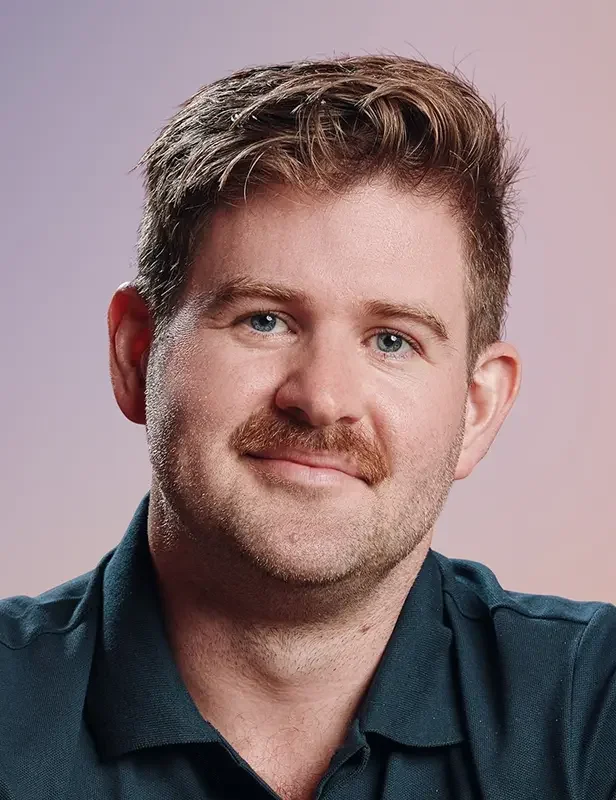
Sam Spurlin
Listen now:
Episode transcript:
Sam Spurlin:
It can be helpful to remember that a lot of the ideas that we're talking about, we didn't come up with that in 20 teens. From the 50s and the 60s, it's like May Parker Follett. These ideas have been in the ether for a long time and there's been lots of cycles and there will continue to be lots of cycles into the future.
Rodney Evans:
Hey everybody. This is At Work With The Ready, a podcast about work design and how organizations can make change work in their favor. I'm Rodney Evans and I'm here with my co-host, Sam Spurlin.
Sam Spurlin:
Companies are facing more change than they were built for. The problem is organizations are still running on management ideas from a completely different era. Rodney and I work with leaders and teams who are redesigning how work actually gets done so change becomes fuel in the tank instead of sand in the gears.
Rodney Evans:
On this show, we share patterns that we're seeing inside of organizations, what's working, what's getting in their way. Today we are taking a slight detour from the usual and we are talking about the failure in many ways of the ways of working movement and what we are seeing around that and digging into why that has happened. But first we will check in because how you do something matters just as much as what you do.
Sam Spurlin:
Well, this new way of working we are sticking with, which is the check-in question.
Rodney Evans:
I'm still long on the check-in round.
Sam Spurlin:
Yeah, me too. Me too. What was your first music purchase with your own money?
Rodney Evans:
So Sam, I am an only child and if there is one skill that I developed early in my life, it was hustling my parents for things that I wanted. I was spoiled as shit. So I was being rewarded for something I had done probably grade or cello related. I was like six or seven. I was given the money to buy a tape because I am that many years old.
Sam Spurlin:
Just real quick, a peek behind the curtain. My first draft of this checking question said, "What was the first CD you ever bought?" And then I was like, "Wait a second. Wait a second."
Rodney Evans:
You're like she's too old for that.
Sam Spurlin:
That might not work.
Rodney Evans:
Yeah, that's fair. You were right. My mom took me to Bradlee's, which was like the Target of my day.
Sam Spurlin:
Okay.
Rodney Evans:
RIP Bradlee's. And I only had enough money for one tape and I couldn't decide between Michael Jackson's "Bad" and Madonna's... I'm going to say... what was Madonna's first record? Was it called "Material Girl"?
Sam Spurlin:
You're asking the wrong guy.
Rodney Evans:
Okay. Someone out there is screaming the answer into the air right now.
Sam Spurlin:
Jack might be the one screaming into the air right now.
Rodney Evans:
Haha, fair. Anyway, with my newly formed skills of manipulation, I convinced my mom to give me enough money for both of the tapes because I pretended that I couldn't decide and therefore was so paralyzed that I could have neither. And she finally gave in. And so I got two tapes with my own "money" right out of my mom's wallet at the Bradlee's. And that is what I bought. And man, bangers both.
Sam Spurlin:
Yeah. All right. Nice.
Rodney Evans:
I'm looking up her first album because we need to know.
Sam Spurlin:
Yeah, of course. We can't have that lingering, just unknown in the world.
Rodney Evans:
Oh, it was just called "Madonna." Okay.
Sam Spurlin:
Oh, all right.
Rodney Evans:
Yeah, that's right. Anyway, that was it. What about you?
Sam Spurlin:
For me, I'm pretty sure it was 1997, which would've made me 10. And the memory that I have is it must have been birthday money or something because I had enough money to buy my first CD player, personal CD player, and then I got three CDs to go along with it. This CD player was bright yellow and it was a piece of shit because-
Rodney Evans:
Was it Sony?
Sam Spurlin:
If you looked at it the wrong way...yes it was.
Rodney Evans:
Obviously.
Sam Spurlin:
And the three CDs that I got: one was just some generic instrumental piano CD that I wanted to be able to listen to when I was doing homework or something because that's who I am. And then the other two, one was Alanis Morissette, "Jagged Little Pill."
Rodney Evans:
Sick.
Sam Spurlin:
And Hansen "MMMBop".
Rodney Evans:
Oh no Sam!
Sam Spurlin:
I don't really know why or how those were the ones that I wanted. I don't remember if I went into the store being like, "This is what I'm going to buy."
Rodney Evans:
Ma'am, I would like MMMBop."
Sam Spurlin:
Or if I was just browsing, it was like, yes, this is what I want. Because my other musical memory, and I didn't buy these, these were gifts, but I had tapes. I had a James Taylor tape. Again, I don't really know why, but I was pretty into James Taylor as a small child.
Rodney Evans:
Same.
Sam Spurlin:
And then I had a Dire Straits tape as well. And of these four...
Rodney Evans:
The Dire Straits is perfect still. Holds up.
Sam Spurlin:
I mean, it was fine. Of these four musical artists that I have mentioned, I don't know that they would crack my Top 100 anymore, but for whatever reason they were my initial musical thoughts.
Rodney Evans:
I love this check-in question. Also, how funny is it that several generations grew up being like, "James Taylor's my guy"?
Sam Spurlin:
Yeah, just that smooth guitar.
Rodney Evans:
Dude, he's smooth. He's like the Mr. Rogers of folk music.
Sam Spurlin:
That's very accurate.
Rodney Evans:
Yeah.
The failure of the new ways of working movement
Sam Spurlin:
All right. Rodney, why the heck are we talking about the quote unquote failure of new ways of working? And again, one other small peak behind the curtain. This has kind of been on the list for a long time, but something about this week when we were looking at topic ideas, you were like, "Yep, we're doing this. I got a thing." It's like, all right, you're coming in hot.
Rodney Evans:
I am coming in hot. So really the reason is I was speaking at something very recently that was attended primarily by practitioners and had really grown out of the Agile space. So it was a lot of very well-known Agileists. Do you call them that? Agilists?
Sam Spurlin:
I think so. Yeah.
Rodney Evans:
Yeah. I think one of the people who were at the manifesto was there, maybe all of them, I don't know, whatever. And I was in several conversations with people who had been in the Agile office or the Agile transformation team inside of large organizations that have since been eliminated. And so throughout the course-
Sam Spurlin:
Not the people, but the whole Agile office.
Rodney Evans:
The whole thing, including the people. Yeah. And so throughout the day, I just was having conversation after conversation with people who were like, "I was an internal coach. I was an internal scrum master. I was an internal transformation person and it all got shut down." And I was like, "This is really interesting to me. " Because on the one hand, we are seeing the rise of a clear need and a recognition, frankly, of the need for good organizational and good work design because of AI. And this is right on the tail of the extinction of that kind of work in a lot of organizations. And because of both that and some internal conversations at The Ready recently, I've just been less and les convinced of ways of working as "the thing" on their own. Now we are like, Twilight Zone OGs, you are never going to catch me saying that the ways of working that we have taught all of you about on this show are not evergreen and valuable and impactful. And... I am now of the mind that they are necessary but insufficient to actually do anything really important anywhere. And that's why I wanted to talk to you about it.
Sam Spurlin:
Okay. Okay, cool. Yeah, I mean, that certainly tracks from my experience as well.
What we mean by “failure”
Sam Spurlin:
Maybe the way we can dive into this, being the consultants that we are, I want to challenge the premise of the question or maybe just clarify the question, which is just what do we actually mean by failure? I'm not arguing that there has been kind of a overall failure of new ways of working to change the world. And is that what we mean by failure at this point? I guess when you think about the failure of this, why that word?
Rodney Evans:
Yeah. I mean, we never thought that there was an end state to creating an evolutionary organization and so, so, so few companies are actually built to benefit from change. We are looking at the same case studies of the truly adaptive organizations that we were looking at 10 years ago.
Sam Spurlin:
Buurtzorg. Morning Star. Haier.
Rodney Evans:
Yeah. I mean, Bayer is coming under Bill, which is great, but it just still feels like more participatory, more complexity conscious, more progressive, more progressive organizations, especially US-based, are still very much the exception, not the rule. And given where things were even five years ago, but I mean, five years ago during the pandemic, there was some real momentum around new ways of working. But I would say 15 years ago to five years ago, there was a real decade in there that was like, "Command and control is not the way. Bureaucratic systems are crumbling. There is a better way to do this. We should all be trying it." And I think there was a groundswell that I would say on balance failed to get a footing and certainly failed to become the default like Buurtzorg or Haier or Roche...those companies did not become the default for how organizations operate.
Sam Spurlin:
Yeah. Not even close. And also there's not a general awareness of those companies that they should be anything but what they are because the other way of looking at what you just said is like, "Oh my gosh, we have more work than we could ever do in a lifetime because all these companies are like, Oh, we're not the way we want to be. Come help us fix ourselves." And no, I mean, the Ready's doing work, I'm doing work, people are doing work, but it's not like, I know for a fact we're not just trying to bat people away from trying to work with us because they just don't know how to do it. There's not even an awareness that there are alternatives to what they're doing.
Rodney Evans:
That's right That's right.
Sam Spurlin:
Yeah.
Rodney Evans:
So that's what I mean by failure. I think I held an assumption in 2012 or 2013 when I was relatively new to this work that eventually the world would have an awakening and the future of work would be progressive adaptive organizations and that future has not arrived in 2026, 15 years later.
ZIRP, COVID, and the swing back to command-and-control
Sam Spurlin:
Yeah. I wonder, not to go too sociology on this, but I'm wondering if the kind of like zero interest rate phenomenon of the late teens, twenty-teens was connected to this optimism that we had around like, oh, there are different ways to work and different ways to organize. And now that we're very well past this ZIRP moment, if it's even coming back around even harder than maybe we expected.
Rodney Evans:
Say more about that.
Sam Spurlin:
Just that I think things were more free and easy in the 20 teens, late 20 teens pre- COVID. And I think there was more openness and awareness and money, frankly, floating around to do this sort of thing. And then COVID was its own beast that had its own very acute moment that needed to be navigated that was actually very much in the wheelhouse of kind of like new ways of working, but nobody was doing that by choice. It was pure survival.
Rodney Evans:
They had to. Yeah.
Sam Spurlin:
And then coming out the back of that, interest rates are up, money's not free. Organizations maybe made some questionable decisions during COVID around how they grew. And it's a big swing back toward kind of autocratic leadership in organizations and the world. And I think it just runs counter to a lot of the stuff that The Ready and others were kind of proselytizing 10 years ago.
Rodney Evans:
I think that's right. And obviously the markets are all over the place right now and just like irrational in many ways. And I think that in external environments that feel chaotic and I would argue that that is the environment we are living in right now, like we have tipped from complexity into chaos because things don't actually feel dispositional. They feel random at this point. It's not that surprising that the power has shifted back to centralization and to the companies.
So to your point, in more abundant times where more people were experiencing more growth and more opportunity, there was more power in the hands of employees. It was much more of like a worker-led market. And so companies were responding in many ways to that by saying, if we want to be a great place to work, if we want to get the best talent, if we want to keep the best people, if we want to have the brightest innovation, we have to be a place that creates human thriving.
And now in chaos, there is much more of a return to traditional ways of thinking and managing, which is "We got to lock this shit down. These people are lucky to be here. Everybody's going to be automated out of a job in 10 minutes. We can do whatever we want with them. The market is flooded with smart people looking for stability," et cetera, et cetera. So I think you're right, Sam. I think the pendulum has swung and I don't think that the philosophical shift is unrelated to the macroeconomic shift that has happened in the last 10 years.
Sam Spurlin:
Yeah. And I think the optimistic take for me on that is just the reminder that things are quite cyclical and we'll swing back the other way, hopefully at some point. And that doesn't mean that when you're in this moment that you abandon the larger project of what we're trying to do, but just kind of keep it in perspective that maybe the arc of transformation that we're talking about is longer than we want to admit. I mean, I think it can be helpful to remember that a lot of the ideas that we're talking about, it's like we didn't come up with them in the 20 teens from the 50s and the 60s, it's like Mary Parker Follett. These ideas have been in the ether for a long time and there's been lots of cycles and there will continue to be lots of cycles into the future.
Rodney Evans:
I think that that's very true and I am also optimistic in the long term because I do feel like both philosophically and from a data perspective, we know that just like extraction and overly managed systems that are too tightly controlled don't thrive. And I do think that companies are rational in general over the long term and when that fails, there will be some kind of return.
What people will buy isn’t actually what they need
Rodney Evans:
But one of the things that I really wanted us to talk about today is kind of all of our part in this as practitioners because on the one hand, like talking to some of these agile folks, it's very easy to do the game of like "the man just doesn't get it." And I'm like, that's true and...that's true and there is a part of what we have said and practiced and done also that has not helped. And I also want to talk about that because everything that you and I are saying right now about the broader environment is fair and what we also know is that if shit works super, super well in an organization, it tends to stick around.
Sam Spurlin:
Yeah.
Rodney Evans:
And so I am curious if you take the market out of it, what do you think the ways of working movement just got wrong?
Sam Spurlin:
Well, I think quite a few things. The first thing that comes to mind for me is just something around this tension between truly complexity conscious organizational change and all of the gnarliness that entails and the very real challenge of packaging and selling things that companies will buy. And I mean that encompasses lots of different things. It was an evergreen topic of conversation at The Ready. I'm sure it still is something I'm thinking about all the time because when you're truly in that space of talking about what complexity consciousness looks like and you start talking about how that shows up in organizations, you can lose folks instantly.
Rodney Evans:
Totally.
Sam Spurlin:
Folks with responsibility to spend money and make things happen in an organization, you can get pretty squirrely pretty quickly with them if you go hard into that. So rationally there's a packaging of the ideas that need to happen that is understandable and more bite size and something that you can like really sell and talk about and go do and point to as a thing that has been done.
And I think there are ways to do that more or less complexity consciously, but having to do that at all inherently is kind of just a requirement that doesn't necessarily help the work but needs to be done. And that's just a difficult place to be in, I think.
Rodney Evans:
I think that's right. I mean, I think this happened absolutely with the agile movement, but I think it happened in ways of working stuff as well, which is basically like you have to sell a Sunshine Zone product. You have to sell a playbook or an artifact or some shit because that's what companies can buy. They want to buy a widget and first of all, selling that then does not set you up well to do the work that's required because then clients are unpleasantly surprised that that's like the beginning of the conversation, not the end of the conversation.
And, I think in the ways of working movement, there's all these mismatches. So there's that mismatch, which is the sale is, in many cases for the buyer, they want the Sunshine Zone thing, but the work is the Twilight Zone work and that's a mismatch. And then there's the mismatch between like what the buyer wants and what the users get. And in many ways, the buyer who's often a senior person because they have the money and they're an executive, they want outcomes, like they want systemic measurable outcomes and they think of a better employee experience through partnering with us as like sprinkles, But they don't particularly care. And so there's a mismatch also there because a lot of times the people that we're interacting and engaging with inside of clients are like, "This has changed my team's ability to communicate and execute and make decisions and create value and blah, blah, blah, blah." But like the COO is like within one month, I haven't seen the numbers move yet and there's a mismatch in timescales and a mismatch in altitudes. And so it's like there's all of these mismatches between how the work gets bought, how the work gets delivered and how the work gets measured that I don't think most of us did an amazing job of closing.
Bottoms-up design to a fault
Sam Spurlin:
Yeah, I think that's right. I don't even know how closable that even is. It might just be inherent to the nature of this system because I think if I had to simplify the approach that I have seen early days of The Ready take and other organizations, other folks, other practitioners doing new ways of working, there was this kind of bottoms up to a fault kind of ad hoc practice adoption that the complexity conscious view of it was something like "Start anywhere. Start with anything and follow that energy and follow the deeper tensions that you uncover and build this muscle of experimentation," which I'm not even saying is necessarily wrong. I think one failure mode that I saw was very few situations did I see where the starting with something and then continuing to go and do the next thing, like that didn't do too many cycles before it had kind of just fallen apart.
And if you're kind of just picking a random thing and maybe only doing a couple iterations on it, you never really get into the meat of what we're trying to do and of course no kind of systemic change happened because you ran a different meeting like three times and it didn't solve everything.
Rodney Evans:
Right. You're not going to get an outcome from that.
Sam Spurlin:
Yeah.
Rodney Evans:
And I think that like especially, I mean, I don't think this has been true at The Ready in a few years, but I feel like early days, even projects that I was a part of, because I came from more traditional consulting, I would be surprised by people I was working with from The Ready who would straight up refuse to write down outcomes or create a roadmap with the client and were just so sort of puritanical about empowerment and emergence and letting the teams figure it out and blah, blah, blah, blah. And it's like obviously a lot of things have changed and the world have changed, but I look back on that like 10 years ago and I'm like, I wouldn't have let those people into The Ready to do that now.That was like wild. And obviously everybody was like a bit drunk on the new ways of working Kool-Aid, including a lot of buyers and a lot of really good work happened. I'm not discounting that, but I'm also aware that systems do fight back and a system that is designed, especially like when you're dealing with executives who have a publicly traded company, a system that is designed to produce quarterly results is not a system that can tolerate like put it in the hands of the teams, good things will happen on some timeline, just hang in there guy.
Sam Spurlin:
Yeah. No, totally. Well, and I contrast that with something like holacracy or sociocracy, which is a entire bundle of logic that you can theoretically install kind of soup to nuts to encompass everything. And that also has not been the answer. We're not in a world where every other organization is a holacracy or a sociocracy, it's not as simple to say, well, if you got to come in with a complete theory of how everything works and then work to install that, I would definitely not advocate for that either.
Rodney Evans:
Well, I think you're hitting on something that I really wanted to talk about, which is when people think about transformation, particularly ways of working transformation as it was called for a long time, there's an assumption that we're replacing an old way of doing things with a new way of doing things. And I haven't been close enough to a holacracy transformation to actually know if that's how it goes, but mostly my experience is like you're actually adding a new system onto an old system more than you're ripping out an old system. And that's like if you're an agilist, it's like you're still dealing with the sort of executive level desire for waterfall type reporting and planning. Or if you're like into the self-management school of this stuff, you're still working in a company that has a performance management system and individual compensation. And I guess this is like a flavor of agile, but if you look at things that became popular for a minute, like the Spotify model, it's like you and I can put people in squads, but there's still a fucking org chart shaped like a pyramid that exists. Things are not being blown up and then cleared away and then rebuilt in these large organizations.
Nobody has capacity to learn anymore
Rodney Evans:
And so I think that like on the one hand, there's always an opportunity to do things better and that assumes that those are things that you have to do anyway and that asumes that there's some capacity to actually learn how to do something better. There was a time and I think this was related to what you were saying before about there just being more abundance in general. There was also a time where I think there was more attention and interest in learning. There was a real moment there where we were like, "growth mindset, learning organizations, that's the shit." People do not want to do that now. My clients do not have the capacity to do hard shit, period. They want the answer from me, they want me to do it for them and then they want it to be done without having to learn one thing about it. And I'm kind of like, that's your right. And if you want to pay just to have this go well without learning anything about how that shit happens, I think that's fair enough.
Sam Spurlin:
Yeah. And you probably will pick up some residual learning just by having it go well and be around.
Rodney Evans:
Through osmosis, et cetera.
Sam Spurlin:
Yeah.
Rodney Evans:
Yeah. But I think that like I'm sort of talking about two shifts in one, which is very long-winded and now I'm going to lose my voice so I'm going to have to stop talking. But there's the one shift which is like, this was predicated on a stupid idea, which is that the old system wasn't there and we weren't putting something on top of it. And then there's also the secondary thing where it's like nowadays, even if you wanted to do that, there's no internal capacity to do it and clients are not asking for capability building around this stuff mostly. Some still are. Some still are. And those clients tend to be the ones that are like experiencing abundance for whatever reason, but most companies now are just like, "Do the hard thing for me. I don't care how it gets done."
Sam Spurlin:
Yeah, no, that tracks. I wonder if there's something about really just leaning in much harder to the pure org debt removal, getting rid of shit that doesn't make sense, simplification without actually necessarily doing much of anything in new ways of working. Let's just strip out the shitty old ways of working that can be removed because they're not load bearing in any way, even though you think they are. And I think bringing in somebody to help you see things that are not actually load bearing and can be removed and just freeing up some of that time and attention and hopefully money to redeploy elsewhere, I think still remains an interesting line of work and service to provide to organizations, particularly in this moment.
Tennis vs. golf: the new consulting posture
Rodney Evans:
Well, yeah. And I think that a lot of what you're saying now is like what the AI transformations that we're part of are about. It's about removing unecessary process and then automating what remains, which is really interesting. I also just think that I wrote sort of like a very long thought piece internally, which maybe I'll shift to the world sometime. And the metaphor that I used, because I love a metaphor, Sam, is like the ready and companies like it were born on sort of the motion of playing tennis, which was like being a great tennis coach or practice partner means being on the court with the client and just like anything they serve to you smashing it back to them. And what that looks like is like hopefully upskilling a little bit as we go. We're all like, they're learning to play tennis better, but basically you're responding to what they serve up.
So they're like, "I'm not happy with how this team is communicating" or "these people are really laggy in their ability to ship" or "this group is really slow in doing anything cross-functionally" or whatever. And you're like, okay, serve it to me and I will like- We can work with that. ... give you an answer that you can go and try. And to be fair, that is what clients wanted five years ago. I could not show up to a boardroom in maybe longer, no. I couldn't show up to a boardroom in 2020 and be like, "Listen up, this is what we're going to do. " Executives would be like, "Who are you? Get out of here." Now the posture that my clients want looks much more like golf than tennis and the role that I consider myself to be in is much more like a caddy.
I know where we are going, even if they don't, I am coaching them...they're still taking the shot, but I'm like, use this club, this is what the wind is doing, this is what this course is like-
Sam Spurlin:
You can't see it, but there's a sand trap over there.
Rodney Evans:
You can't see it, but I know what's next. Also, you don't have to know this whole course because I know this whole course and I can see what 18 looks like and how we're going to end up there. And the reason that the metaphor works and I love it is a fewfold. One, because tennis courts are basically tennis courts no matter what.
Sam Spurlin:
They're all the same.
Rodney Evans:
They're all the same. And it doesn't really matter as a tennis coach if you know a particular tennis court.
The geometry stands. And two is because in tennis, essentially every time you react, you are putting the work back on them. You are saying back to you, boss, until you get it back to me over the net. And in this golf metaphor, the idea is that I am kind of responsible for moving them toward an outcome that I see for them and that I know is going to work for them. And it's not so, so important that they become better golfers. I just want them to win. And it's not so important that they buy into the strategy for getting there. And it's not so important that they learn all of the moves. I just want them to make great shots and get to the end as quickly as possible. And it is a different mindset.
Sam Spurlin:
Well, I love that. And I think the thing that I love even more about this metaphor is that in the tennis one, you can be very well approximated by a brick wall.
Rodney Evans:
Sure.
Sam Spurlin:
That can do 90% of what you were doing in that situation. So how much defensible kind of moat is there for you as a professional or as a business. Whereas a caddy, that's a very expertise required, experience required. You got to know the course. There's some real human stuff around calming your golfer down when they're just losing their shit because they made three bad shots in a row. It's much more, may I say, complexity conscious.
Rodney Evans:
It is. It is. I think golf is a more complex game. And I think that one of the reasons that people at The Ready in olden days were more hesitant to play golf is because we really relied on the idea that we're not experts in your business. We're experts in how work gets done and we're the containers and you're the contents. The reality is though, we are in and around a million companies and we see these patterns again and again and again, and we do have opinions on how it should go. And we do know when we hear a bogus strategy and we do know when they're futzing around with something that's not going to work. And we do know when they are doing a bad job making a decision because we've been in 25 other leadership teams and seen how this goes and what the long-term results are.
And so I think that some of this is remaining humble to the idea that I'm not a subject matter expert in the logistics business that my client is in. However, I have been in more companies in his space than he has and I have been in more executive teams than he has and I have the benefit of seeing a million patterns play out over time that no executive that has any tenure in their company is ever going to have. And there's value in that. My clients appreciate that and there's not really a reason not to bring that expertise to bear if it's helpful to them.
Sam Spurlin:
Yeah. I definitely kind of remember the shift that we made internally at The Ready from like the dawning realization that we could be a litle bit more prescriptive than zero prescription.
Rodney Evans:
Nobody's mad about it.
Sam Spurlin:
And it actually made the work I think a lot better. It made it more fun. It felt like we made progress in ways like, all right, I've done enough projects where I know we start with these three things. I'm not going to let you spend a month figuring that out on your own. I'm just going to tell you, we should probably start here and let's get a move on. And we can save the more kind of co-creative stuff for the things that truly needs to be co-created.
Rodney Evans:
Yeah. And these days, even when it's co-created, I generally am like, I'm bringing a draft. By co-created, I'm like, "Here's the starting point. It's 80% done." Because again, people aren't dumber than they were five years ago, but they are more taxed. Nobody I know has more space in their day. Nobody I know feels like ahead in their role. And so giving people answers to respond to, not to necessarily prescribe, it has to be this way, but giving them answers, giving them options and saying like, "Look, I know you're full up. I know your brain is full up and your day is full up and you don't have a lot of time to sit here with me with a blank mural board and come up with shit. Here are the three things that we could do to get to the next hole. I'd suggest this one." It's just like it's better for everybody.
Is local, team-level change even worth it?
Sam Spurlin:
Yeah. No, yeah I completely agree with that. Let me throw one other thing that's kind of bouncing around in my head right now and you can tell me if it's a cope or there's something actually there too. I've become more okay with the idea that making things better locally in a huge organization is nothing to sneeze at. Some of these organizations are so huge. We're talking a hundred thousand people, tens of thousands of people and the idea that this thing is going to become a completely new type of thing because of working with us is borderline farcical, but the idea of a group, a function, a product team, a set of teams, a team of teams, crafting their own subculture within the constraints that they have in this organization. I have seen people light up. I have seen work get better even if it is just part of a larger beast and I've chosen to become more okay with the idea that that is worthwhile work to do.
Rodney Evans:
Yeah. I'm not going to argue that doing that work no matter what and people having a year of a better working experience and seeing a better way of working and probably doing better work and getting better results is not worth doing. You're already more beneficial and productive than 80% of consultants in the world just by having that impact. I think the thing that I am no longer convicted about is whether the subculture of that pocket can hang on if that leader doesn't stay.
Sam Spurlin:
Yeah. Yeah. I'm with you on that. I've definitely seen that stuff.
Rodney Evans:
So, that's the only part that for me has become a hinge. I'm like, I have had too many projects of my own where the believer and I have done some awesome shit and their organization has outperformed their peer organizations, et cetera, et cetera. And the second they leave it gets snapped back to the way the rest of the company works.
Sam Spurlin:
Yeah. I'm right there with you. And the other part of that that I choose to think has an impact, I don't know if it actually does, is that the people who experience that, who now are kind of forced to snap back to the extent that they stick around, maybe they're a voice of potentially bringing some of these ideas wherever they are. If they're leaving, which I think is a very common pattern, a group really gets deep with the ready or someone like the ready, things are really good and then it snaps back when everything leaves. They're like, "Oh, I don't actually have to accept this. I can go somewhere else."
Rodney Evans:
Yeah. They're like, "I don't want to do this anymore."
Sam Spurlin:
There's hopefully kind of the start of a chain reaction where those folks can go off and bring some of those ideas to other organizations. And I've certainly heard from enough former clients over the last 10 years who are no longer at the organization as they were at when we worked together who still talk to me, who are still doing things, that there's at least some evidence of that that I cling onto a life raft when things get a little bit grim.
The movement failed, but the moves are still key
Rodney Evans:
100%. Well, and I would say that the idea for this episode was about the failure of the movement, not the failure of the moves.
Sam Spurlin:
Ooh, good point. Good distinction.
Rodney Evans:
There's no part of me that thinks you don't need an operating rhythm to get shit done in a company or that you don't need feedback from multiple sources to become a better teammate, or you don't need a strategy stack to steer your business quarter on quarter and month on month. I am still fully allegiant to the ways of working. I am more curious about the ways in which the systems have fought back and those things have not become defaults in part because they feel like such no shit solutions to me and because when I'm in an organization for whatever reason that doesn't have them, it's like actually the lived experience of nails on a chalkboard where I'm just like, "Oh my God, how do you guys function like this? It's fucking chaos and I cannot do anything meaningful here. This is insane to me." So it's like I'm more curious about why a new way of working and a new way of organizing didn't become "the way". But yeah, I agree with you. And also it's like there are clients that I have worked with who have left their organizations who are like, "I am a changed person because of our experience together." And I'm like, "That's not not worth something to me. " Totally. I'm still proud of that work and I still would go do it again, even if their departure meant that that company undid a lot of what they had done.
Sam Spurlin:
Yeah, for sure.
Tip #1: Go deeper than surface level moves
Rodney Evans:
Okay, Sam, now that we have explored the death of agile and ways of working as being the possible accepted future, at least in the short term, let's talk about ideas for what to do because there's still so, so much to do that's really worth doing. Why don't you kick us off?
Sam Spurlin:
All right. My first thought, and this is really kind of speaking to the practitioners out there, external, internal, it doesn't really matter, but if you find yourself kind of advocating for new ways of working, here's my challenge to you. Make sure you can go deeper with any of these practices. I think there are a lot of folks out there who are kind of in this world who can talk about or introduce an action meeting or a strategy stack or an op rhythm, all of these things, like the surface level moves, but the surface level moves are the least interesting parts of these things.
Rodney Evans:
That's true.
Sam Spurlin:
So the example that I always kind of go to is like we don't do an action meeting for fun or just for like some of the surface level things that you get from it. I mean, we do, but the actual more interesting thing is how do you help a team start to navigate the realizations they're having around power on this team or how do you help them navigate when they start asking for the first time, "Well, what is our shared work or what should our shared work be?" That is where you start to make the move beyond this very surface level, easy to understand sort of practice into the actual kind of fascia of the organization, like the actual deep parts where you can start to make some of these system level changes. And I don't know that all practitioners have the experience or the deep understanding of how to get to that. So if you're hearing yourself in that, I would challenge you to go deeper in these practices so that you can get beyond the easy stuff and start doing the more interesting things.
Rodney Evans:
Yeah. And don't be confused about the two because I still have conversations with people that are like, "It's facilitation." And I'm like, "That's what you see. That's part of what you see. That's like not 90% of it. That's the tip of the iceberg."
Sam Spurlin:
All right, what do you got?
Tip #2: Orient to the outcome, not the metrics
Rodney Evans:
Slightly opposite end of the spectrum, but this is just something that I've been really leaning into for the last year, which is just orient to the outcome. So if what the client wants is growth in a new product line or to reduce OpEx or to see a cross-functional initiative come to light, I don't really bore them with the details of how that's happening. I'm like, I'm going to do all the things that I know how to do because I know that that's how you get great outcomes, but I'm not really going to bother being like, "First, we're going to get clear on leading and lagging indicators, then we're going to do role work, then we're going to deal with decisions." I just do not concern them with it. I'm just like, "What is it that we are aiming for? Got it. " And then the ways of working to me, the work design of it all is basically secret sauce.
It's not the product. What they are buying is the outcome. Maybe that's like AI adoption or workflow automation or something else very specific, but I basically do not try to enroll them in the philosophy or in giving one single shit about how we get there unless they're curious. And to your point, it often rubs off on people and people do often say, "Why are we doing it this way?" And then I am very happy to tell them, but I don't spend nearly as much time trying to get people interested in this shit as I used to.
Sam Spurlin:
Yeah, I think that as much as that breaks my heart, because I'm a super nerd about this and I want to tell you all about why it's really cool that complicated and complexity are different things and why it'll unlock a lot for us. And yeah, if you spend more than about 30 seconds on that, it's probably a waste of time.
Rodney Evans:
Yeah, totally. I think that's right.
Tip #3: Branching roadmaps and scenario planning
Sam Spurlin:
I'm realizing that my other idea is actually the same thing that I already said. So I'm going to come up with something a little bit on the fly here.
Rodney Evans:
Fun.
Sam Spurlin:
I have become much more open to the idea of creating roadmaps around what it is that we're doing and how things are going to fit together, but leaning into the scenario planning version of that. So it's not like here's the on roadmap, but here is the branching roadmap and the decisions that we will have to face going forward. And we will prune this roadmap down to our reality as we move through the work as opposed to me just kind of recreating a roadmap over and over as the context changes around us. So I think it has been useful for thinking about how do these things actually fit together? What are we likely to learn from this first batch of work, which then means we're going to either do this or we're going to do this or we're going to do this and here's how we'll kind make the decision when we get to that point that has been, I think it's easier to tell the story of the larger thing that we are trying to accomplish and how things fit together when you are willing to kind play into that space.
And in my very early days of doing this work, the idea of me trying to predict the future is like, "Oh, you can't do that. " Well, no, I've seen enough of this, how this goes. I can tell you what are kind of paths that we will get to choose down the road. Do you have one more, Rodney?
Tip #4: Build organizations that benefit from change
Rodney Evans:
Yeah, I have one more and it's kind of a macro idea, but I think it's really important and it's very related to my tennis versus golf metaphor. So ways of working and tennis were always somewhat reactive in nature. It was always fundamentally about how to sort of cope as things changed or things happened, whatever those things were. And it was like, how do you meet the moment that is happening and make it through? And I'm actually seeing a lot of similar language around AI. It's like how do we survive as these things happen to us...as this new technology is happening to us? And that's fair. I get that that's why the response is what it is, but I think that the golf posture is about creating organizations that benefit from change, that are built for change. And if you don't start from that perspective, if you don't start from the perspective that the promise of work design is an organization in which change itself is the asset and your ability to use change as fuel is the only differentiation you have, that is a very different case for designing work differently than how do you cope with whatever the environment throws at you without becoming completely overwhelmed or paralyzed or sunk. I think that even though that's a little bit softer than some of the other things that we've talked about, I think especially for leadership teams, if they can start to even inquire about what would it look like for this company to be built to benefit from change, to believe that that benefit is our only differentiation now that everybody has access to the same competitive analysis, to the same technology, to the same tool.
Now that AI is going to democratize so many things that were strategic advantage before, what if this is the one that's left over and what if we pursued it doggedly? I think that shift is actually the unlock to everything else that we're talking about.
Sam Spurlin:
Yeah. I really like that and I'm thinking about the golf metaphor and I'm wondering if it's something like the best golf players don't just walk up to the ball and hit it as hard as they fucking can every time.That's not actually how you play golf You have to know when to use the various clubs in your bag, know your tendencies with each club. I always hit my seven iron this far. For whatever reason, I hit my five iron 10 yards further than people think I should. That type of flexibility is I think kind of the thing that you're talking about.
Rodney Evans:
Yeah. Rather than it being like, "Oh man, they mowed this morning."
Sam Spurlin:
"Oh, I'm screwed."
Rodney Evans:
"I wasn't expecting that." Be the kind of player that's like, "They mowed this morning, that's going to fuck somebody else's game up." But for me-
Sam Spurlin:
I'm good. ...
Rodney Evans:
That's going to make me better.
Sam Spurlin:
Yeah. That's cool. All right.
Rodney Evans:
All right.
Sam Spurlin:
I feel rejuvenated in my chosen career. Thanks, Rodney.
Rodney Evans:
Good. That's what we're here to do. Rejuvenate you.
Sam Spurlin:
That's right. All right. We're always looking for new topics for the show. So if you have an organizational pattern that you're having trouble changing, shoot us a note at podcast[at]theready[dot]com.
Rodney Evans:
This show is edited and mixed by Taylor Marvin at Coupe Studios and produced by Jack Van Amburg. Outwork the Ready is created by The Ready where we help organizations around the world change the way they work. Thank you for listening.