
AUA: Are Ego-Driven Leaders The Only Kind That Succeed?
About this episode:
Original Air Date: August 3 2026Sam Altman and Elon Musk built some of the most valuable companies on the planet while doing nearly everything we would advise against. So a listener wants to know: if ego and raw self-belief keep landing people at the top, is all this talk of trust and participation on our show worth it?
In this mini episode, Rodney and Sam get honest about survivorship bias, why colorful founders get all the ink while quietly thriving companies get none, and how the frontier game selects for a very particular kind of human. They also make the case for a bigger definition of success, one that counts the experience of the people doing the work right alongside the profit.
Mentioned in this episode:
In this episode:
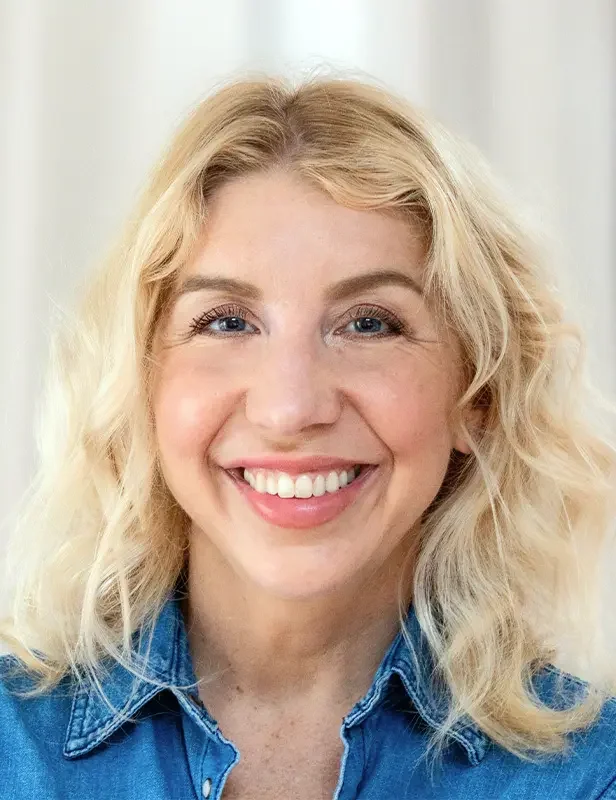
Rodney Evans
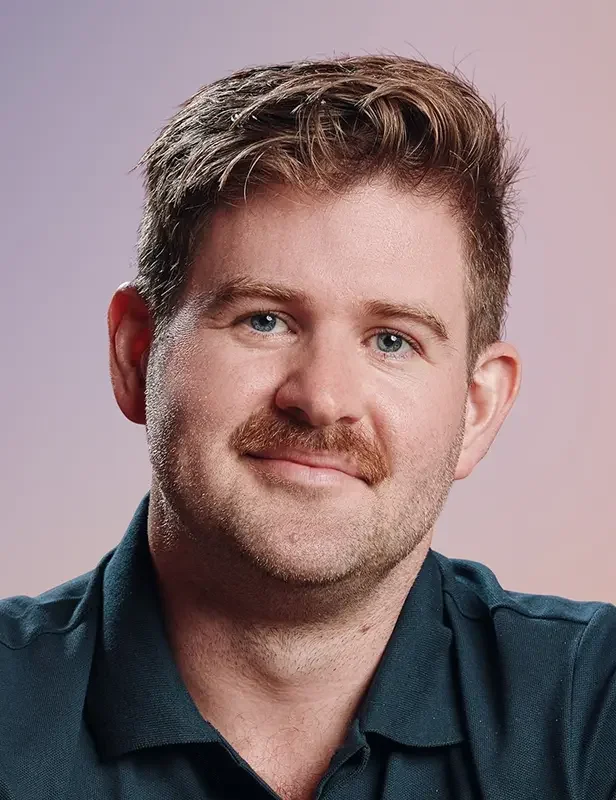
Sam Spurlin
Listen now:
Episode transcript:
Sam Spurlin:
Hey everyone. Welcome back to At Work with The Ready. I'm Sam Spurlin and I'm joined as always by Rodney Evans.
Rodney Evans:
Hey, Sam.
Sam Spurlin:
Every other week we're tackling one tough thought-provoking listener question and sharing a few ideas we think might help. Let's dive in. Rodney, what have you got for us this week?
Rodney Evans:
I recently read the article in The New Yorker about Sam Altman. I guess I am right that he's exactly the kind of leader that's doing the opposite of what you would advise him to. And yet he created one of the most valuable companies in the world. The same thing is probably true for someone like Elon Musk. So maybe his way of doing things is more successful than going for trust and participation, et cetera. Or do the companies that you work with get another kind of success? Also, in my organization and environment, I see people getting "to the top" that act from a position of ego and power and still look successful. What does success look like in an organization that's worked with you for a while and how might that be different to the results someone like Altman and Musk get? Okay, what do you got, Sam?
Sam Spurlin:
So I mean, this is going to be a philosophical answer, I think, or heavy on the philosophy. One thought just real quick, anytime we are holding up exemplars of leadership or organizations that are doing things in a kind of iconoclastic way is you have to be very conscious of just the insane survivorship bias that is inherent in that. So there could be so many companies that are run in the same way with the same sort of practices and the same sort of principles and 99% of them die on the vine along the way, but you have a very small minority that do succeed for various reasons outside of the culture or how they're actually run. And we hold them up as like, oh, shouldn't we all be this way? It's the classic like, "Steve Jobs was an asshole, so why can't I be an asshole?" It's that whole realm of things. I'm just always incredibly skeptical or somewhat hesitant to hold up any organization as what we should all be striving for. Just setting that aside.
The philosophical thing that I just want to throw into the mix, and this is something that I've been, I think, wrestling with a lot more in how I think about the work and how I help other people do this work is that I think there's a definition question about what does success mean? And I think we've always, or I'll speak for myself, I have tried to have a definition of success that is more than just we made a lot of money or we have the biggest organization or the greatest sort of impact. And I think there is something around the experience of people in your organization, non-monetary things related to the meaning and the value that you place on the work that is important. And I don't want to hold up a company as ultra successful because they made the most money as the paradigm here. So that's where my head goes at first on something like this.
Rodney Evans:
Yeah. I mean, I think to your first point, I was going to talk about another bias that is adjacent and related. So there's the survivorship bit, which is for every Sam Altman, there are 9,000.
Sam Spurlin:
9,000 poor and out of business Sam Altmans.
Rodney Evans:
9,000 single shingle consultants who are like, "I'll advise you on startups," you know? The bias I was going to talk about is actually that I think that the archetypal leader that is very colorful and ego driven and very public gets a lot of ink and gets a lot of eyeballs. There are a lot of very successful companies that you've never heard of because there is no Elon Musk posting pictures of him on ketamine. There are wonderful, thriving, scaled organizations, many of which didn't IPO, many of which don't have a founder billionaire at their helm, many of which have been in business for a century that are not as exciting to read about and to profile because they don't have a little baby psycho founder.
And so I just want to say out loud, when I come across those companies, I'm always like, it's so interesting to me that I've never heard of you. And then when I read their Wikipedia, I'm like, "Holy shit, you make so much money and you've been in business for such a long time and there's literally nothing written about you in Forbes because there's nothing interesting about you because you're not bad."
Sam Spurlin:
Yeah.
Rodney Evans:
So it's a different kind of bias, but it's like we have to remember that there are reasons that there's a whatever 15-page profile about Sam Altman in The New Yorker to begin with.
Sam Spurlin:
Yeah. Yeah. It's the conflating of news and entertainment with this. I guess my last thought on this is that some of the most outwardly successful people in business in organizations are also some of the most profoundly unhappy and broken people I've ever met. So just again, going back to the idea of what are we actually talking about with success? And I want to contribute to a world where we have a more holistic view of what it means to be successful in work in an organization. And it's not just did we make the most money that was absolutely possible, but what is the experience of the people who work in our organization and our collaborators and our vendors and just what's the sort of impact that we're having on the world beyond the balance sheet? And obviously you need to make money to exist, not against making money. If you don't have a profit, you're probably not going to be around for a long time, but there's more in play here that I will always kind of keep coming back to.
Rodney Evans:
Yeah. I think this relates to something I wanted to say just about the broader system, which is late stage capitalism does really reward this outsized kind of financial success on the one hand. America loves billionaires for reasons that I think neither you nor I really understand. But also take Sam Altman in the context of both the economic system that we're working in and also this particular industry. So AI is the most sort of rocket ship, phase shift, frothy, trendy, exciting, terrifying new thing that we've had in a long, long time. And what that means is that in order for people like Sam Altman to continually raise capital, to continually get their bets underwritten for decades plus before they're able to actually have a profitable business, does require a certain archetype that is not necessarily the archetype of long-term stable businesses. There is a reason that frontier CEOs are more like Steve Jobs than they are like the founders of Patagonia because they are doing a thing that requires almost freakish self-confidence, ego, belief, conviction, delusional thinking, et cetera, to raise billions of dollars to do what they want to do.
I'm only saying that as a backdrop, both in terms of the natural selection of this kind of industry for this kind of human. And also because in your question, you asked specifically about the kinds of companies that we work with in the long term. And what I would tell you is particularly the mid-market companies that I primarily work with at this point, they don't have investors who are going to fund a decade or more of like, "Trust me guy, this thing's going to be a rocket ship."
These are real companies with real customers and real businesses and they're profitable and they have been for decades. And so they have a different interest in sustainable systems, in benefiting from change, in being able to evolve with the market because they're not playing the frontier game. They're playing the long-term community stability survival resilient profitable game. And that's just a different thing. So I don't expect that we're going to get a call from Sam Altman anytime soon, nor do I frankly think we would be a good fit for that kind of company.
Sam Spurlin:
Sure, sure. Well, just the last thing that you guys made me think of is that most companies are like the mid-market that you just described needing to make money and stay alive and are not a frontier AI company like SpaceX and OpenAI.
Rodney Evans:
Yeah, exactly.
Sam Spurlin:
All right. That is it for this many. If you've got a question of your own, hit us up at podcast@theready.com.
Rodney Evans:
And we will see you back next week for a full episode of At Work with The Ready. Thank you so much for being a listener.
